
Travelogue from Hanoi: Tattooing as Understanding Decolonial Practice
Postat den 15th January, 2026, 09:31 av karubakeeb
By: Kim Hoa Hof
Decoloniality is a fleeting image to me still. I think one of the things that makes decoloniality interesting is in fact this ineffable quality. I think the practice, the application, and decoloniality as life lived is what interests me deeply. I think about what the great decolonial scholars refer to when they speak of third space and dwelling in the margins. Right now, I want to explore my own positionality as a marginalized position. Without caveats, without the nuances of my stacked privileges that have led me to this moment, to this text. I believe I can choose it—that the idea of decoloniality urges me to. So I do.
I want to look at self-expression as a decolonial practice. I think about human existence as movements of expressing ourselves. And I wish to step out of expression as thoughts and analysis. I believe the obsession with this type of expression is a Eurocentric idea from the time popularized as the Enlightenment. I wish to steep in knowledge as far away from those ideas as possible.
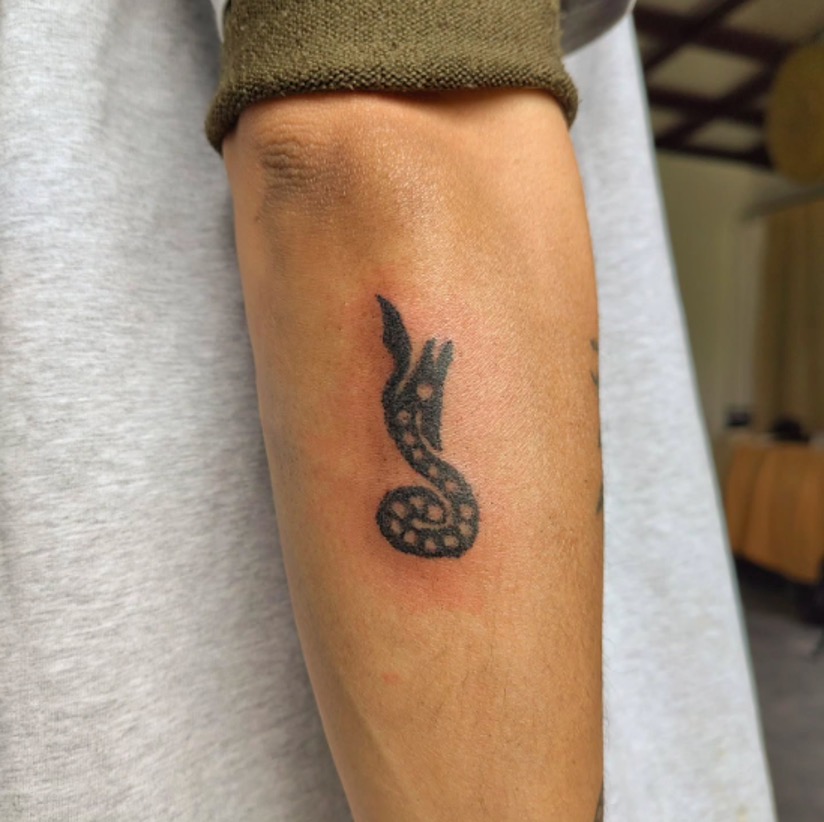
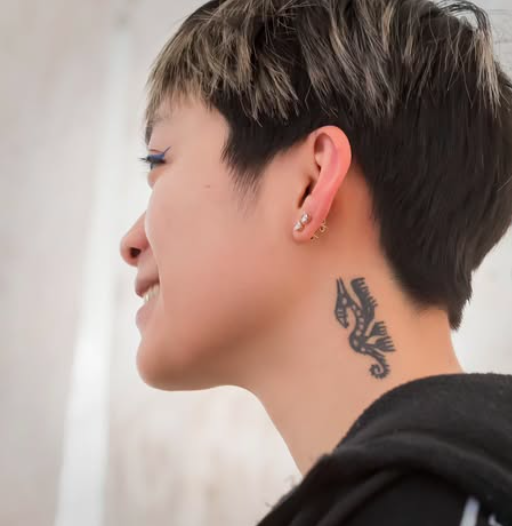
In Hanoi I found a tattoo artist based in Amsterdam. My Hanoi—dripping with postcoloniality. Like me, they had Vietnamese heritage. I lingered on the parallels of the diaspora of overseas Vietnamese and the history of colonized elites based in the metropoles. The artist told me that even the word tattoo has a colonial heritage—snatched from the Tahitian word for marking. They called their practice ancestral markings and explained that the only people they worked on were people with Vietnamese ancestry. This artist reminded me of the fact that I am not of the young minds anymore. Of how much expansion my world will benefit from in perpetuity.
This artist had had the opportunity to search in the French colonial archives for traces of Vietnamese tattooing history. The fabled origin story of Vietnamese people contains tattooing—cementing tattooing as a heritage that matters to us. Of course, only colonial research is left. And the oral histories that I have stumbled upon.
This is one story I have heard: the ancient land of Vietnam has been inhabited by people long before Vietnam became one land. We call land sea—the Vietnamese word for land is water. Long before the imperial reigns, tattooing was a part of living. Something that can be understood through the story of imperial dragon tattooing of the first imperial Ly dynasty. This emperor made the imagery of the dragon and the practice of tattooing an exclusively imperial practice. This should be understood in light of the fact that tattooing is a part of our origin story. To protect the first men from sea monsters—sea creatures’ eyes and scales were tattooed on stomachs and thighs.
I came into this room set up as an Airbnb in one of Hanoi’s Soviet-era communal housing complexes. The artist had asked me to bring offerings and asked me to do a ritual to call upon my ancestors. I did what I felt in the moment.
When I left, my skin was burning from the fresh ink and the sun had gone down. I thought of how marks can travel across time—through myth, through colonial erasure, through archives, through skin. My ancestral marking became a part of a becoming. A way of remembering what I cannot remember, a way of refusing and resisting through suddenly embodied ideas, a way of carrying ancestral history forward on my body.
Perhaps this is what decoloniality is to me for now: not a finished thought, but a practice of dwelling in fragments, of letting the body speak, of finding meaning in what remains and what can be remade.
Markings and photos by Lê Hương Quỳnh
Det här inlägget postades den January 15th, 2026, 09:31 och fylls under blogg