I participated 27-29 June 2026 in a weekend with the Future Library project in Oslo. The occasion was the handover of the manuscripts of Tommy Orange and Amitav Ghosh to this 100-year project created by Katie Peterson in 2014. All three were present. On the main day, some 150 people participated: from Norway, many other European countries, Mexico, and the US.
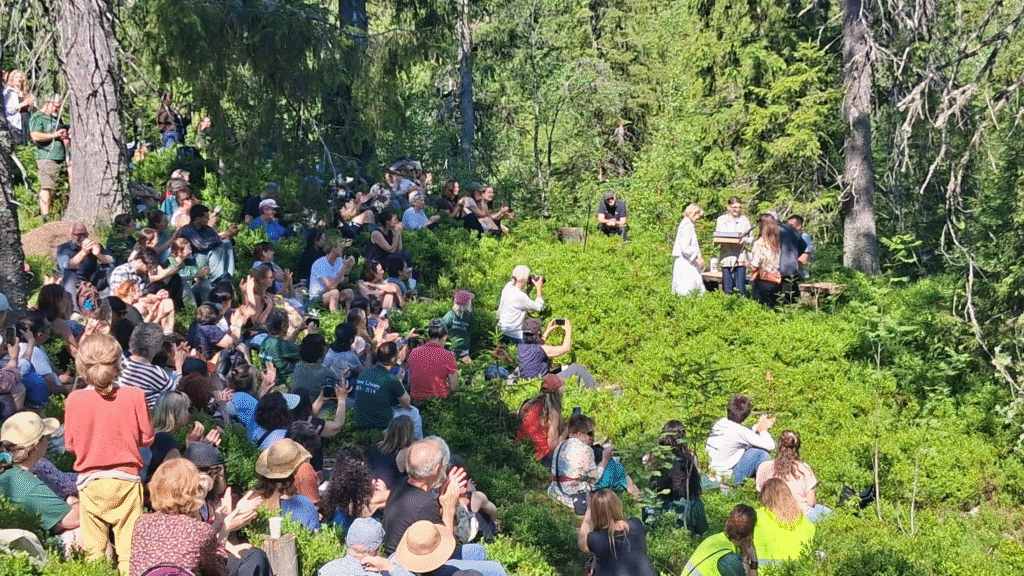
The handover ceremony on 28 June 2026 in the Future Library forest.
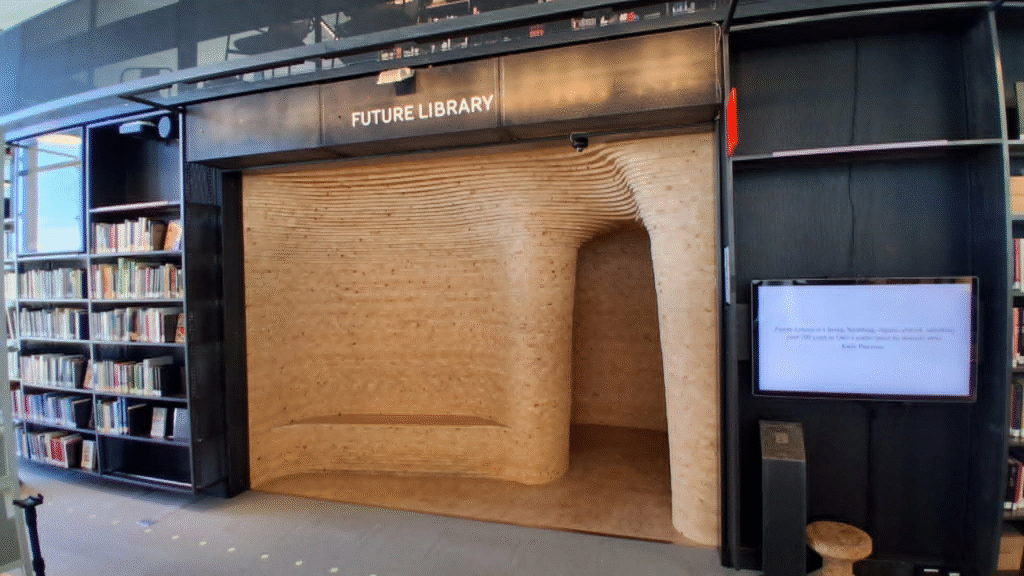
The weekend involved various performances including a handover ceremony in the Future Library forest north of Oslo (see picture above), the placing of the unread manuscripts until 2114 into the Future Library room in the Deichman Bjørvika Public Library in Oslo (see picture below), and a Symposium of the Long-Term Art Projects (LTAP) initiative entitled “What Can Art Do for the Future?”. I contributed by co-chairing (with Richard Sandford, UCL) a panel offering “Perspectives on a Long Future”, with three present custodians of long-term art projects from Germany, the Netherlands, and Austria.
Among the participants of the Symposium were Marianne Borgen (former Mayor of Oslo), Anne Beate Hovind (curator of the Future Library project), Michael Münker (founder and co-ordinator of LTAP) and Lydia Caldana (Foresight Policy Analyst at EU Policy Lab).
I like to see the Future Library project in Oslo, as many of the other long-term art projects elsewhere, as an exercise in practicing heritage futures.
The heritage is in this case is both natural and cultural. The natural heritage is the Future Library forest where in 2014 the trees have been planted that in 2114 are anticipated to be used to produce the paper on which the manuscripts of the (by then) 100 manuscripts will be printed. The cultural heritage are not only the unread texts, the public library where they will be stored until 2114, and the books then to be printed, but also the annual public handover and placing rituals in which many people participate, celebrating the power of art and culture.
The Future Library room, eventually containing 100 unread texts to be printed after 2114.
This heritage is negotiating the relations between present and future societies in several ways. On one level, it transmits texts for up to one century into the future. On another level, it involves a community of authors and project facilitators in the present that takes on a commitment for the future and in doing so spreads hope and trust in many uncertain events and processes that lie ahead of all of us.
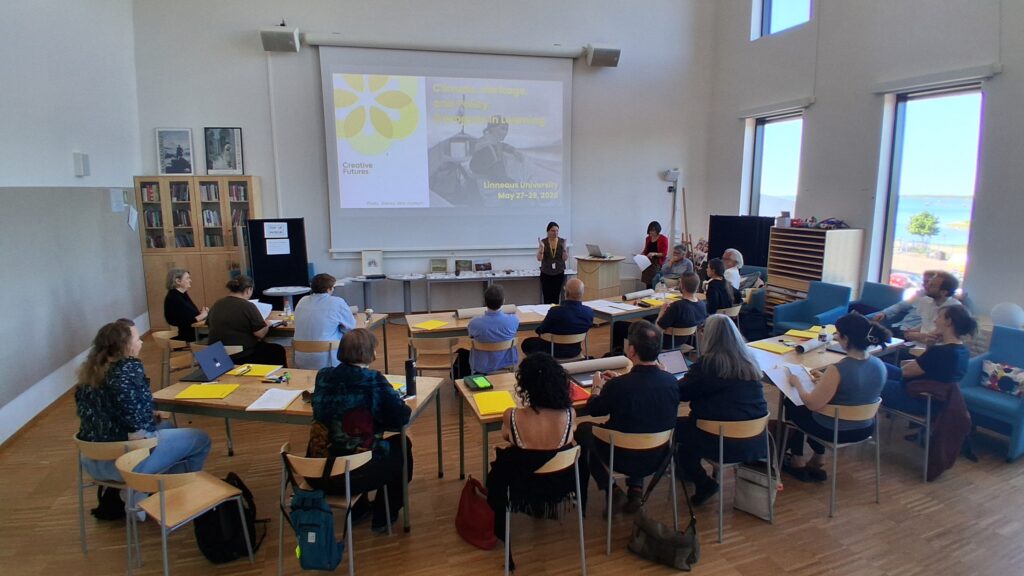
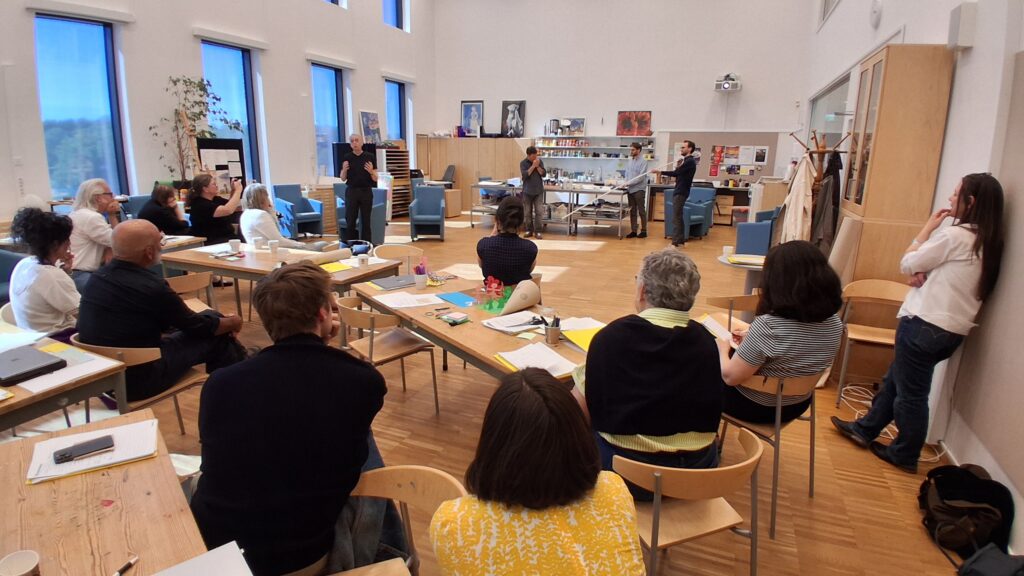
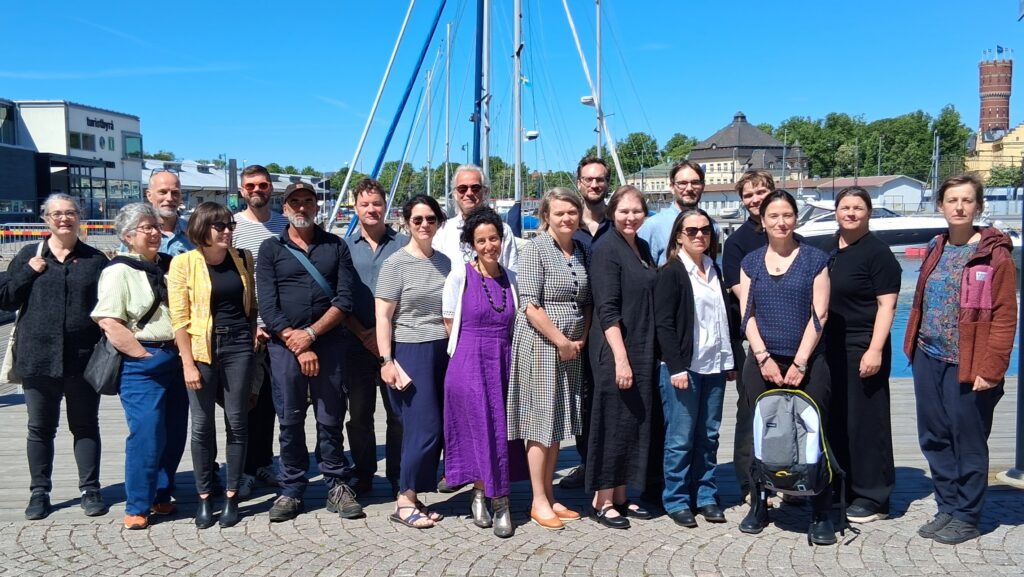
Around 20 specialists in cultural heritage and climate change from Sweden, Norway, Denmark, France, the UK, and the US attended the workshop on “Climate, Heritage, and Policy: Dialogues in Learning”, organised by Marcy Rockman at Linnaeus University on campus Kalmar (27-30 May 2026). The workshop was supported by a grant from the Swedish Research Council.
The workshop related directly to heritage futures, i.e. the role of cultural heritage in managing the relations between present and future societies. Its aim was to develop a framework of learning and dialogue to promote a body of practice that integrates across fields of climate change, archaeology/heritage, and governance practices.
The discussions generally prioritised people over objects, change over preservation, global over national concerns, and the future over the past.
The workshop asked a series of timely questions over the course of the four days. What I have been taking away includes thoughts about the following issues (others will have taken away different thoughts):
how are we to discuss climate change in relation to cultural heritage that is deeply problematic?
what happens when we recognise that knowledge about climate change is based on social truths?
how are we to draw on the potential of cultural heritage to make climate change deeply personal?
are there better terms than the homogenising notion of “community” for describing the humans affected by climate change?
is unlearning possibly more important than learning?
how can we best harness the power of engaging with collaborators as human beings rather than as experts?
is climate change necessarily a threat or can it also be considered as an opportunity?
who do we want to be and how do we want to live, now and in the future?
Among the ways of working were group work, artistic expression, and fieldwork in Kalmar, involving all the senses.
The creativity and playfulness in methods amounted to what participant called “epistemic disobedience”. It also resulted in much enjoyment among the participants and led to concrete discussions of future collaboration in a number of specific contexts.
Importantly, we had glorious summer weather throughout the workshop and even on the excursion day to Öland on the final day!
The following members of the UNESCO Chair on Heritage Futures participated in addition to Marcy Rockman and myself: Anders Högberg, Gustav Wollentz.
A more detailed report about the precise aims and results of the workshop is being prepared and will be made available via this blog in due course.
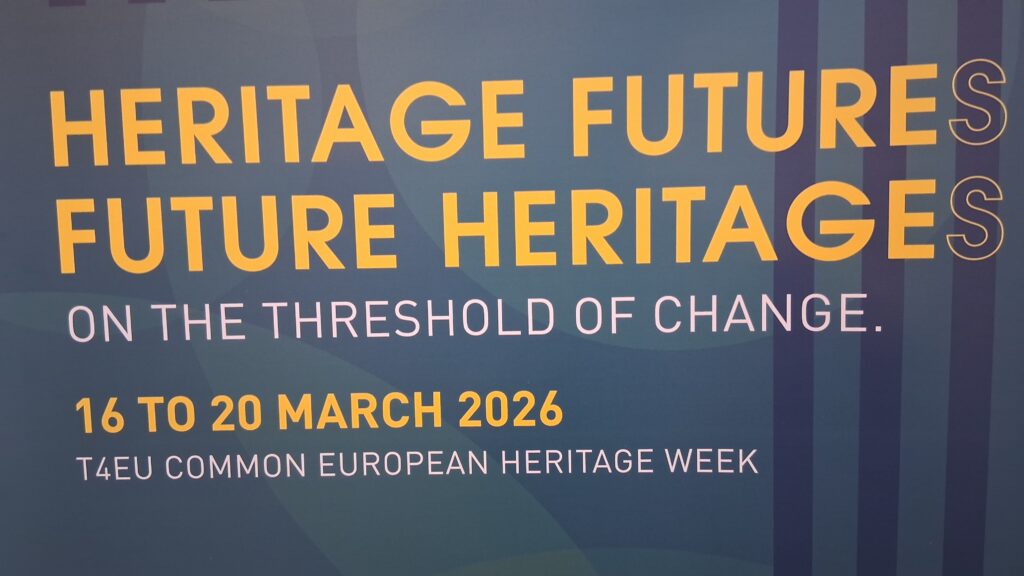
Cornelius Holtorf presented an invited keynote lecture on “Heritage Futures: From Conservation to Change” for an audience of almost 100 students, researchers and University teachers, attending the international conference EPoCH2026 · Heritage future(s) / future heritage(s): on the threshold of change held at Católica University, Porto, Portugal. The slogan of Católica is “The University of the Future” (19 March 2026).
EPoCH is an annual scientific conference, organized by the Heritage & Conservation-Restoration Focus Area of the Centre for Science and Technology of the Arts (CITAR) of Universidade Católica Portuguesa, intended as a forum for discussions on future directions in heritage and conservation-restoration research, embracing collaborative conversations driven by emerging perspectives and the exploration of a diverse array of practices, theories, and approaches. In 2026, EPoCH was organized in connection with the Transform4Europe (T4EU) alliance and was part of the broader framework of the T4EU Sustainable Heritage Conference and T4EU Common European Heritage Week.
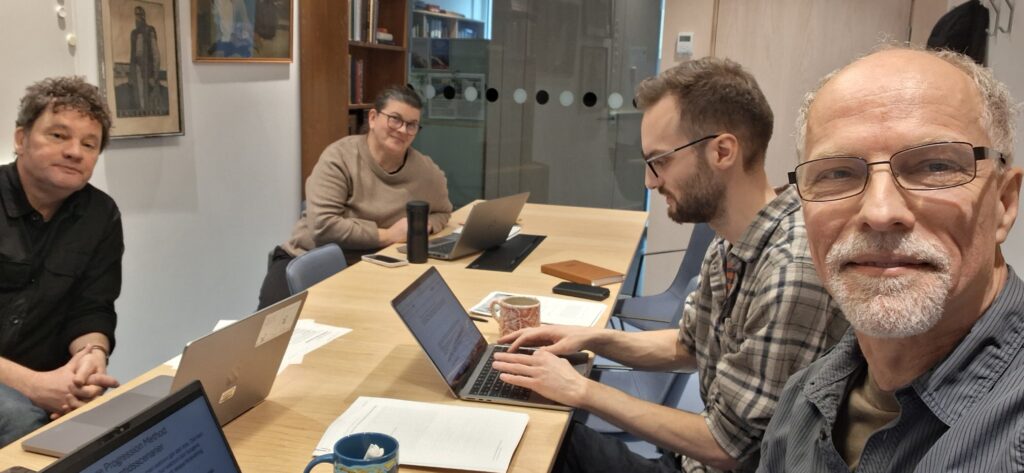
The team at Linnaeus University working on behalf of the Swedish National Heritage Board on a future national research agenda on sustainability spent most of the day to hold an internal futures workshop (16 March 2026).
Anders Högberg, Ulrika Söderström, Gustav Wollentz, and Cornelius Holtorf used Causal Layered Analysis to rethink cultural heritage and identify new perspectives to be taken and new questions to be asked concerning cultural heritage and social sustainability.
One underlying metaphor for cultural heritage in the future might be: “The cultural heritage of the future, we create ourselves, together.”
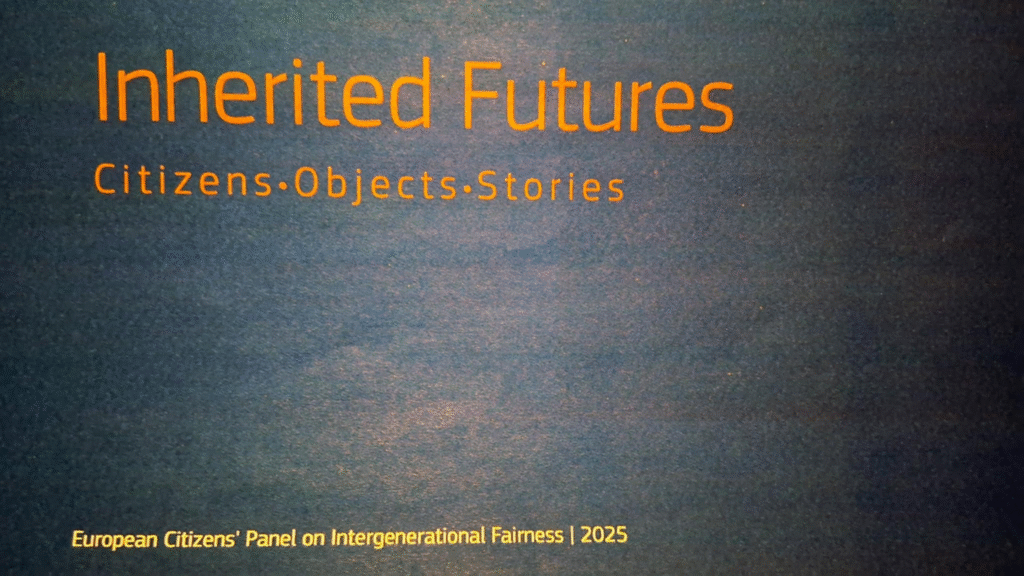
The EU Commissioner för Intergenerational Fairness recently published a report entitled Inherited Futures. Citizens – Objects – Stories. I downloaded it here I think but it is no longer available there now (if anybody finds it please let me know).
This 200+pages-report documents the objects and stories of 150 randomly selected citizens from all 27 EU Member States who were asked what intergenerational fairness means to them.
The objects and stories they selected make intergenerational relations tangible and personal. Many of these citizens chose what reminds them of their grandparents, what they care about for the future, and/or what they choose to pass on to their children or grandchildren. As the Introduction to the report concluded, many objects are small bridges between past and future.
This collection of citizens’ objects and stories is in fact a collection of ‘heritage futures’, exemplifying how cultural heritage can manage the relations between present and future societies in people’s ordinary lives.
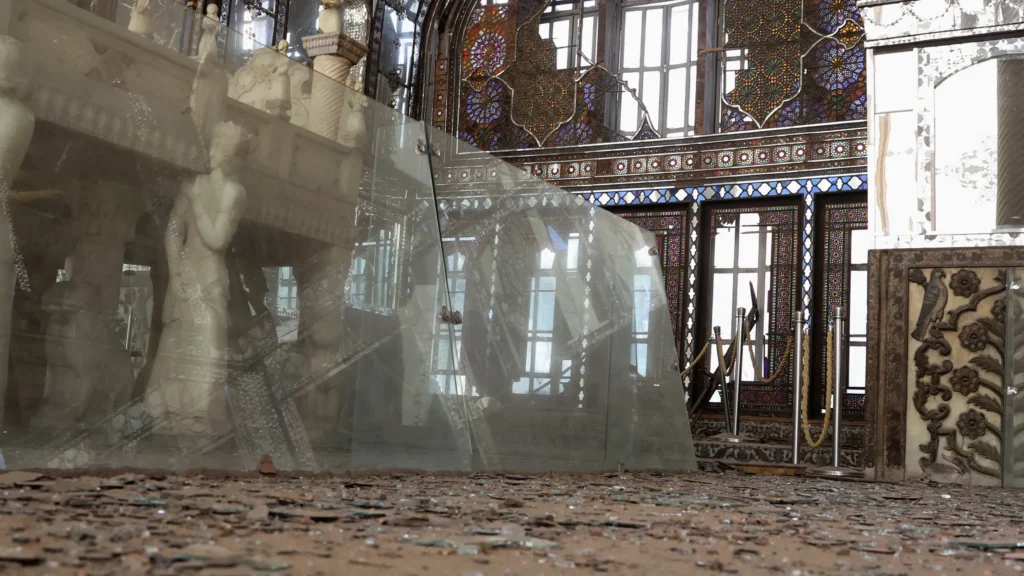
Golestan Palace, a UNESCO World Heritage site, was severely damaged on 2 March 2026 during the USA–Israel war against Iran. According to Khabaronline (2026), portable artefacts had been transferred to storage during the twelve-day war in June, and only the buildings themselves were affected by the explosions. The palace dates back to the fifteenth century and includes several buildings, gardens, exhibition halls, and galleries. It was used and developed mainly during the Safavid (1501–1736) and Qajar (1789–1925) dynasties, and was added to the UNESCO World Heritage List in 2013. It remains the only UNESCO-registered site in the capital city of Iran.
One of the most significant aspects of the palace is its vast archive, which includes more than 60,000 historical photographs, 9000 negatives and videos, and around 1,520 albums. For many years, independent scholars, researchers who do not work for the Iranian state, had great difficulty accessing this archive. In June 2024, however, an anonymous individual or group uploaded part of the photographic collection online (about 3200 photos). Their identity has never been revealed, and it remains unclear how they were able to access, digitize, and publish the albums in the public domain.
When the archive became available, I began to reflect on why access to these materials had been so restricted. The albums contain hundreds of photographs from the late nineteenth century, particularly images from the court and the harem of Naser al-Din Shah Qajar (1831–1896) and his many wives. These photographs reveal social norms or communities that the Islamic Republic has long denied or labeled as “westernized”: enslaved people, men holding hands, same-sex lovers, the king’s wives posing semi-nude before his camera, and a society far more complex and diverse than the homogenized image of the past promoted by the state.
Among these albums, one is especially important for understanding the concept of heritage in modern Iran: Album 137. I first learned about this album in 2011 after one of my students (S.) told me she had encountered it in Golestan Palace while she was there for another reason. She mentioned that the album contained photographs related to the archaeological excavations at Susa.
Maryam Dezhamkhooy, S., and I went to the palace to search for it. By chance, we met Dr. Chahriar Adl (1944-2015), an Iranian archaeologist, there. He kindly helped us obtain permission to make copies of the photographs. This was something that would have been nearly impossible without his support.
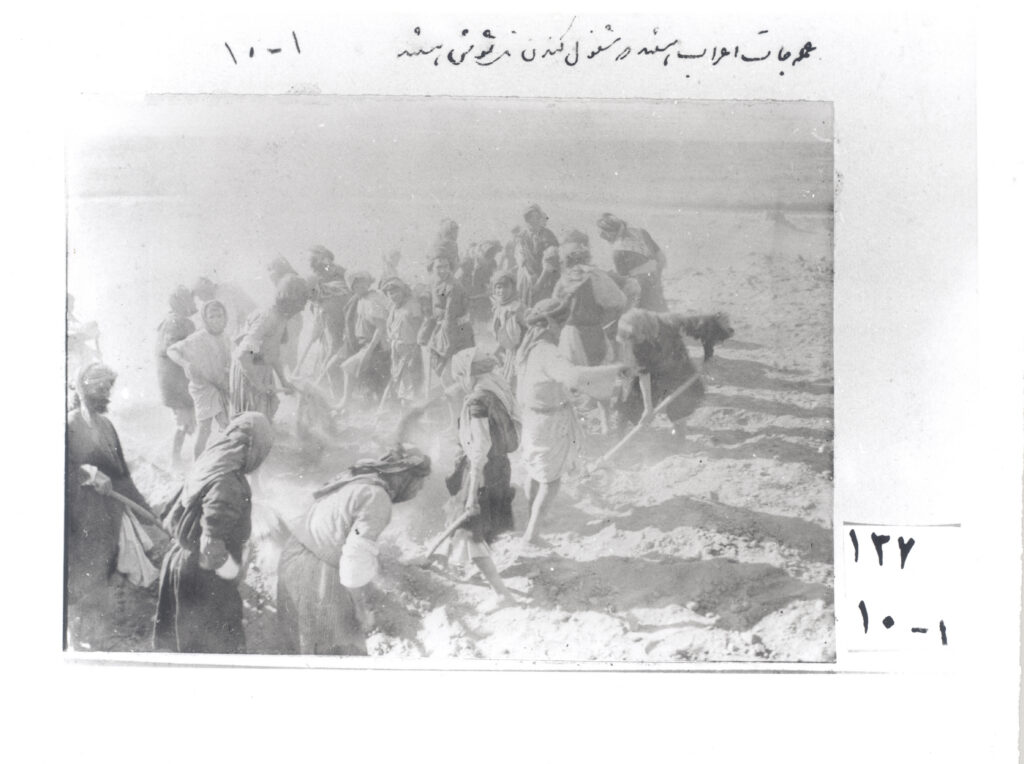
These photographs were later made public together with the rest of the archive. Album 137 contains 27 photographs related to the excavations at Susa led by Jean-Jacques de Morgan (1857–1924). According to the album’s description page, the photographs were taken in 1899–1900 (1317 A.H.) by a man named Heidar Milani while he was passing through Susa on his return mission from the southwestern province of Iran (Arabestan at the time and now, Khouzestan). In his note, Milani uses the phrase hasab-al amr-e al-a’laa, indicating that he took the photographs following an order from a higher political authority.
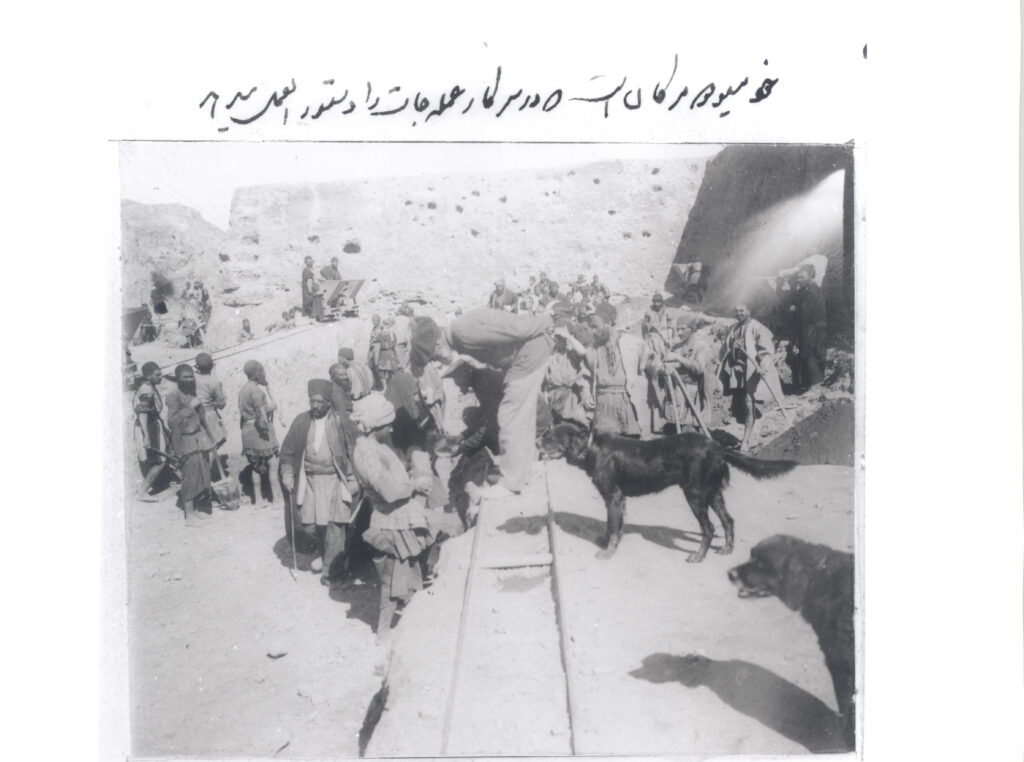
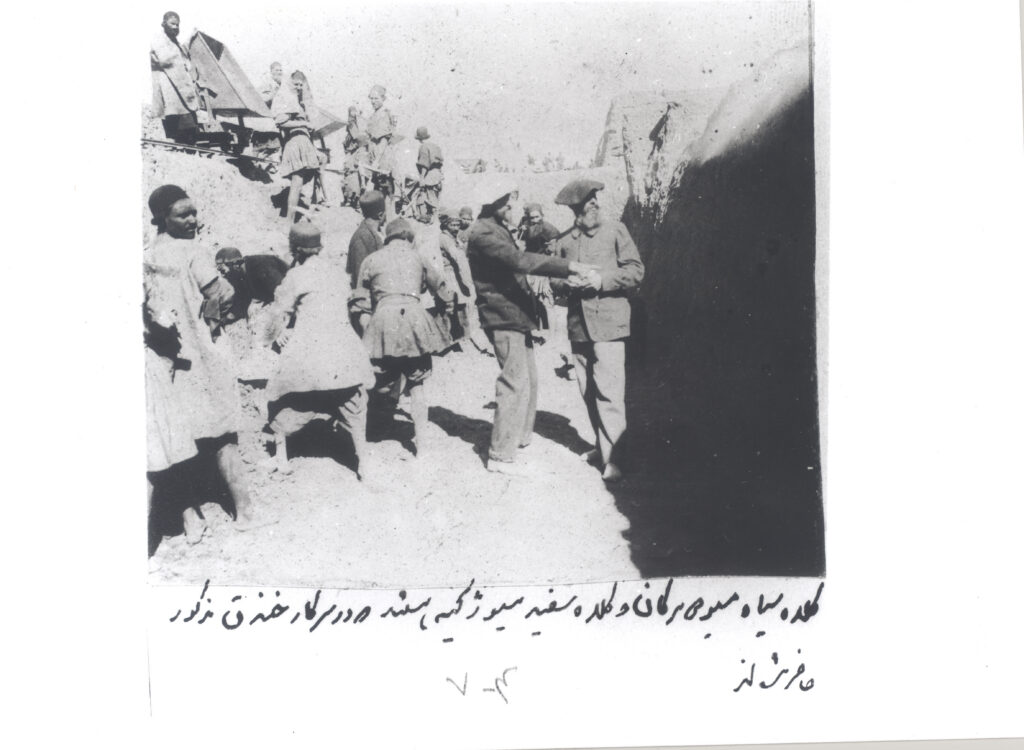
People consisting of de Morgan (Figure 2), his assistant (Figure 3), and workers (Figure 4) appear in eleven of the photographs, offering a rare glimpse of how he conducted his excavations. De Morgan, originally a geologist, used mining techniques to excavate archaeological sites and caused considerable damage to sites in Iran and Egypt, such as Susa. He dug a large tunnel through the main mound at Susa and destroyed the archaeological layers, made big holes that compromised the preservation of the site very difficult till now. Milani’s captions note that the workers visible in the photographs were indigenous Arab inhabitants of the region.
Another revealing detail appears on the cover of the album: a note written by a retired Iranian archaeologist who, after the 1979 revolution, had been responsible for overseeing archaeological institutions (Papoli-Yazdi, 2023). The note is dated 10 April 2011 and records that three other members of the Iranian Cultural Heritage Organization and the University of Tehran accompanied him on his visit (which indicates the importance and formality of the visit).
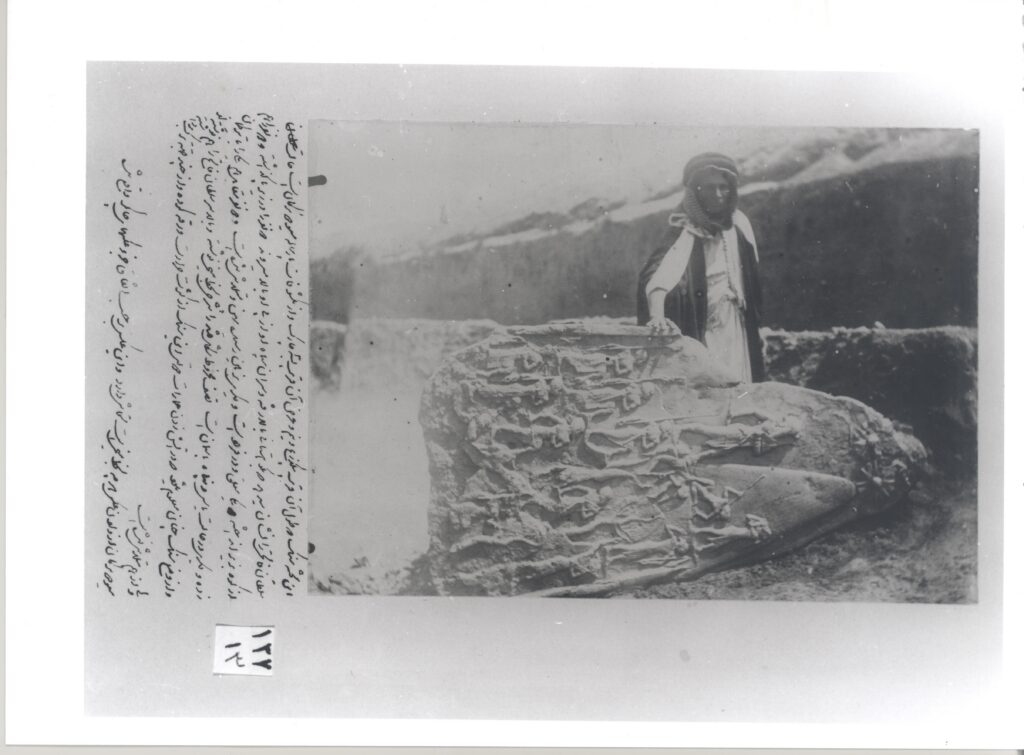
In the photographs where de Morgan appears, he is always positioned at the center. The large groups of local workers surrounding him remain anonymous through the photographer’s lens, or their bodies are only used as a scale to promote the size of an archaeological finding (Figure 5).
French missionaries, antiquarians, and archaeologists played a crucial role in shaping the modern idea of the identity of Iranians as a nation-state in the late nineteenth and early twentieth centuries. They transformed a largely mythical past into one defined by monuments and archaeological sites such as Susa, without considering the narratives of local communities and indigenous researchers.
During the past century, heritage in Iran has repeatedly been at the center of tensions between state power and nationalist narratives. At times, these two forces have overlapped, jointly marginalizing the perspectives of indigenous communities as well as those of independent researchers. Yet there has always been a third force, colonialism, one whose influence is often denied by both the state and nationalist discourse. Iranian nationalism frequently frames the country’s heritage as exceptional and uniquely its own, leaving little room to acknowledge external structures of power.
Today, however, the role of colonialism is bolder. The buildings of Golestan Palace have been damaged by explosions for the first time in their long history, despite standing in the center of a city that has endured Russian imperial influence, revolutions, coups, invasion by Allies, and two world wars.
However, Golestan Palace is not merely a collection of buildings. It also houses one of the largest historical archives in the world, whose preservation ensures the possibility of recovering at least part of the past, which has been mainly written by the states and colonizers; the preservation of this archive allows the denied and ignored heritage and past to be reinterpreted, re-narrated, and rewritten in the future. The destruction of Golestan Palace will transform the future of the past.
This destruction raises new questions about the future of the palace and its archive, as well as the future of archaeological narratives and the history of the heritage idea in Iran. Where is the archive? Is it possible that authorities/colonizers destroy unwanted parts of it? Will independent researchers be able to access the materials of Golestan Palace in the future? Or will the next political order conceal, reinterpret, or selectively reveal them in order to shape a new narrative in the future about Iran’s heritage and the history of archaeology within the country?
Leila Papoli-Yazdi Archaeologist of the contemporary past and Garbologist and member of the UNESCO Chair on Heritage Futures
Papoli-Yazdi, L. (2023) Confessions of a Green Notebook: Reading Unpublished Documents About the Oppression of Iranian Archaeology Professors During the 1980s. Archaeologies. https://doi.org/10.1007/s11759-022-09468-9
Captions:
Figure 1- Debris at the historical monument Golestan Palace after it was damaged in an Israeli and U.S. strike, amid the U.S.-Israeli conflict with Iran, in Tehran, Iran, March 3, 2026. Photographer: Majid Asgaripour
Figure 2 – The caption reads: “Monsieur de Morgan, himself giving instructions to the workers” (photo 137-7-1, from Album 137). Photographer: Heidar Milani.
Figure 3 – The caption reads: “The man with the black hat is Monsieur de Morgan, and the man with the white hat is Monsieur Jacquier (?), present at the work taking place in the mentioned ditch” (photo 137-7-4, Album 137). Photographer: Heidar Milani.
Figure 4 – The caption reads: “Arab workers digging the mentioned ditch” (photo 137-10-1, from Album 137). Photographer: Heidar Milani.
Figure 5- Victory of Naram-Sin over the mountain tribe of the Lullubi and their king Satuni, Louvre. The caption describes the scene of the stele (photo 137-13, from Album 137). Photographer: Heidar Milani.
Cornelius Holtorf was invited to present the 9th Annual Heritage Lecture at the Cambridge Heritage Research Centre, University of Cambridge, UK (20 February 2026). In front of an audience of 60+ students and researchers in cultural heritage he gave a lecture on decolonising the future. The lecture was recorded and can be watched here on Youtube.
Decolonising the Future: From Preserving Memory across Generations to Sustaining the (Re-)Generation of Memory
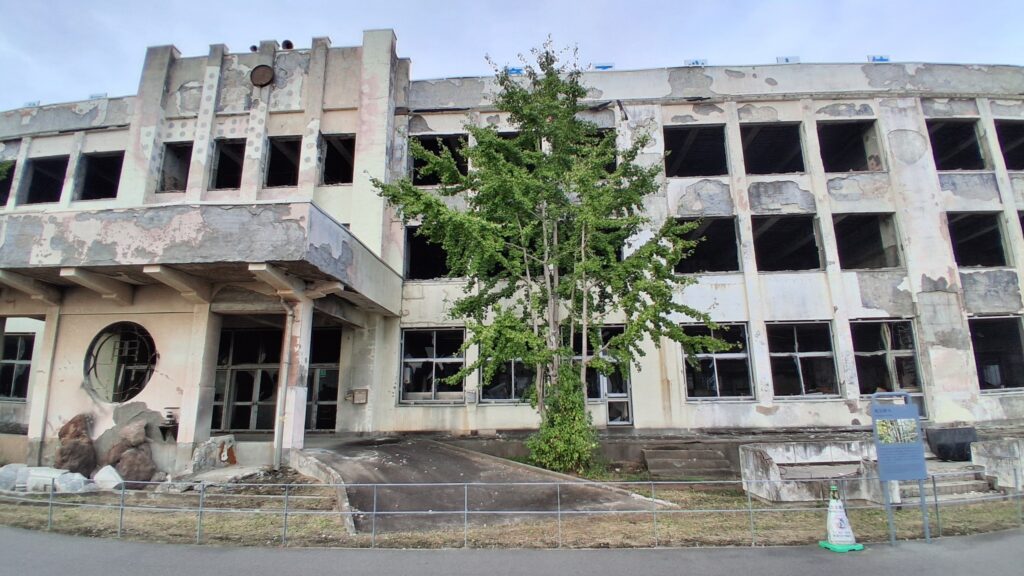
Resprouting tree in front of the Ishinomaki Kadonowaki Elementary School
The field of ‘heritage futures’ explores the roles cultural heritage plays in negotiating relations between present and future societies. In many contemporary contexts, cultural heritage is to be preserved explicitly for the benefit of future generations. Such efforts are typically grounded in the assumption that present-day values and narratives of heritage will be shared and appreciated in the future. The preservation of cultural heritage may indeed create benefits, much as a less polluted, better preserved, and more sustainable natural environment is likely to benefit those who come after us. Implicitly, we expect our preservation practices to ensure that we will be remembered as good ancestors.
Yet to what extent do the tangible and intangible legacies we leave behind constitute attempts to establish control over future human (and indeed some non-human) beings? Does heritage preservation inadvertently colonize those who will live in the future by imposing our present-day values and priorities upon them? If so, is this problematic in ways comparable to the colonisation of living peoples in the past, a legacy with which we are still grappling today? Do we therefore need to decolonize the future?
I address this challenge by asking how we might make sense of the past through memory in a world where the future is not what it used to be. Two case-studies will help me to explore what this shift may entail. Both concern forms of memory and heritage created in the present to benefit the future, and both relate to nuclear power, a domain that has long provoked existential questions about the future of humanity. First, I examine the memorialisation of the 3/11 disaster, following the major earthquake and tsunami that struck Japan’s northeastern coast in 2011 and led to the nuclear meltdowns at the Fukushima Daiichi Nuclear Power Plant. Second, I consider strategies designed to preserve awareness of nuclear waste repositories across many generations and for up to one million years.
In conclusion, I invite the audience to consider an alternative approach to heritage futures that may, in fact, reflect how memory has always functioned (because the future may never have been what it used to be). I propose moving away from present-day strategies aimed at transmitting memory unchanged across generations, towards an acceptance of continuous processes of (re-)generating memory and the changes this entails. My point is that it may not be the values we currently ascribe to heritage that endure over time, but rather the processes through which heritage is continually revalued. Can and should such a post-preservational approach contribute to decolonizing the future?
Uranium, heritage futures, and environmental assessment
When uranium is discussed, the conversation usually starts with risk: toxicity, radiation, standards, limits. But risk is not the beginning of the story.
Before uranium becomes a health concern, it becomes something else: ◻︎ a long-lived inheritance.
Heritage is whatever persists beyond us and must be dealt with by those who follow. Some of it is chosen. Much of it is not. Industrial societies, in particular, generate large amounts of unintentional material heritage: substances, residues, and infrastructures that remain active long after their usefulness — and often their caretakers — are gone. Uranium belongs squarely in that category.
Long before we calculate doses to people or compliance margins, uranium has already become a durable inheritance that future societies must manage. This is where heritage futures and environmental assessment intersect.
Why Risk Frameworks Matter — but Come Later
Because uranium persists, institutions attempt to manage it through risk frameworks.
Historically, these frameworks have made a clear division:
▸ uranium → treated mainly as a chemical toxicant ▸ radium → treated as the radiological concern
This separation is deeply embedded in regulations, monitoring programs, and safety assessments. It has also shaped how responsibility is understood and communicated across time. But it carries an implicit assumption:
▹ that radium, not uranium, controls radiological ingestion risk.
What the Research Shows
In my latest paper, published in Science of the Total Environment, I tested this assumption directly. Two key results emerge:
▸ Uranium is not radiologically negligible, even where international guideline values are fully respected.
▸ Dose delivery is controlled by mobility, and groundwater systems are typically charged far more with uranium than with radium.
In other words, although radium is more radiotoxic per decay, uranium often dominates radiological ingestion risk simply because there is much more of it dissolved in water.
Why This Matters for Heritage — Not Just Compliance
Seen through a heritage lens, this result has a deeper meaning. The continued use of radium as a universal proxy for uranium-related radiological risk is not just a technical shortcut. It is a legacy assumption, inherited from earlier regulatory cultures.
That assumption:
▸ fragments what is chemically and physically unified, ▸ hides part of the long-term burden, and ▸ narrows how responsibility is framed across generations.
Turning the Perspective Around
The main message is not that past frameworks were wrong. It is that the material heritage we have created no longer fits comfortably within them.
Uranium is not just the parent of radium in a decay chain. In water-mediated environments, it often becomes the parent of dose — and therefore of risk.
Recognizing this does not overturn radiological protection. It strengthens its internal coherence. And, more importantly, it clarifies what kind of heritage we are actually passing on — material, persistent, ethical, and administrative, and inescapably shared with the future.
Further Reading
C. Pescatore (2026). Integrating uranium radiological ingestion risk into environmental safety assessment alongside radium. Science of the Total Environment, 1011, 181055. https://doi.org/10.1016/j.scitotenv.2025.181055
Claudio Pescatore is a member of the UNESCO Chair on Heritage Futures at Linnaeus University
Historian Sandra Mass reflected in an important new book on Zukünftige Vergangenheiten (Future Pasts) on what it means, and could mean, to be writing history in the Anthropocene. This is a timely topic very relevant to the concept of ‘heritage futures,’ for it addresses ‘history futures’. By that I do not only (even mainly) mean the future of researching and teaching history, as she mostly does, but rather the significance today of composing stories of the past that enhance people’s capacity of meeting the challenges of the future (but see her discussion on p. 46-7). As I see it, the primary question is not which future pasts (i.e. descriptions of our present) future historians should be presenting but which present and future histories (i.e. accounts of the past) are most likely to benefit future presents.
This does not mean that the future and people’s future needs are predetermined and can be foreseen. But Mass agrees as well that the future is no longer entirely open either, as climate change and nuclear waste, for example, create facts that reduce future human options (p. 33, 103-4). Following Zoltán Simon, it may even be that humanity as such will be threatened in an entirely novel future taking the hit of climate change, nuclear war, and/or artificial intelligence (p. 106). What does that possible prospect mean for future history, potentially lacking significance in an altogether different reality? Could history in such a world cease to exist even without humanity to end (p. 107)?
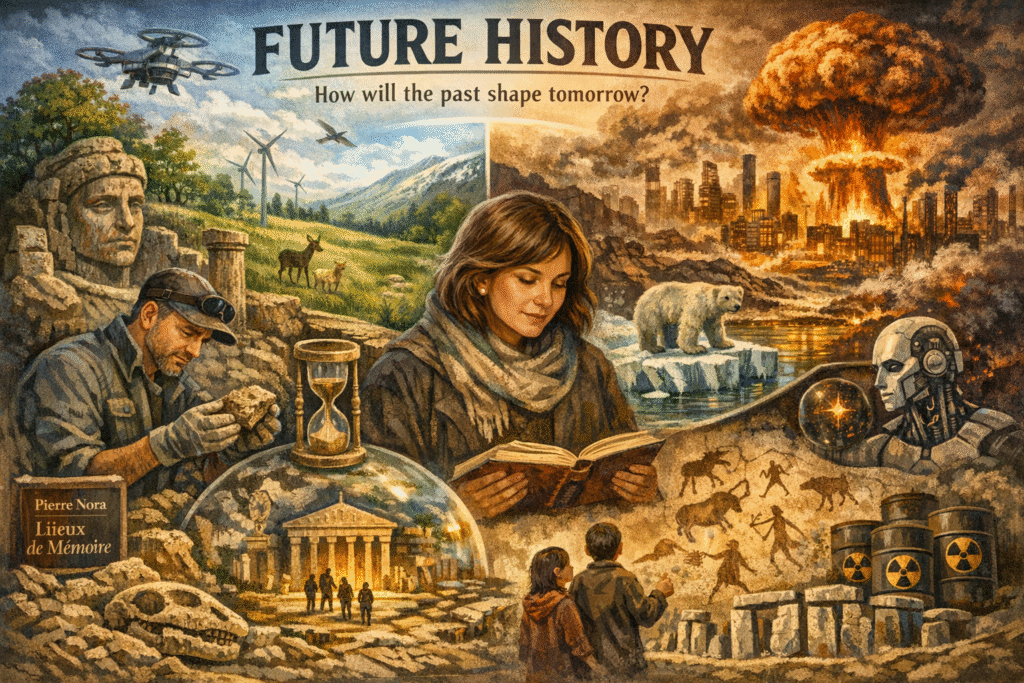
The end of history? An illustration of the present text by ChatGPT.
Sandra Mass writes particularly convincing and insightful in her extensive discussion of “More-Than-Human-History,” an emerging focus that is particularly pertinent for understanding the Anthropocene and goes far beyond existing environmental history. Such a non-anthropocentric history will be helpful for placing Homo Sapiens into a larger planetary perspective fostering much needed insights and understandings of past, present, and future realities that can push the historic disciplines beyond many past agendas that are possibly losing in significance.
In this context, what Mass missed is not only the many obvious (to me anyway) links to Archaeology and the work of archaeologists. Clearly, she is aware of the potential of archaeology (p. 35) and considers it easy to integrate archaeology and some other neighbouring disciplines into historical agendas (p. 179-80). Fine! More seriously is her omission of the significance of heritage and history culture (Geschichtskultur) for addressing the challenges of the Anthropocene.
Prominent scholars in historically oriented disciplines (including Pierre Nora, David Lowenthal, and Ian Hodder) argued that in a societal perspective, the significance of cultural heritage (and purposefully constructed sites of memory) has been superseding that of history (and living memory of the past). What will matter in future societies, I therefore suggest, is not primarily the extent to which scholarly knowledge will be able to represent important historical path dependencies during our and subsequent presents. Instead, what will matter more is the extent to which stories about the past manifested in cultural heritage relate, or will relate, to people’s lives and inform human behaviour by expressing and reinforcing particular collective identities, values, and mindsets that may or may not be in the best interest of future generations.
I argue therefore that historians, archaeologists, and others have important roles in shaping the future by giving attention to heritage futures now: the role of heritage in managing the relations between present and future societies.
A new publication focusing on the value of Foresight in heritage was just published with Gustav Wollentz from the UNESCO Chair on Heritage Futures as a co-author. The article is named “Foresight in heritage: fostering future consciousness to proactively face change”, by Hana Morel, myself, Sarah Forgesson, Amy Iwasaki and Alison Heritage.
It is the first academic publication coming out from our engagement with ICCROM’s Strategic Foresight initiative, which has been piloting Foresight in heritage on a global level. It is a collaboration that is important since very little has been done in this area, and so much remains to be done.
The paper introduces Foresight as a structured approach that is increasingly employed across industries and disciplines for anticipating future change and proposes its utility for the heritage sector. We illustrate how integrating greater Foresight into heritage practice can encourage proactive engagement with emerging trends; develop resilient strategies for heritage research, planning and management; and locate where heritage-based actions can bring transformative change.
Morel H, Wollentz G, Forgesson S, Iwasaki A, Heritage A (2025;), “Foresight in heritage: fostering future consciousness to proactively face change”. Journal of Cultural Heritage Management and Sustainable Development, Vol. ahead-of-print No. ahead-of-print. https://doi.org/10.1108/JCHMSD-12-2024-0298


[…] The new funding for this and a number of additional smaller projects, means that the Climate Heritage Network is…
[…] Chair on Heritage Futures « Culture, cultural heritage and COP26 […]
[…] mer på Unescoprofessurens blogg http://blogg.lnu.se/unesco/?p=1061 Besök Öland 2050! […]