UNESCO

Chair on Heritage Futures

Various activities January – March 2026

2026-03-31

Cornelius Holtorf, at the invitation of SVT Drama, formulated a short text about culture and cultural heritage in Sweden and the world in the year 2030. The text is intended to help screenwriters identify the themes and conflicts that will shape societal development in the coming years, so that the series SVT is developing today—for release in 4–5 years—will feel relevant and resonate with their contemporary context (4 January 2025).

Cornelius Holtorf lectured on “Global Cultural Policy” for 15 students taking the course Possibilities and Limits of Cultural Policy as part of the Undergraduate Programme in Cultural heritage in present and future societies at Linnaeus University, Campus Kalmar (7 January 2026).

Marcy Rockman held a seminar on archaeology and the climate crisis for 25 students taking the course Archaeology I at Linnaeus University, Campus Kalmar (8 January 2026).

Cornelius Holtorf commented on the Draft ICOMOS Charter on Preparedness for Emergency Response to Cultural Heritage in Disasters and Conflicts prepared by the International Scientific Committee on Risk Preparedness (ICORP) (12 January 2026).

Anders Högberg was invited to run a workshop on Archaeology, heritage processes and futures making practices at the two Research Days of the Study Program Pre- and Protohistory Post-Anthropocene Archaeology at Institute für Ur- und Frühgeschichte und Vorderasiatische Archäologie, Heidelberg University (12-13 January 2026).

Cornelius Holtorf presented an invited talk “Kulturerbe als Bedrohung? Herausforderungen im Umgang mit toxischem Erbe” (Cultural heritage as a threat? Challenges in managing toxic heritage) for cirka 20 students and researchers plus an unknown number of online listeners taking part at the annual conference Sammlungen – Provenienz – Kulturelles Erbe at the University Würzburg, Germany (23 January 2026).

Anders Högberg, Gustav Wollentz and Cornelius Holtorf took part in the start-up workshop of the project “Sustainable Cultural Heritage: Need for New Knowledge in Swedish Cultural Heritage Research” organised by the Swedish Research Council, held at WIk Castle near Uppsala, Sweden (28-29 January 2026).

Cornelius Holtorf was interviewed by Jurn Buisman, Cyrill von Planta, Monica Rhodes, and Gabrielle Lubliner in the context of the project “A Spot on the Horizon”, a strategic initiative of the Board of the International Council of Monuments and Sites (ICOMOS) focused on anticipating long-term challenges and future directions for the organisation (12 February 2026).

Cornelius Holtorf attended a digital seminar on Culture, Media and Long-Term Governance of the Long-Term Governance Network run by the School of International Futures and chaired by Sophie Howes, the first Future Generations Commissioner for Wales 2016-23 (12 February 2026).

Cornelius Holtorf held a Masterclass for eight PhD students in Cultural Heritage at University of Cambridge, UK (19 February 2026)

Cornelius Holtorf helt a seminar on his forthcoming paper “Beyond the 1964 Venice Charter: cultural
heritage as regeneration (ever changing never less than whole)” in the journal CONSERVAR PATRIMÓNIO for seven students reading the MPhil in Cultural Heritage at University of Cambridge, UK (20 February 2026).

Cornelius Holtorf was invited to address 20+ managers in the Jönköping Region during their annual leadership day with a talk entited “Why culture and cultural heritage must serve peace and not war, especially in times of crisis” (27 February 2026).

Cornelius Holtorf, in his role as member of the External Advisory Committee, took part in a meeting of the Flagship-Initiative Transforming Cultural Heritage at University of Heidelberg, Germany (27 February 2026).

Cornelius Holtorf co-organised and co-ran a workshop for 22 participants on peace experience and peace knowledge in Sweden as intangible cultural heritage, in Mörbylånga, Sweden (1 March 2026).

Cornelius Holtorf had an informal meeting with Gunnar Petersson, Chair of “Hela Sverige ska leva, Kronoberg”, who is developing the idea of a UNESCO Biosphere area tentatively entitled Inland Lake Landscape Linné in Kronobergs län (10 March 2026).

Cornelius Holtorf lectured on “Designing Futures” for 12 students in Design, reading a course on Design Processes and Methods focussing on Time at Linnaeus University, Campus Växjö (11 March 2026).

Cornelius Holtorf attended a digital seminar of the Long-Term Governance Network run by the School of International Futures, this time focussing on Communicating for Future Generations featuring Deša Srsen, Member of Cabinet for the European Commissioner for Intergenerational Fairness (12 March 2026).

Cornelius Holtorf submitted comments to the authors on a working draft of the Future Generations Communications ‘Playbook’ with key messages and resources for communicating on future generations, funded by the Future of Climate Cooperation (14 March 2026).

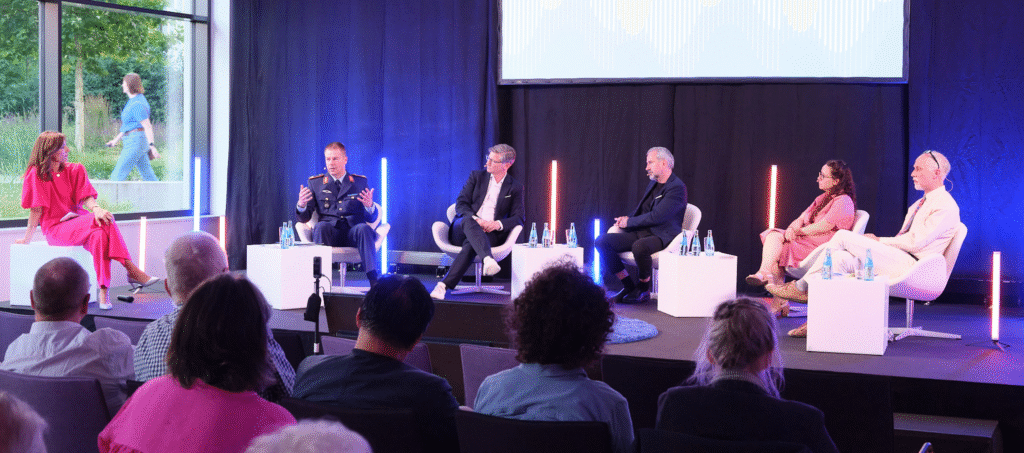
Cornelius Holtorf and Sarah May attended online a Roundtable Debate on “Transforming Heritage: Research, Policy, and Practice in Dialogue” organised by the Centre for Advanced Study inherit. heritage in transformation Humboldt-Universität Berlin, Germany (24 March 2026). The panel included Charlotte Joy, Non-Executive Director for Culture, UK National Commission for UNESCO; Marlen Meißner, Head of the Heritage, Nature, Society Department; German Commission for UNESCO; Ulrike Guérin, Head of the UNESCO “Heritage for Peace” Programme, Paris; Elke Selter, Associate Researcher, SOAS University of London; Katharina Ribbe, Multilateral Cultural Policy, Federal Foreign Office, Germany.

What do we need to know in 2050?

2026-03-26

The UNESCO Chair on Heritage Futures held a Futures Workshop for its ‘home’ Faculty of Arts and Humanities at Linnaeus University in Kalmar. For four hours, we involved cirka 70 colleagues in intensive group work and plenary discussions about knowledge in the arts and humanities in transition, asking the challenging question “What do we need to know in 2050?”.

As group leaders served Anders Högberg, Gustav Wollentz, Emily Hanscam as well as our colleagues Bodil Petersson (Dean) and Corina Löwe (Vice-Dean). The Dean and Vice-Dean emphasized that this was to be seen as the start of a process of long-term development for the Faculty.

From Conservation to Change

2026-03-19

Cornelius Holtorf presented an invited keynote lecture on “Heritage Futures: From Conservation to Change” for an audience of almost 100 students, researchers and University teachers, attending the international conference EPoCH2026 · Heritage future(s) / future heritage(s): on the threshold of change held at Católica University, Porto, Portugal. The slogan of Católica is “The University of the Future” (19 March 2026).

EPoCH is an annual scientific conference, organized by the Heritage & Conservation-Restoration Focus Area of the Centre for Science and Technology of the Arts (CITAR) of Universidade Católica Portuguesa, intended as a forum for discussions on future directions in heritage and conservation-restoration research, embracing collaborative conversations driven by emerging perspectives and the exploration of a diverse array of practices, theories, and approaches. In 2026, EPoCH was organized in connection with the Transform4Europe (T4EU) alliance and was part of the broader framework of the T4EU Sustainable Heritage Conference and T4EU Common European Heritage Week.

CLA of Cultural Heritage and Social Sustainability

2026-03-17

The team at Linnaeus University working on behalf of the Swedish National Heritage Board on a future national research agenda on sustainability spent most of the day to hold an internal futures workshop (16 March 2026).

Anders Högberg, Ulrika Söderström, Gustav Wollentz, and Cornelius Holtorf used Causal Layered Analysis to rethink cultural heritage and identify new perspectives to be taken and new questions to be asked concerning cultural heritage and social sustainability.

One underlying metaphor for cultural heritage in the future might be: “The cultural heritage of the future, we create ourselves, together.”

Inherited Futures

2026-03-13

The EU Commissioner för Intergenerational Fairness recently published a report entitled Inherited Futures. Citizens – Objects – Stories. I downloaded it here I think but it is no longer available there now (if anybody finds it please let me know).

This 200+pages-report documents the objects and stories of 150 randomly selected citizens from all 27 EU Member States who were asked what intergenerational fairness means to them.

The objects and stories they selected make intergenerational relations tangible and personal. Many of these citizens chose what reminds them of their grandparents, what they care about for the future, and/or what they choose to pass on to their children or grandchildren. As the Introduction to the report concluded, many objects are small bridges between past and future.

This collection of citizens’ objects and stories is in fact a collection of ‘heritage futures’, exemplifying how cultural heritage can manage the relations between present and future societies in people’s ordinary lives.

Heritage for Global Challenges

2026-03-06

Cornelius Holtorf visited the Leverhulme Heritage for Global Challenges Research Centre established in 2022 at the University of York, UK. All the Centre’s work “begins from the premise that there is an urgent need to develop new ways of thinking about and managing heritage.”

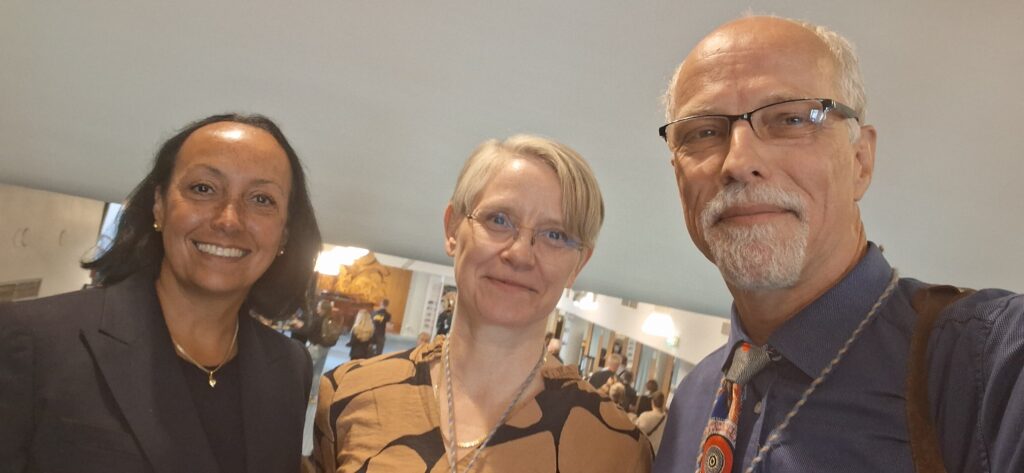
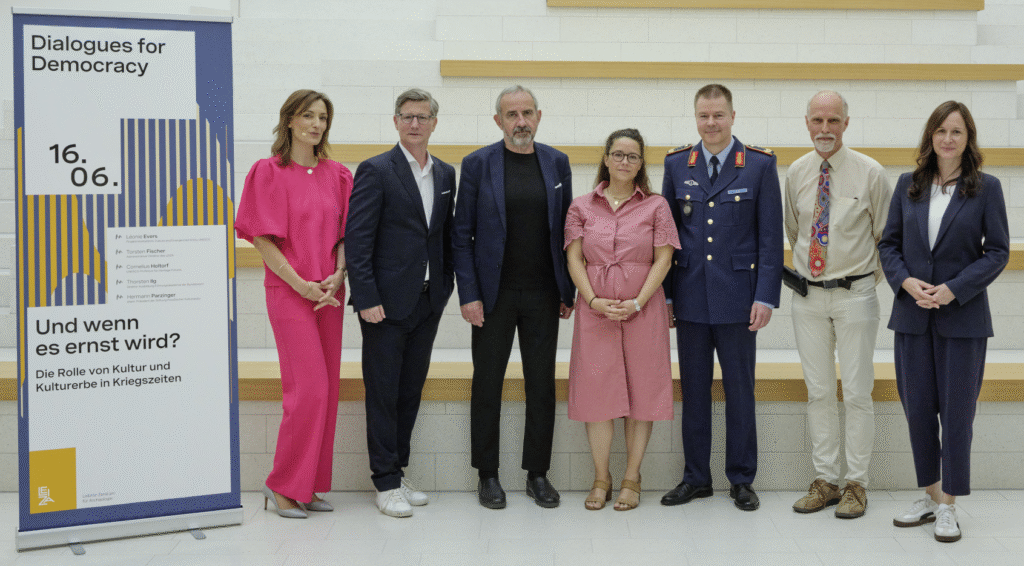
The Leverhulme Centre is housed in the historic King’s Manor building and led by Professor Emma Waterton (centre) and Dr Hayley Saul (right).

During the morning, Holtorf met 14 researchers at the Centre to discuss their ongoing research. Later gave a lecture entitled “Decolonising the Future: From Preserving Memory across Generations to Sustaining the (Re-)Generation of Memory” for a combined physical and digital audience of around 50 (5-6 March 2026).

Becoming human in the age of AI

2026-03-04

Anders Högberg published a paper in which he discusses the significance of Artificial General Intelligence in the context of human cognitive co-evolution.

ABSTRACT: This perspective article brings to focus the unpredictable trajectory of AI-human cognitive co-evolution. Challenging the notion of a fixed ‘Stone Age brain’, it emphasizes the adaptive and plastic nature of human cognition shaped by millions of years of technological engagement. Underlining the need for anticipatory thinking, it asks: What do we need to know now, to be able to recognize what people need to understand in a yet unexplored future of AI-human cognitive co-evolution? Rather than presenting empirical findings, this theoretical and exploratory piece seeks to stimulate reflection and dialog on how AI’s integration into human life may transform our notions of humanness, as AI systems are reshaping human cognition, relationships, and socio-technical practices.

Högberg asks: how might AI-human collaboration redefine future understandings of what it means to be human?

Högberg, A. 2026. Becoming human in the age of AI: cognitive co-evolutionary processes. Frontiers in Psychology, 16:1734048. doi: 10.3389/fpsyg.2025.1734048

Humanity’s Uranium

2026-02-24

Claudio Pescatore gave a research seminar for 20 staff and students at the Linnaeus University Centre for the Environment (CENWIN) in Kalmar, Sweden.

The title of his talk was “Humanity’s Uranium as a Planetary Liability – Its Chemical and Radiological Toxicity, Ecological Debt, and the Governance Gap.” Here is a 10-point summary:

  • Uranium in the Earth’s crust belongs to geology: dispersed, buffered, and governed by natural timescales.
  • Once extracted, it leaves geology and enters history — becoming part of human systems, decisions, and liabilities.
  • Less than 1% is fissioned for energy; more than 99% remains as a long-lived material stock.
  • Uranium is not consumed — it is redistributed into tailings, depleted uranium, fuels, and wastes.
  • Its decay chain regenerates over time, while the uranium parent remains essentially undepleted.
  • The hazard is therefore persistent, combining chemical mobility and radiological renewal.
  • Remediation can manage flux and exposure, but it does not erase the underlying inventory.
  • Dilution depends on finite environmental buffering capacity and cannot be a durable solution.
  • Long-term safety requires working with natural processes — containment, geochemical stability, and stewardship — rather than assuming closure against them.
  • A sustainability debate that ignores this enduring, mobilised uranium inventory rests on an incomplete material accounting.

Decolonising the future

2026-02-21

Cornelius Holtorf was invited to present the 9th Annual Heritage Lecture at the Cambridge Heritage Research Centre, University of Cambridge, UK (20 February 2026). In front of an audience of 60+ students and researchers in cultural heritage he gave a lecture on decolonising the future:

Decolonising the Future: From Preserving Memory across Generations to Sustaining the (Re-)Generation of Memory

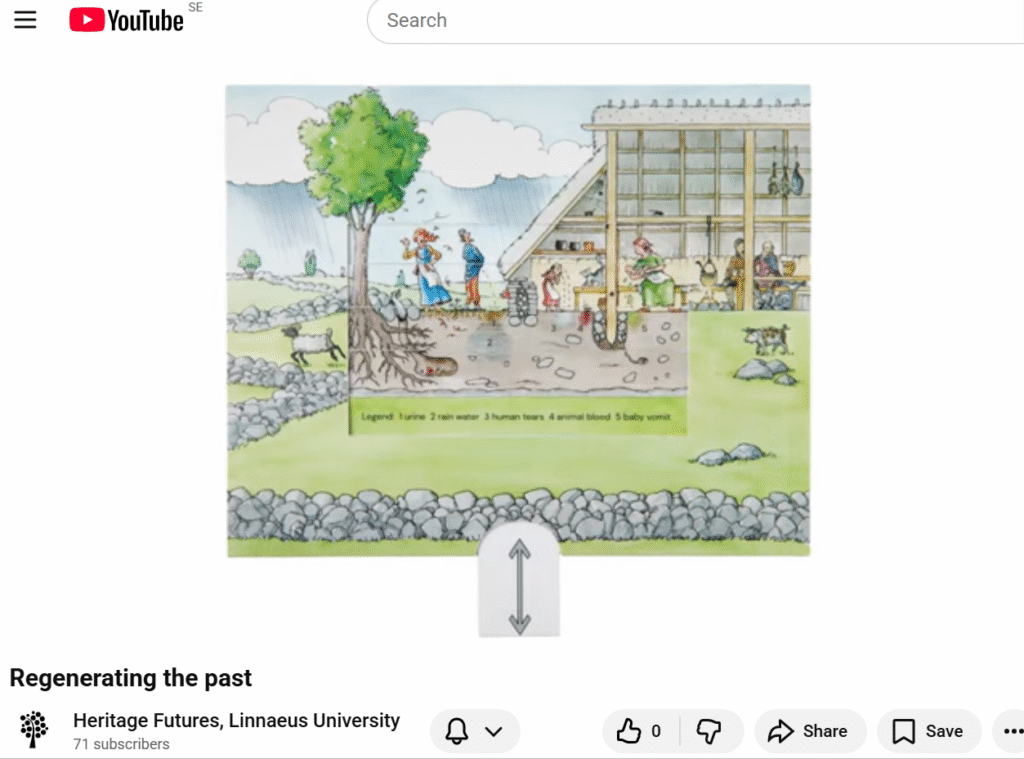
Resprouting tree in front of the Ishinomaki Kadonowaki Elementary School

The field of ‘heritage futures’ explores the roles cultural heritage plays in negotiating relations between present and future societies. In many contemporary contexts, cultural heritage is to be preserved explicitly for the benefit of future generations. Such efforts are typically grounded in the assumption that present-day values and narratives of heritage will be shared and appreciated in the future. The preservation of cultural heritage may indeed create benefits, much as a less polluted, better preserved, and more sustainable natural environment is likely to benefit those who come after us. Implicitly, we expect our preservation practices to ensure that we will be remembered as good ancestors.

Yet to what extent do the tangible and intangible legacies we leave behind constitute attempts to establish control over future human (and indeed some non-human) beings? Does heritage preservation inadvertently colonize those who will live in the future by imposing our present-day values and priorities upon them? If so, is this problematic in ways comparable to the colonisation of living peoples in the past, a legacy with which we are still grappling today? Do we therefore need to decolonize the future?

I address this challenge by asking how we might make sense of the past through memory in a world where the future is not what it used to be. Two case-studies will help me to explore what this shift may entail. Both concern forms of memory and heritage created in the present to benefit the future, and both relate to nuclear power, a domain that has long provoked existential questions about the future of humanity. First, I examine the memorialisation of the 3/11 disaster, following the major earthquake and tsunami that struck Japan’s northeastern coast in 2011 and led to the nuclear meltdowns at the Fukushima Daiichi Nuclear Power Plant. Second, I consider strategies designed to preserve awareness of nuclear waste repositories across many generations and for up to one million years.

In conclusion, I invite the audience to consider an alternative approach to heritage futures that may, in fact, reflect how memory has always functioned (because the future may never have been what it used to be). I propose moving away from present-day strategies aimed at transmitting memory unchanged across generations, towards an acceptance of continuous processes of (re-)generating memory and the changes this entails. My point is that it may not be the values we currently ascribe to heritage that endure over time, but rather the processes through which heritage is continually revalued. Can and should such a post-preservational approach contribute to decolonizing the future?

Hopemaking

2026-02-04

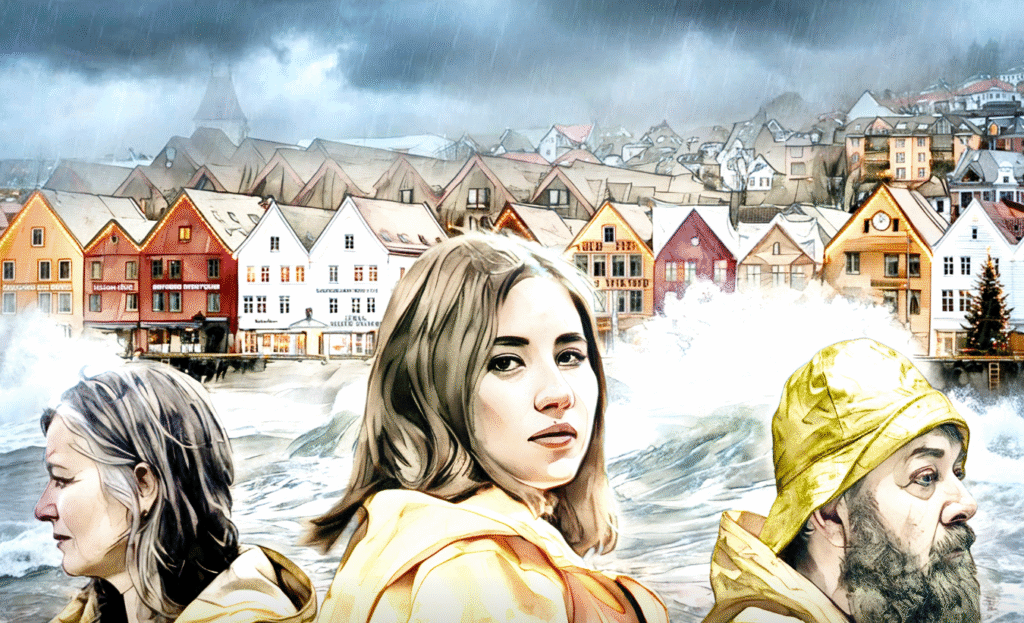
As many as four of us (Emily Hanscam, Gustav Wollentz, Marcy Rockman and Cornelius Holtorf) participated actively in a stimulating workshop in Höör (Scania, Sweden) on Hopemaking, bringing together artists, an art curator, and scholars at Linnaeus University in English Literature and us in Archaeology with different agendas exploring common ground.

The project explores hopemaking as a way of countering the paralyzing predisposition to imagine future disaster as inevitable and of nurturing alternative cultures of hope and resilience. In the project, we collaborate with three local artists and Kalmar Art Museum in the context of their exhibition entitled “Survival Kit”.


Particularly exciting was to meet the two artists behind Kultivator, Malin and Mathieu. In their experimental work, they combine art with agriculture. For our project, they are keen to contribute to hopemaking by visualizing different futures. We are very excited! 🙂