
Futures workshop at World Futures Day 2025
Postat den 4th December, 2025, 09:24 av Helena Rydén
Compiled by Helena Rydén, Assistant to the UNESCO Chair on Heritage Futures at Linnaeus University.
World Futures Day (WFD) on 2 December 2025 explored the theme “Anticipation in an Era of Volatility” at UNESCO Headquarters in Paris. One of the highlights was the afternoon futures workshop, “Crisis Preparedness and Beyond: Future-Making Through Culture and Heritage,” where Vicky Karaiskou and Cornelius Holtorf—both UNESCO Chairs—engaged a large (ca 50) and enthusiastic audience.
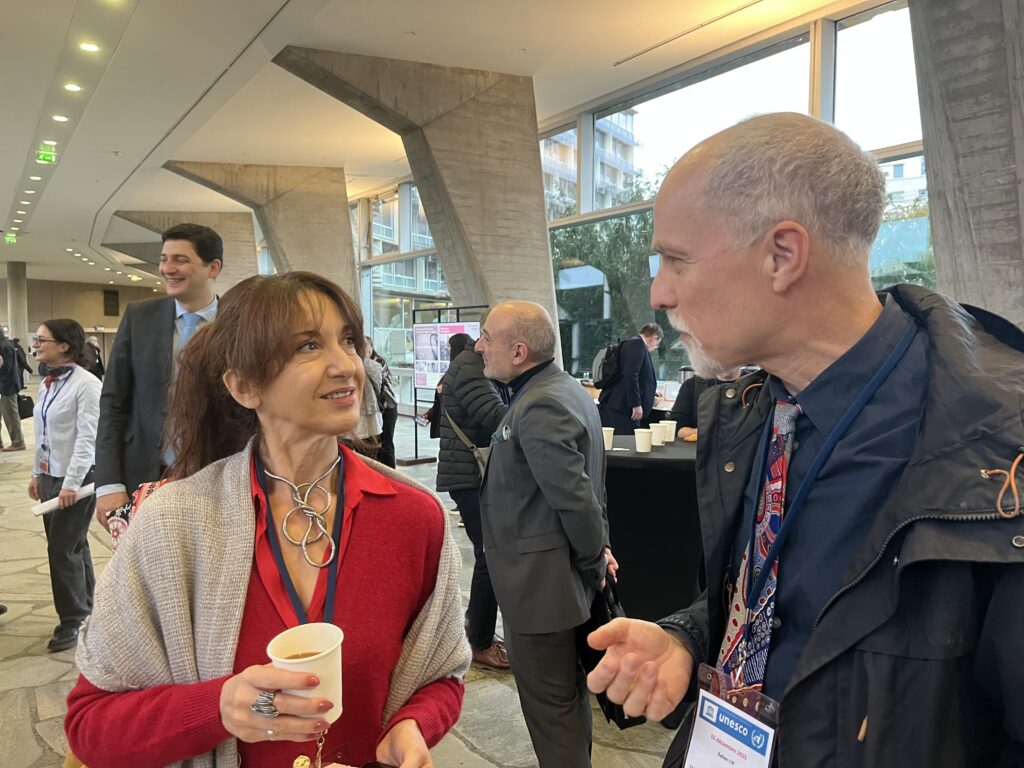
Vicky Karaiskou and Cornelius Holtorf at UNESCO HQ in Paris 2 December 2025 preparing for the afternoon session.
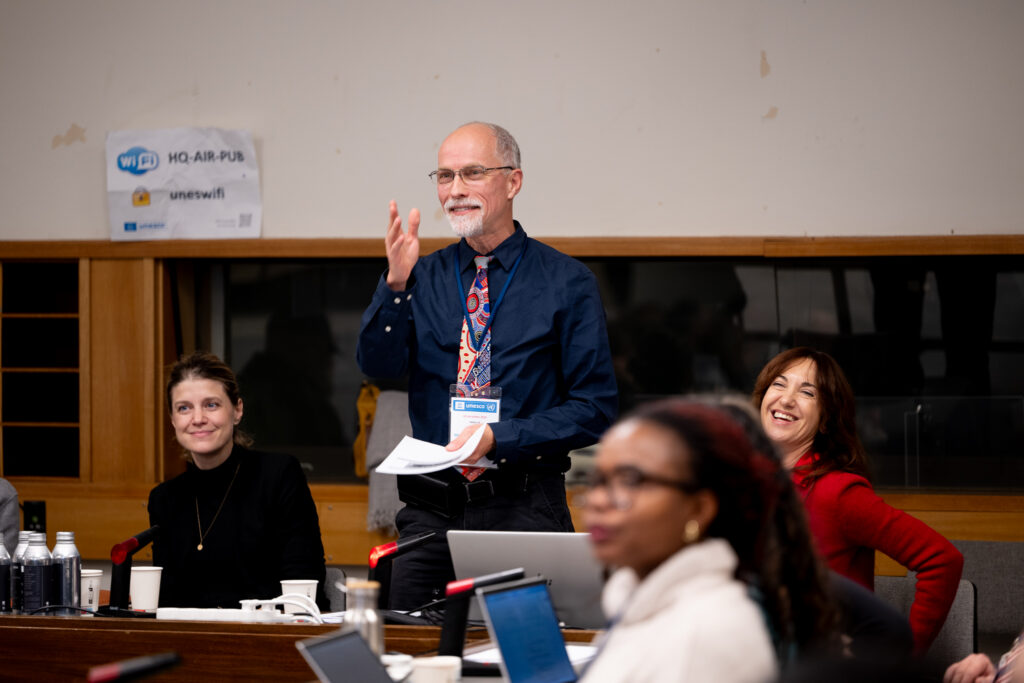
After statements by UNESCO, the European Commission and CrisisReady*, Vicky and Cornelius took the lead and guided us through the workshop. Both are deeply interested in the culture and values that shape us as human beings—Vicky focusing on the visual dimension.
Vicky Karaiskou explains: “I explore the profound implications of cultural visual narratives, shedding light on how they shape our individual and collective memory, as well as societal perceptions. Visuality examines the origins of our perceptions and assumptions because they deeply influence how we perceive the present, how we engage with the past, and how we envision the future.”
Cornelius Holtorf describes: “Heritage Futures are concerned with the roles of heritage in managing the relations between present and future societies, e.g. through anticipation, planning, and prefiguration.”
The workshop was truly engaging. We began by discussing what forms a collective identity: Who are we? How do culture and heritage make people who they are? Language, food, family and education were among the ideas raised. Next, we reflected on how our collective identities are relevant or affected in an anticipated crisis? We agreed that care—both as a human trait and as something that must be learned—was essential. Finally, we were asked to imagine future scenarios on how our collective identities could be used for crisis prevention, resolution, and recovery in the future?
The goal was to help us focus on the origins of our perspectives and assumptions, which deeply impact how we envision the future. Our group envisioned a natural disaster scenario where our collective identity, empathy, emotions, and local context were crucial for decision-making.
If the aim was to foster empathy, inspire positive change, and promote inclusiveness and social resilience for an equitable future, the workshop certainly succeeded. By envisioning the future beyond the uncertainty of the unknown, we learned how to mobilize and stimulate inspiring thinking, feeling, and acting—unlocking new ideas for creative solutions.
Several participants said this workshop was the highlight of the day, and some even asked to exchange contact details with us, expressing interest in visiting the Chairs for a period.
Want to learn more about the UNESCO Chairs?
- Vicky Karaiskou’s Chair
- Cornelius Holtorf’s Chair
*The session started with short background statements to the topic by: - Ana Videkanic, Crisis Coordination Officer, Crisis Response and Preparedness, UNESCO
- Karalyn Monteil, Head of Unit, Culture and Emergencies, Culture Sector, UNESCO
- Anne-Katrin Bock, Policy Analyst, EU Policy Lab, European Commission
- Andrew Schroeder, Co-Director, CrisisReady, and V-P, Research and Analysis for Direct Relief
Det här inlägget postades den December 4th, 2025, 09:24 och fylls under blogg