
Various activities October – December 2025
2025-12-31
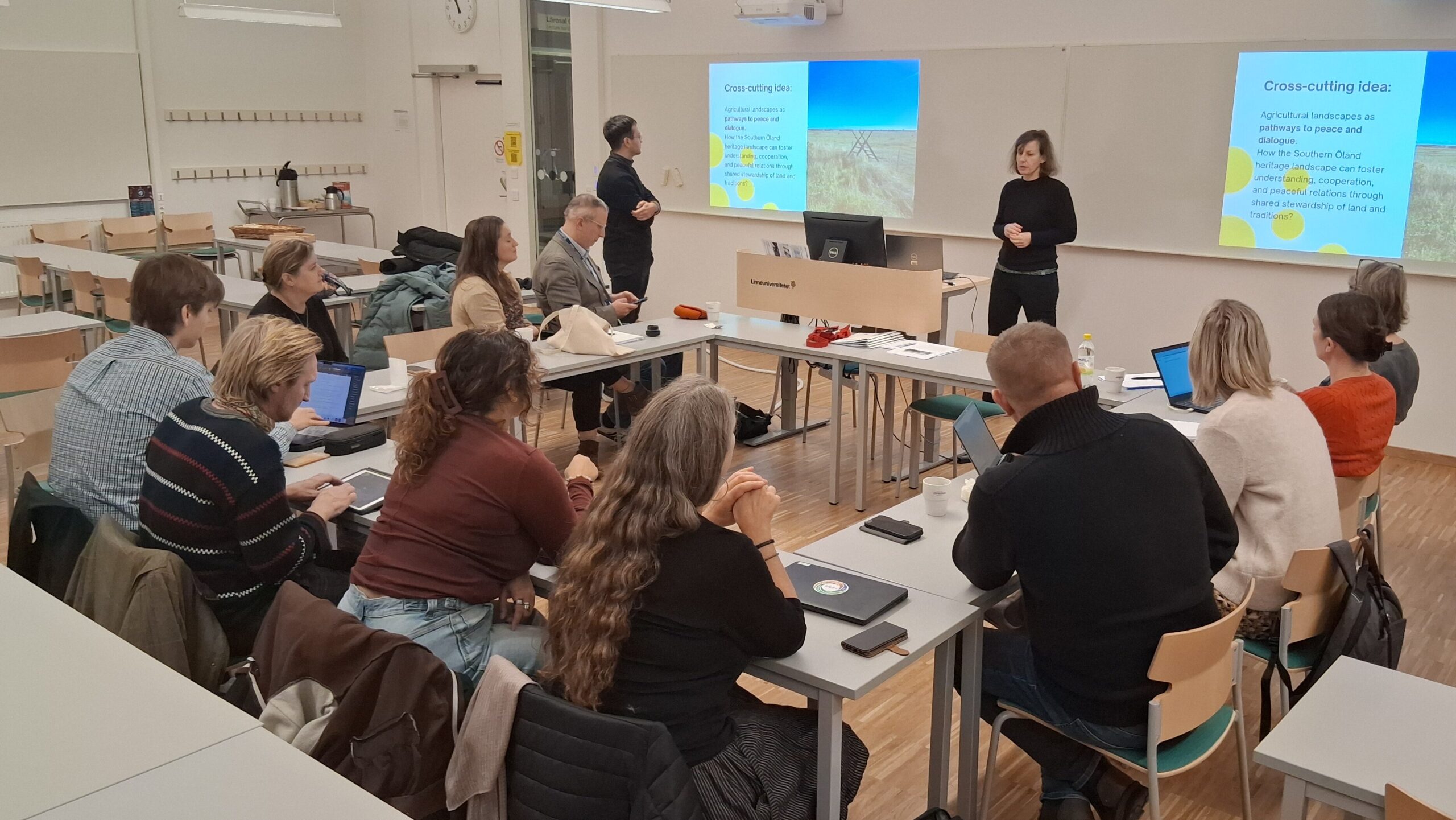
Cornelius Holtorf participated in the World Heritage Council Meeting for the World Heritage property Agricultural Landscape of Southern Öland, Mörbylånga, Sweden (3 October 2025).
Cornelius Holtorf had an informal meeting in Yokohama with Noboru Takamura, Director of The Great East Japan Earthquake and Nuclear Disaster Memorial Museum, Futaba, Fukushima Prefecture, Japan, to discuss heritage futures in the narrative of the museum (8 October 2025).
Cornelius Holtorf had an informal meeting in Yokohama with Tatsuyoshi Saijo, Kyoto University of Advanced Science, to discuss his concept and practice of Future Design and how it relates both to heritage futures and to futures literacy (8 October 2025).
Cornelius Holtorf took part in the annual meeting of the Academic Advisory Board of the Leibniz Centre for Archaeology (LEIZA) in Mainz, Germany. He also chaired a meeting about a joint book project of the Board (15-17 October 2025).
Cornelius Holtorf contributed ideas about “The power of culture to advance intergenerational fairness” to the EU Citizens’ Engagement Platform informing policy-making on Intergenerational Fairness (25 October 2025). See https://citizens.ec.europa.eu/participation/processes/intergenerational-fairness/f/134/proposals/26071 .
Anders Högberg and Cornelius Holtorf started a course at Linnaeus University on Futures Literacy for Humanities Research (4.5 HEC) for nine research students from various Swedish Universities including Uppsala University, Malmö University and Linnaeus University. The introductory day on 27 October 2025 featured, among others, two lectures on aspects of heritage futures and futures literacy. The remainder of the course included supervision and a final seminar where the students’ work was presented and discussed.
Cornelius Holtorf lectured for three hours on “Cultural and heritage tourism – making choices for the future” for ten mostly international students taking the advanced-level course on Tourism and Sustainability in the Anthropocene 15 hec in Tourism and Recreation Studies at Linnaeus University, Kalmar (28 October 2025).
Cornelius Holtorf had an informal meeting with representatives of the Salama bint Hamdan Al Nahyan Foundation in Abu Dhabi about a new project they are developing in “Emirati Futurism”, a distinct way for shaping the future involving the arts, culture and heritage (29 October 2025).
Cornelius Holtorf had an informal meeting about Future Archaeology with Robert Duffley, Caitlin Nasema Cassidy and Helene Larsson Pousette in relation to a project entitled “Ungovernable” they are developing at Linnaeus University (30 October 2025).
Cornelius Holtorf lectured for two hours on “Background for Fieldwork on tourism in southern Öland” for twelve mostly international students taking the advanced-level course on Tourism and Sustainability in the Anthropocene 15 hec in Tourism and Recreation Studies at Linnaeus University, Kalmar (30 October 2025).
Cornelius Holtorf gave an invited online lecture entitled “Heritage Futures – what it is and why it matters” for MA and Doctoral students as well as researchers at the Centre for Heritage Revitalization and Sustainable Tourism Development linked to the UNESCO Chair on Sustainable Tourism in UNESCO Designated Sites at Fudan University, Shanghai, China (31 October 2025).
Cornelius Holtorf had an informal meeting with Rune Bjerkestrand and Bendik Bryde of the Arctic World Archive Foundation in Norway (3 November 2025). With their origins in the tech company Piql, their mission is to “preserve the world’s memory — securely, sustainably and freely accessible to all for generations to come.”
Cornelius Holtorf discussed informally future collaboration at the interface of heritage futures and cultural tourism with Professor Chaozhi Zhang, Chairholder of the UNESCO Chair on Sustainable Tourism in UNESCO Designated Sites at Fudan University, Shanghai, China (4 November 2025).
Cornelius Holtorf presented an invited lecture on “Towards a Future Agenda for the Decorated Farmhouses of Hälsingland” for around 90 local and regional participated at the annual Knowledge Day for the Word Heritage property Decorated Farmhouses of Hälsingland 2025, Bollnäs, Sweden (5 November 2025).
Cornelius Holtorf presented an invited Inspirational Lecture on “Applying archaeology to solving challenges of present and future society: the significance of intersectoral collaboration and interdisciplinary methodologies” for cirka 80 Doctoral students and their supervisors from various disciplines and many Swedish Universities during the first Jubilee Doctoral Students network meeting of the Knowledge Foundation in Stockholm, Sweden (6 November 2025).
Cornelius Holtorf gave an invited online lecture for 20+ Japanese researchers entitled “Heritage Futures – what it is and why it matters” as the Canon Institute for Global Studies Future Design Workshop #88, hosted by the Future Design Research Center, Kyoto University of Advanced Science, Kyoto, Japan (7 November 2025).
Cornelius Holtorf had an online meeting with Sofia Wikelid, researcher for Swedish Television’s planned programme on The Future in Sweden (11 November 2025).
Cornelius Holtorf gave a talk entitled “From Loss and Damage to Offering Solutions for the Future” at the Centre for Climate Science and Policy Research, University of Linköping (13 November 2025).
Anders Högberg svarade på en Remiss om förslag till aktualiserad kulturmiljöstrategi för Kronobergs län 2026–2030 – Kulturmiljöer i en föränderlig tid (14 November 2025).
Cornelius Holtorf and Anders Högberg contributed to Linnaeus University’s Remisssvar till Strålsäkerhetsmyndigheten concerning SKB’s Fud-research program for 2025 (14 November 2025).
Cornelius Holtorf hosted a guest lecture on “Mind the Gap” by Vicky Karaiskou, Chairholder, UNESCO Chair on Visual Anticipation and Futures Literacy towards Visual Literacy, Open University of Cyprus, in the context of a Doctoral Course at the Faculty of Arts and Humanities on Futures Literacy for Humanities Research, held (18 November 2025).
Cornelius Holtorf ran a Heritage Futures Workshop at a conference on Charting New Horizons for Education for Sustainable Development, organized by VolkswagenStiftung, German Commission for UNESCO and German Rectors’ Conference in Hannover, Germany (20 November 2025).
Cornelius Holtorf was invited to the Cultural Heritage Forum 2025 of the Cultural Heritage Academy to attend an afternoon at the University of Gothenburg dedicated to a discussion of the cultural canon for Sweden. He presented a talk entitled “Future canon – from historical to future-oriented frames of reference” and participated in a panel with, among others, Lars Trägårdh who had led the government’s Commission to suggest the content of such a cultural canon for Sweden (27 November 2025).
Cornelius Holtorf had an informal meeting on “past-futuring” with Sophia Labadi, Professor of Cultural Heritage at the University of Kent, in Paris, France (1 December 2025).
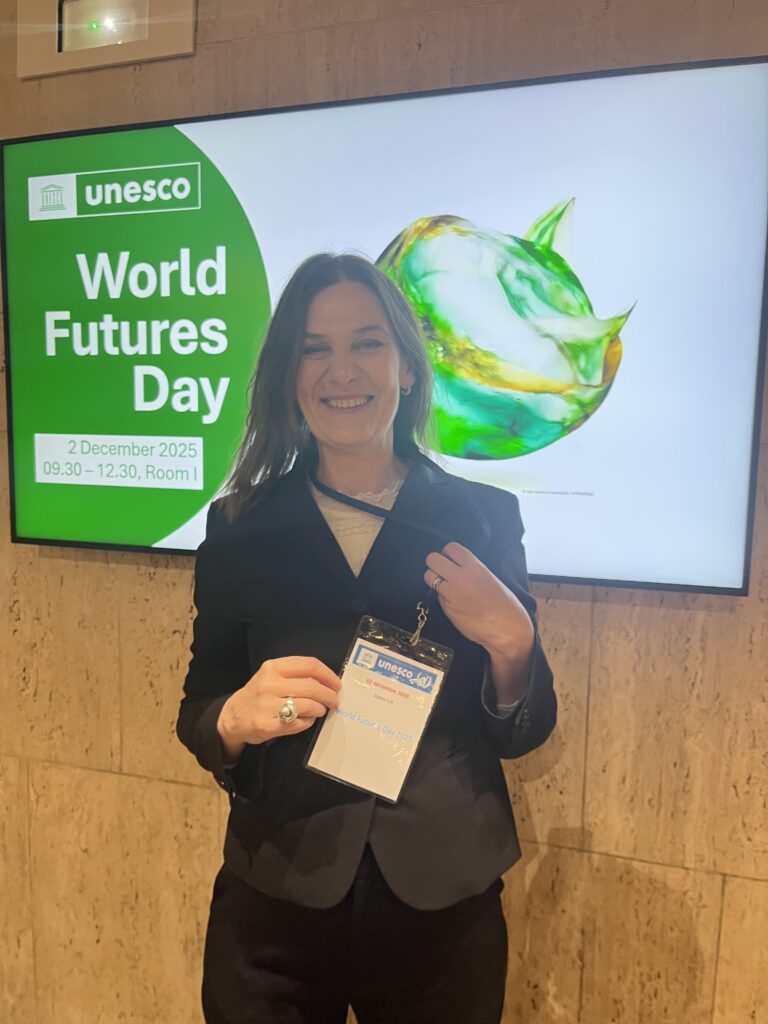
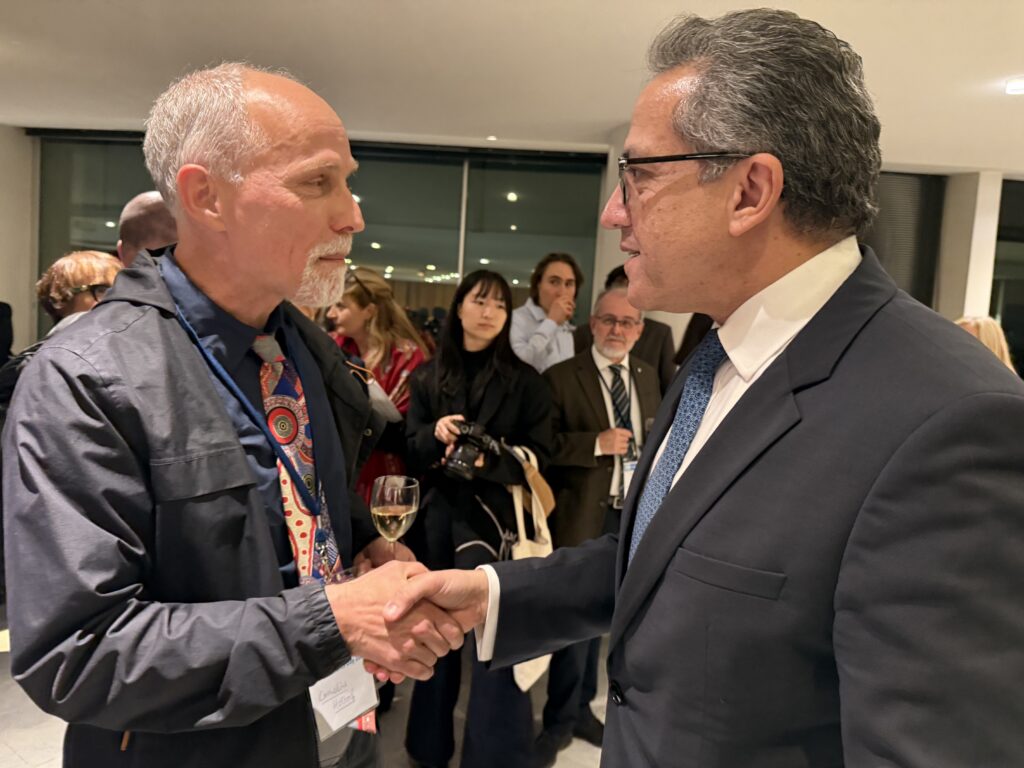
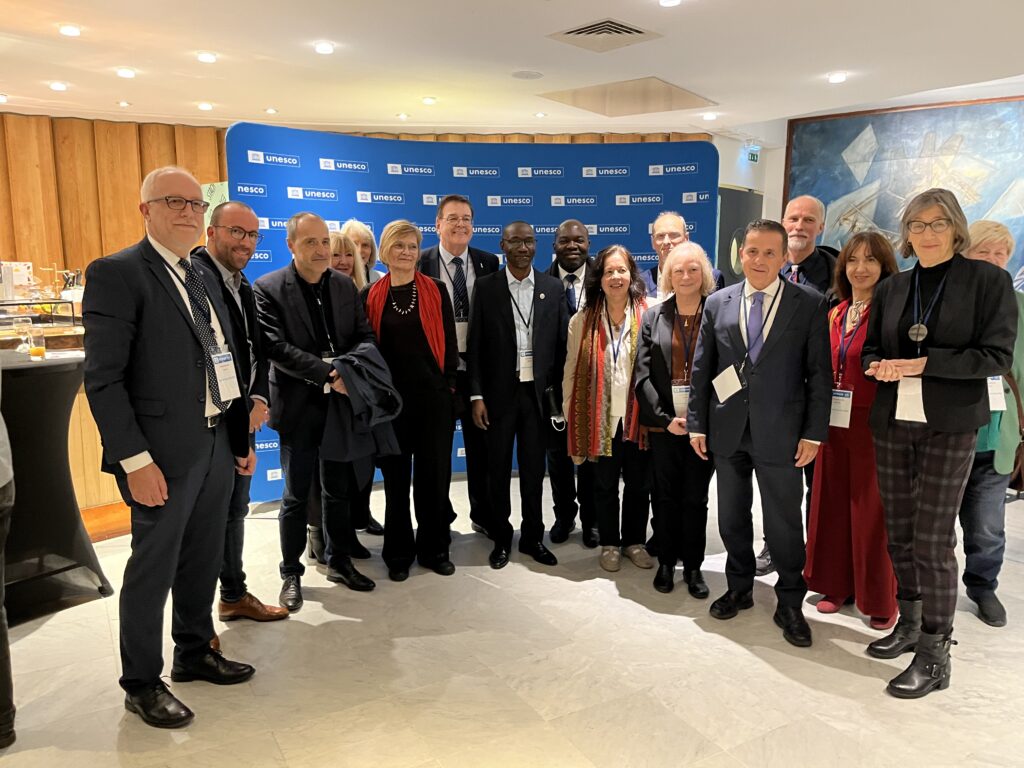
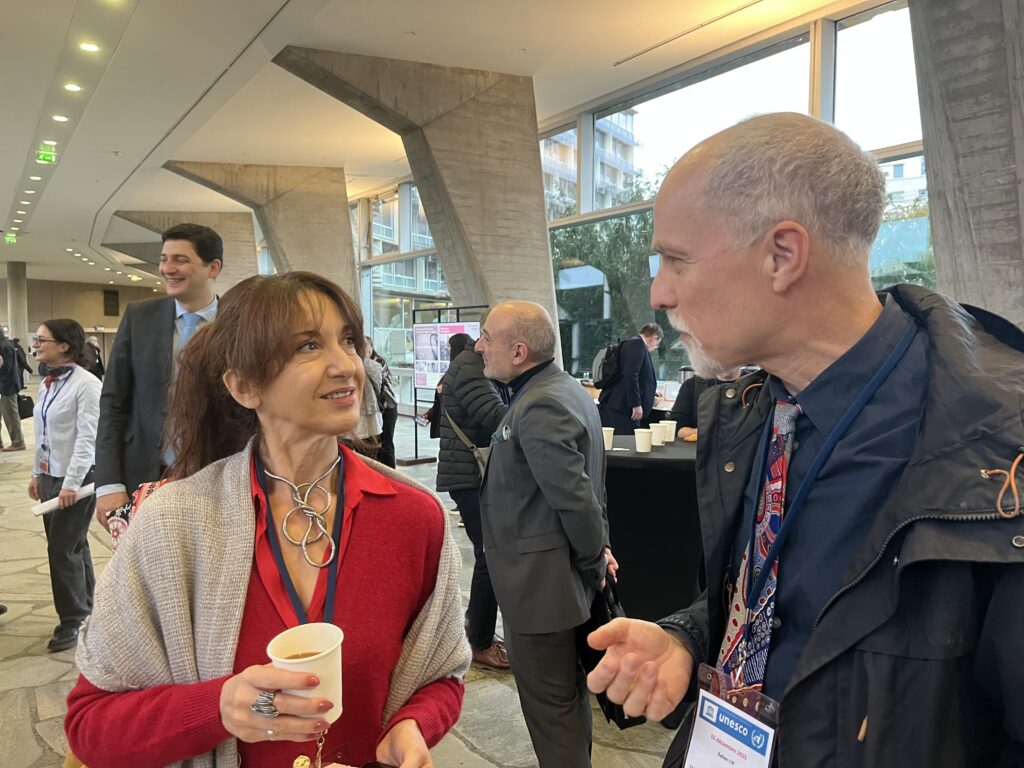
During World Futures Day (2 December 2025) at UNESCO Headquarters in Paris, France, Cornelius Holtorf had informal conversations with, among others, Clare Stark, Head of Unit for Foresight and Futures Literacy, SSH; Keith Holmes, Research Coordinator UNITWIN, Education; Maya Prince, UNESCO Chairs manager, Education; Karalyn Monteil, Head of Unit, Culture and Emergencies, Culture; Irakli Khodeli, new Head of Department, UNESCO MOST, SSH; Khaled El-Enany, new Director General for UNESCO.
Cornelius Holtorf submitted comments on the draft version of the ICOMOS International Charter for the Conservation of Earthen Architectural Heritage (10 December 2025).
Cornelius Holtorf participated in the Long-term Governance Network Meeting about ‘Long-term governance and wellbeing economics’ arranged by the School of International Futures (SOIF), featuring Katherine Trebek, Australia (political economist, writer and advocate for economic system change), Gareth Hughes, New Zealand (Wellbeing Economy Alliance Aotearoa), and Mads Falkenfleth, Denmark (Wellbeing Economy Lab) (11 December 2025).

[…] The new funding for this and a number of additional smaller projects, means that the Climate Heritage Network is…
[…] Chair on Heritage Futures « Culture, cultural heritage and COP26 […]
[…] mer på Unescoprofessurens blogg http://blogg.lnu.se/unesco/?p=1061 Besök Öland 2050! […]