
The Future of the Past: War and Heritage at Golestan Palace
Postat den 11th March, 2026, 13:21 av Helena Rydén
by Leila Papoli-Yazdi
Golestan Palace, a UNESCO World Heritage site, was severely damaged on 2 March 2026 during the USA–Israel war against Iran. According to Khabaronline (2026), portable artefacts had been transferred to storage during the twelve-day war in June, and only the buildings themselves were affected by the explosions. The palace dates back to the fifteenth century and includes several buildings, gardens, exhibition halls, and galleries. It was used and developed mainly during the Safavid (1501–1736) and Qajar (1789–1925) dynasties, and was added to the UNESCO World Heritage List in 2013. It remains the only UNESCO-registered site in the capital city of Iran.
One of the most significant aspects of the palace is its vast archive, which includes more than 60,000 historical photographs, 9000 negatives and videos, and around 1,520 albums. For many years, independent scholars, researchers who do not work for the Iranian state, had great difficulty accessing this archive. In June 2024, however, an anonymous individual or group uploaded part of the photographic collection online (about 3200 photos). Their identity has never been revealed, and it remains unclear how they were able to access, digitize, and publish the albums in the public domain.
When the archive became available, I began to reflect on why access to these materials had been so restricted. The albums contain hundreds of photographs from the late nineteenth century, particularly images from the court and the harem of Naser al-Din Shah Qajar (1831–1896) and his many wives. These photographs reveal social norms or communities that the Islamic Republic has long denied or labeled as “westernized”: enslaved people, men holding hands, same-sex lovers, the king’s wives posing semi-nude before his camera, and a society far more complex and diverse than the homogenized image of the past promoted by the state.
Among these albums, one is especially important for understanding the concept of heritage in modern Iran: Album 137. I first learned about this album in 2011 after one of my students (S.) told me she had encountered it in Golestan Palace while she was there for another reason. She mentioned that the album contained photographs related to the archaeological excavations at Susa.
Maryam Dezhamkhooy, S., and I went to the palace to search for it. By chance, we met Dr. Chahriar Adl (1944-2015), an Iranian archaeologist, there. He kindly helped us obtain permission to make copies of the photographs. This was something that would have been nearly impossible without his support.
These photographs were later made public together with the rest of the archive. Album 137 contains 27 photographs related to the excavations at Susa led by Jean-Jacques de Morgan (1857–1924). According to the album’s description page, the photographs were taken in 1899–1900 (1317 A.H.) by a man named Heidar Milani while he was passing through Susa on his return mission from the southwestern province of Iran (Arabestan at the time and now, Khouzestan). In his note, Milani uses the phrase hasab-al amr-e al-a’laa, indicating that he took the photographs following an order from a higher political authority.
People consisting of de Morgan (Figure 2), his assistant (Figure 3), and workers (Figure 4) appear in eleven of the photographs, offering a rare glimpse of how he conducted his excavations. De Morgan, originally a geologist, used mining techniques to excavate archaeological sites and caused considerable damage to sites in Iran and Egypt, such as Susa. He dug a large tunnel through the main mound at Susa and destroyed the archaeological layers, made big holes that compromised the preservation of the site very difficult till now. Milani’s captions note that the workers visible in the photographs were indigenous Arab inhabitants of the region.
Another revealing detail appears on the cover of the album: a note written by a retired Iranian archaeologist who, after the 1979 revolution, had been responsible for overseeing archaeological institutions (Papoli-Yazdi, 2023). The note is dated 10 April 2011 and records that three other members of the Iranian Cultural Heritage Organization and the University of Tehran accompanied him on his visit (which indicates the importance and formality of the visit).
In the photographs where de Morgan appears, he is always positioned at the center. The large groups of local workers surrounding him remain anonymous through the photographer’s lens, or their bodies are only used as a scale to promote the size of an archaeological finding (Figure 5).
French missionaries, antiquarians, and archaeologists played a crucial role in shaping the modern idea of the identity of Iranians as a nation-state in the late nineteenth and early twentieth centuries. They transformed a largely mythical past into one defined by monuments and archaeological sites such as Susa, without considering the narratives of local communities and indigenous researchers.
During the past century, heritage in Iran has repeatedly been at the center of tensions between state power and nationalist narratives. At times, these two forces have overlapped, jointly marginalizing the perspectives of indigenous communities as well as those of independent researchers. Yet there has always been a third force, colonialism, one whose influence is often denied by both the state and nationalist discourse. Iranian nationalism frequently frames the country’s heritage as exceptional and uniquely its own, leaving little room to acknowledge external structures of power.
Today, however, the role of colonialism is bolder. The buildings of Golestan Palace have been damaged by explosions for the first time in their long history, despite standing in the center of a city that has endured Russian imperial influence, revolutions, coups, invasion by Allies, and two world wars.
However, Golestan Palace is not merely a collection of buildings. It also houses one of the largest historical archives in the world, whose preservation ensures the possibility of recovering at least part of the past, which has been mainly written by the states and colonizers; the preservation of this archive allows the denied and ignored heritage and past to be reinterpreted, re-narrated, and rewritten in the future. The destruction of Golestan Palace will transform the future of the past.
This destruction raises new questions about the future of the palace and its archive, as well as the future of archaeological narratives and the history of the heritage idea in Iran. Where is the archive? Is it possible that authorities/colonizers destroy unwanted parts of it? Will independent researchers be able to access the materials of Golestan Palace in the future? Or will the next political order conceal, reinterpret, or selectively reveal them in order to shape a new narrative in the future about Iran’s heritage and the history of archaeology within the country?
Leila Papoli-Yazdi
Archaeologist of the contemporary past and Garbologist and member of the UNESCO Chair on Heritage Futures
leila.papoli-yazdi@garbonomix.com
References:
Khabaraonline (2nd March 2026) Golestan Palace damaged in airstrike. https://www.khabaronline.ir/ (in Persian)
Papoli-Yazdi, L. (2023) Confessions of a Green Notebook: Reading Unpublished Documents About the Oppression of Iranian Archaeology Professors During the 1980s. Archaeologies. https://doi.org/10.1007/s11759-022-09468-9
Captions:
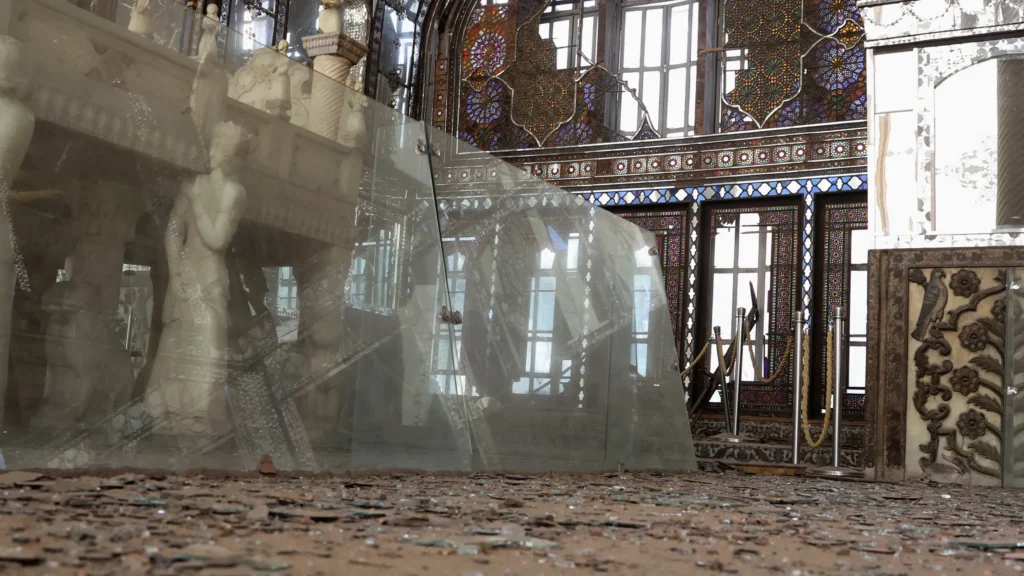
Figure 1- Debris at the historical monument Golestan Palace after it was damaged in an Israeli and U.S. strike, amid the U.S.-Israeli conflict with Iran, in Tehran, Iran, March 3, 2026. Photographer: Majid Asgaripour
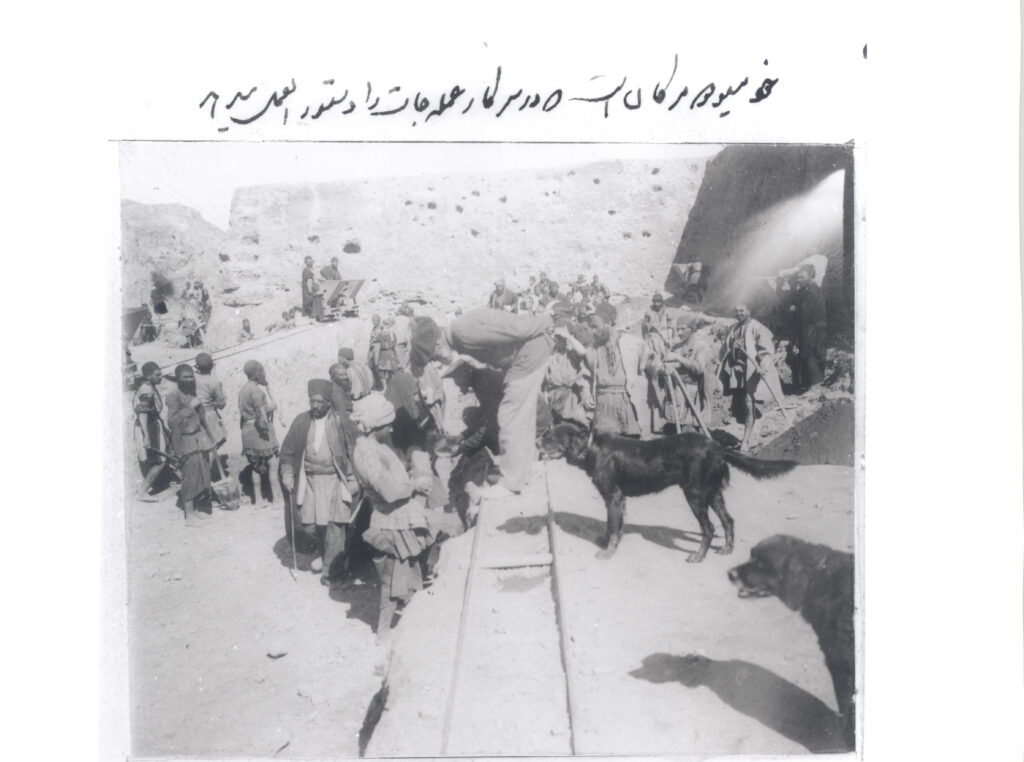
Figure 2 – The caption reads: “Monsieur de Morgan, himself giving instructions to the workers” (photo 137-7-1, from Album 137). Photographer: Heidar Milani.
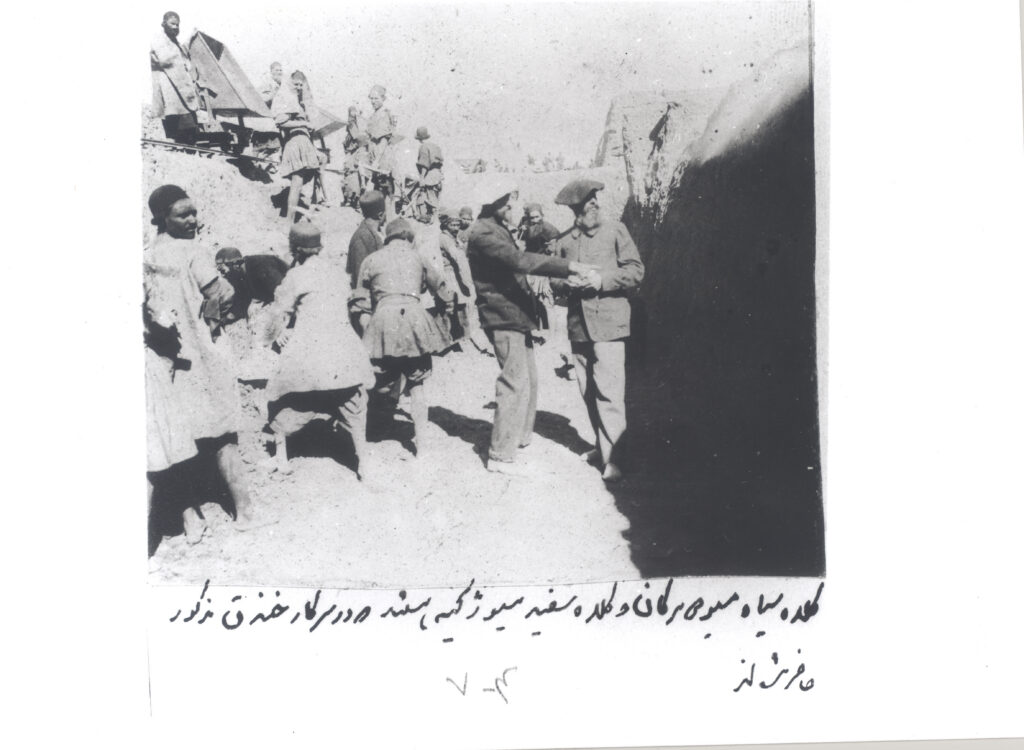
Figure 3 – The caption reads: “The man with the black hat is Monsieur de Morgan, and the man with the white hat is Monsieur Jacquier (?), present at the work taking place in the mentioned ditch” (photo 137-7-4, Album 137). Photographer: Heidar Milani.
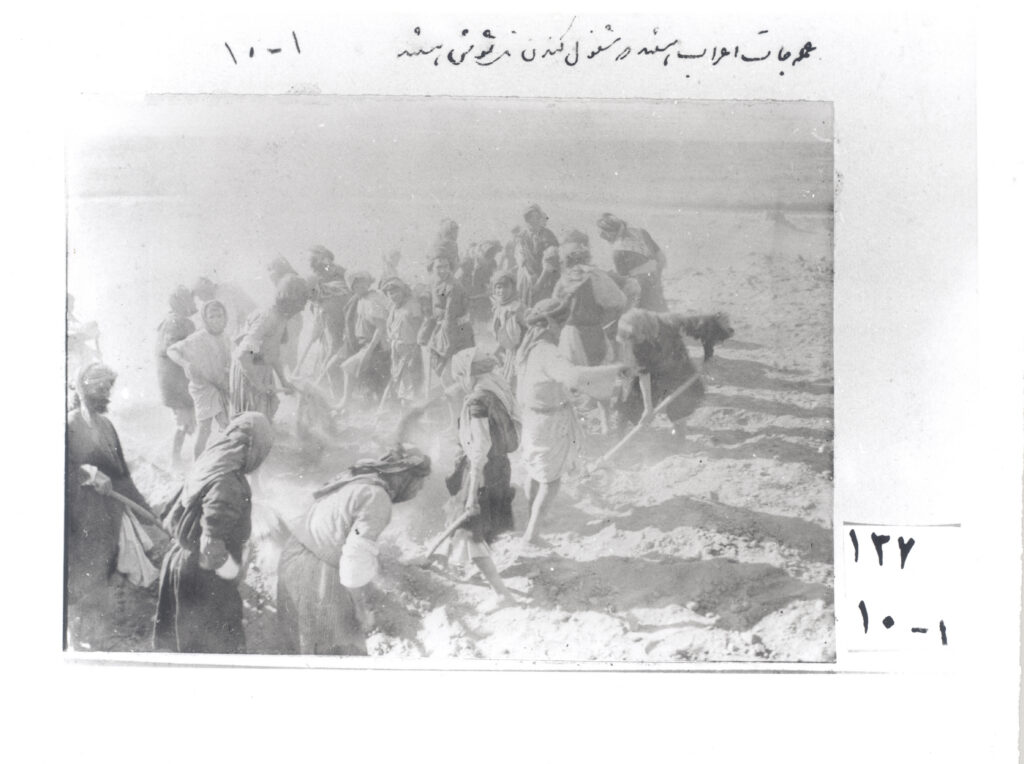
Figure 4 – The caption reads: “Arab workers digging the mentioned ditch” (photo 137-10-1, from Album 137). Photographer: Heidar Milani.
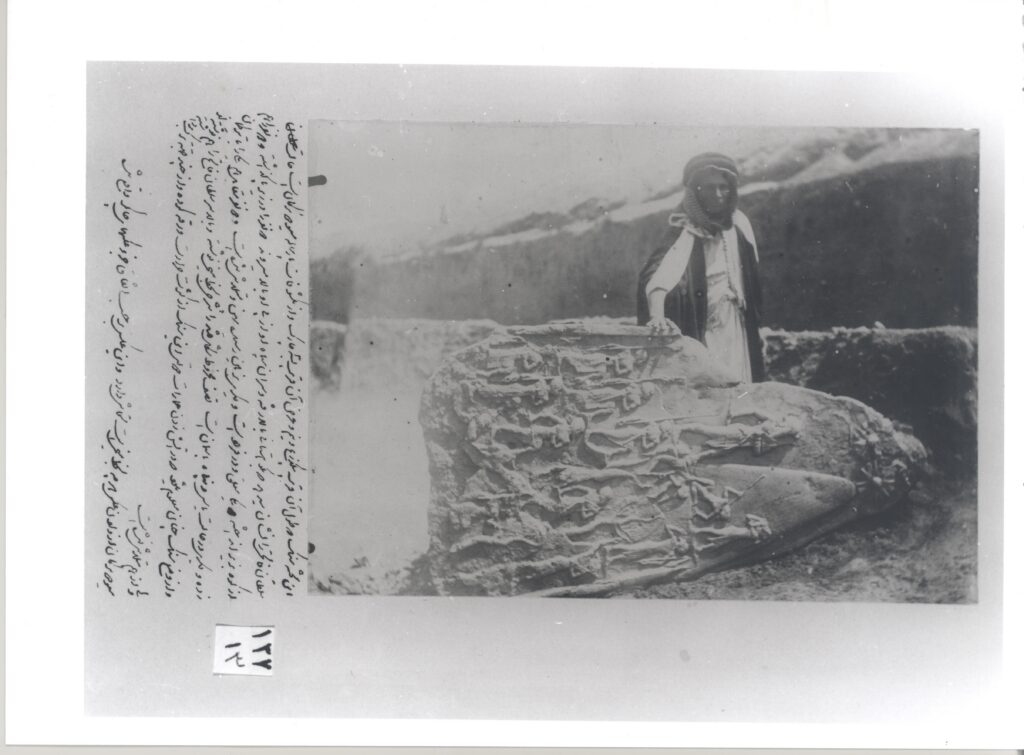
Figure 5- Victory of Naram-Sin over the mountain tribe of the Lullubi and their king Satuni, Louvre. The caption describes the scene of the stele (photo 137-13, from Album 137). Photographer: Heidar Milani.
Det här inlägget postades den March 11th, 2026, 13:21 och fylls under blogg