UNESCO

Chair on Heritage Futures

Exploring Visual Literacy – Imag(in)ing

2023-03-30

After starting off the spring semester at the University, it was time for a Visual Literacy Workshop on Imag(in)ing the Future, run by Vicky Karaiskou, UNESCO Chair on Visual Anticipation and Futures Literacy, based at the Open University of Cyprus.

Vicky asked us to send her an image of the future before the workshop.

I did not know the purpose, was it to fire us all up before the workshop? Was I expected to talk about the image I had chosen? I decided to dive into the workshop with open eyes. I mean, what can go wrong?

We met on zoom on 13 March, almost all members of the Chair and some invited students and researchers. After some introductions, Vicky introduced us to the workshop.

Each of us presented one or two images of what the future meant to us. This was so interesting! So many different views, some about crossroads, some urban environments, some landscapes, and water, even cartoons and illustrations from children’s literature were there.

Vicky: You wake up in 2123. You have only one question you can ask to make sense of that strange world around you. Τhe question can only be answered with ‘yes’ or ‘no’. What would you ask? — Many of us asked basic questions like what I can eat, where is the toilet but questions of language, are we still human, which planet are we on, were also raised.

Vicky: Depict how you predict 2123 will look. Observe what is around you: how is the environment? How do cities & buildings look; what institutions exist; what about social relationships; behaviours; people’s looks; works; activities (what people do); values; ideologies; dominant trends? — This part of the workshop made us realize that we all have different expectations about the future, some negative, some positive.

When we had come this far in the workshop, I realized what we were doing. Vicky asked us to explore our underlying assumptions and emotions! The idea was to make us question and investigate these assumptions and emotions through the images and understand how the assumptions and emotions affect us.

At the end, we were asked to create a new question about the future starting with What if…? The questions were humble and included approaching other audiences, working globally, and expressing future visions through art. Before finishing the workshop, we were all asked to complete individually a sentence which started with the words: “In 2123, the future will mean…”.

The aim of the workshop was to open up new ideas. It certainly did!

After finishing, Vicky sent all of us a summary of our individual contributions. Her Chair partner, Sebastian Plate, used AI to summarize our contributions. Based on the answer to the last question and the input during the workshop, he made the AI capture this on my contribution:
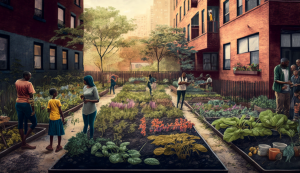
Workshop Visual Literacy

Thank you, Vicky, for opening my eyes and for a creative workshop!

Helena Rydén, Assistant to the UNESCO Chair on Heritage Futures

ChatGPT missar kulturarvets komplexitet

“Framtidens teknologi sitter inne med gammal kunskap. När chattroboten ChatGPT fick frågor om vad kulturarv är och varför det är viktigt, gav den svar som inte inkluderar nya forskningsresultat.” Det skriver Anders Högberg, professor i arkeologi och medlem i forskningsteamet kring Unescoprofessuren vid Linnéuniversitetet. Läs artikeln i Magasin K*:

ChatGPT missar kulturarvets komplexitet | Magasin K


Anders Högberg

Anders Högberg, Professor of Archaeology UNESCO Chair on Heritage Futures

* Magasin K är en digital tidning för den som jobbar, studerar eller är intresserad av branscherna kultur, kommunikation och kreativ sektor.

How can we engage with temporal interculturalities?

2022-12-07

Cornelius Holtorf organized and chaired a roundtable entitled “How can we engage with temporal interculturalities?” attended by an audience of 30+ participating in the Bi-annual conference of the Association of Critical Heritage Studies held at Pontificia Universidad Católica de Chile in Santiago de Chile (5 Dec 2022).

https://www.achs2022santiago.com/web/wp-content/uploads/2022/12/Round-Table-2.pdf

Bi-annual conference of the Association of Critical Heritage Studies held at Pontificia Universidad Católica de Chile in Santiago de Chile (5 Dec 2022)

Bi-annual conference of the Association of Critical Heritage Studies held at Pontificia Universidad Católica de Chile in Santiago de Chile (5 Dec 2022)

Speakers: Qian Gao, Sarah May, Luz Endere, Dante Angelo

Coordinator: Cornelius Holtorf
Bi-annual conference of the Association of Critical Heritage Studies held at Pontificia Universidad Católica de Chile in Santiago de Chile (5 Dec 2022)

World Futures Day 2 December 2022

2022-12-02

Let the future begin today – the importance of futures literacy is highlighted on the new international day “World Futures Day”

Today, December 2, the international day “World Futures Day” is celebrated for the first time. The day has been instituted by UNESCO to draw attention to an area that is growing in importance – futures literacy. Read the interview with Cornelius Holtorf (In Swedish) at the website of the Swedish National Commission of UNESCO here

Follow us for FREE resources on enhancing futures thinking & futures literacy in the heritage sector.

@UnescoChairLNU
youtube.com/@HeritageFutures

UNESCO Chair Symposium

2022-11-24

On 24 November, Anders Högberg, Professor of Archaeology and member of the UNESCO Chair on Heritage Futures, represented our Chair in a Global Symposium arranged by Ted Fuller at the UNESCO Chair on Responsible Foresight for Sustainable Development at University of Lincoln. The symposium was arranged ahead of UNESCO World Futures Day 2022.

Presentations were made by researchers from all over the world, dealing with aspects on social entrepreneurship, sustainability and futures literacy. It was interesting to see researchers from various academic disciplines can coming together to discuss future related topics.

Anders Högberg

Anders Högberg, Professor of Archaeology UNESCO Chair on Heritage Futures

EU´s heritage work and policies

2022-11-16

Anders Högberg participated at “Höstmötet”, an annual conference arranged by the Swedish National Heritage Board https://www.raa.se/evenemang-och-upplevelser/hostmotet/program/

Anders was invited to present and discuss at a workshop on EU´s heritage work and policies and how it can change to accommodate new knowledge and actions needed for future social sustainability.

Anders Högberg

Anders Högberg, Professor of Archaeology, UNESCO Chair on Heritage Futures

Progress Report 09/2021-08/2022

2022-11-15

A new report covers the fifth year of the UNESCO Chair on Heritage Futures at Linnaeus University. Among the highlights of the year were several global initiatives to which our Chair could contribute with a distinctive perspective on heritage futures. The Chair’s membership of the Climate Heritage Network provides an important context for some of this work.

Among others, Cornelius Holtorf has been advising a Pilot Foresight Study of the International Centre for the Study of the Preservation and Restoration of Cultural Property (ICCROM). As foresight and cultural heritage are now more frequently being discussed it is of great importance that we can explain clearly the significance of heritage futures – which is what the team behind the Chair has been working with in a new animation.

Animation: What are Heritage Futures and why do they matter?

Animation: What are Heritage Futures and why do they matter?
The basic idea is explained for everybody in this animation. Understand why futures thinking matters for cultural heritage management (2 min, English with subtitles, 2022). Available on the Chair’s YouTube channel: ‘Heritage Futures’ youtube.com/@HeritageFutures

Please get in touch if you have any comments or suggestions!

View the Report (issuu)
Download the Report

Team of the UNESCO Chair on Heritage Futures

Team of the UNESCO Chair on Heritage Futures

Workshop: Inclusion and diversity in the heritage field – developing participatory approaches for the future

2022-09-30

Monday 26 September Anders Högberg was involved in arranging a workshop in Kalmar. At a well visited event (c. 25 persons) with students from Archaeology and Heritage Studies and also Leila Papoli-Yazdi and Emily Hanscam from the Heritage Futures chair in the audience, aspects of ´Inclusion and diversity in the heritage field’ was discussed. Sarah May presented on ‘Heritage, negotiating change, negotiating power’ and Cornelius Holtorf presented on the theme ‘From diversity to variation: human identity reconsidered’.

The intellectual set-up for the workshop was this:

Top-down initiatives aimed at promoting social inclusion within the Scandinavian heritage field have created dominant narratives of community cohesion, by drawing upon notions of unity presented as pre-existing. Essentialistic ideas of ‘rooted’ cultures, linked to shared histories and places of origin, provide individuals and groups with a sense of continuity and belonging. Embedded with assumptions concerned with nostalgia and consensus, such concepts work to construct and divide society into assumed homogeneous collectives. Efforts over the last two decades to extend the span of how cultural heritage is typified to recognize diversity, have not in themselves challenged inbuilt power relations, traditional narratives or the processes by which heritage is defined and given meaning. Recent strategies of minority inclusion involve an increased emphasis on the recognition and valorization of alternatives ‘from below’. Central is the notion that official heritage institutions and practitioners should act less like experts with authenticating authority, and instead adopt roles of facilitators and enablers. In this workshop we investigate how we can further develop such approaches.

The workshop was initiated and organised by Kaja Hannedatter Sontum from The Future Past: Bridging Public Administration, Academia and Schools, a research and dissemination project within HEI: Heritage Experience Initiative at the Department of Archaeology, Conservation and History, University of Oslo, Gustav Wollentz from The Nordic Centre of Heritage Learning and Creativity in Östersund, Sweden, and Anna S. Beck from the project The Timeline. Applied Archaeology in Køge Nord at Museum Southeast Denmark, together with Anders Högberg at the Department of Cultural Sciences and the UNESCO Chair of Heritage Futures, Linnaeus University. The event was hosted by The Centre for Applied Heritage, Linnaeus University.

Gustav Wollentz, Anders Högberg, Sarah May and Kaja Hannedatter Sontum.