
Climate, Heritage, and Policy
2026-05-30
Around 20 specialists in cultural heritage and climate change from Sweden, Norway, Denmark, France, the UK, and the US attended the workshop on “Climate, Heritage, and Policy: Dialogues in Learning”, organised by Marcy Rockman at Linnaeus University on campus Kalmar (27-30 May 2026). The workshop was supported by a grant from the Swedish Research Council.
The workshop related directly to heritage futures, i.e. the role of cultural heritage in managing the relations between present and future societies. Its aim was to develop a framework of learning and dialogue to promote a body of practice that integrates across fields of climate change, archaeology/heritage, and governance practices.
The discussions generally prioritised people over objects, change over preservation, global over national concerns, and the future over the past.
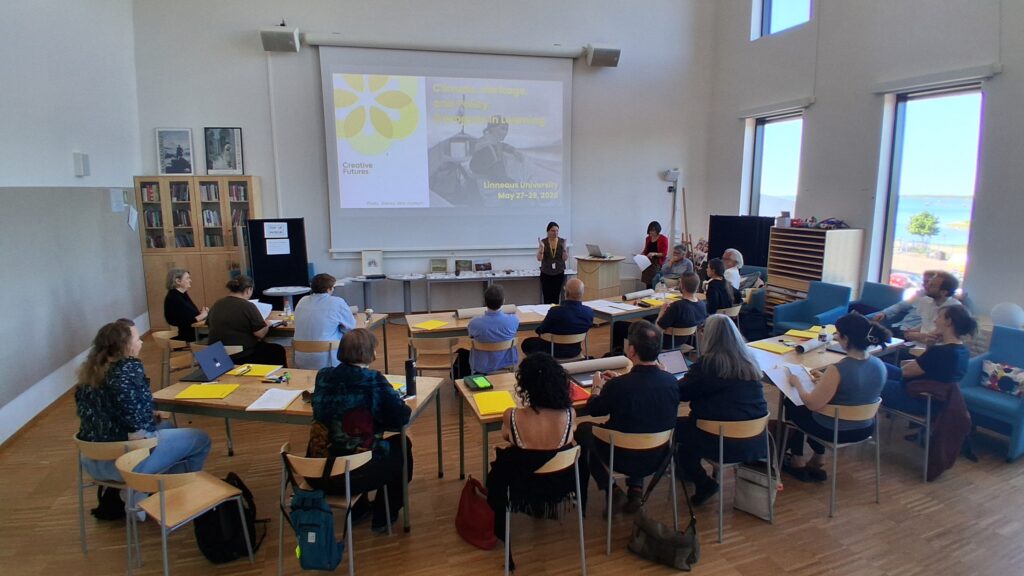
The workshop asked a series of timely questions over the course of the four days. What I have been taking away includes thoughts about the following issues (others will have taken away different thoughts):
- how are we to discuss climate change in relation to cultural heritage that is deeply problematic?
- what happens when we recognise that knowledge about climate change is based on social truths?
- how are we to draw on the potential of cultural heritage to make climate change deeply personal?
- are there better terms than the homogenising notion of “community” for describing the humans affected by climate change?
- is unlearning possibly more important than learning?
- how can we best harness the power of engaging with collaborators as human beings rather than as experts?
- is climate change necessarily a threat or can it also be considered as an opportunity?
- who do we want to be and how do we want to live, now and in the future?
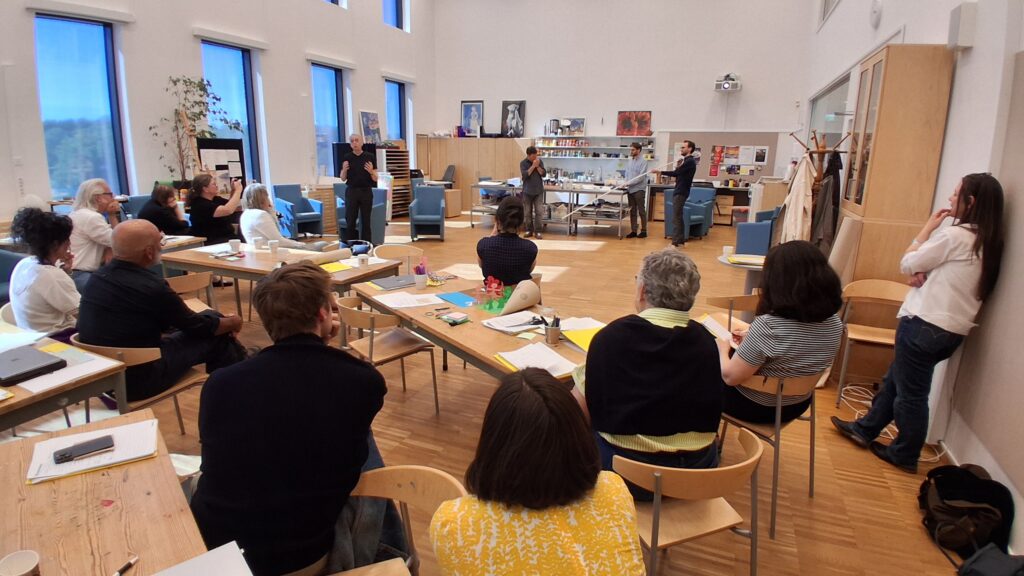
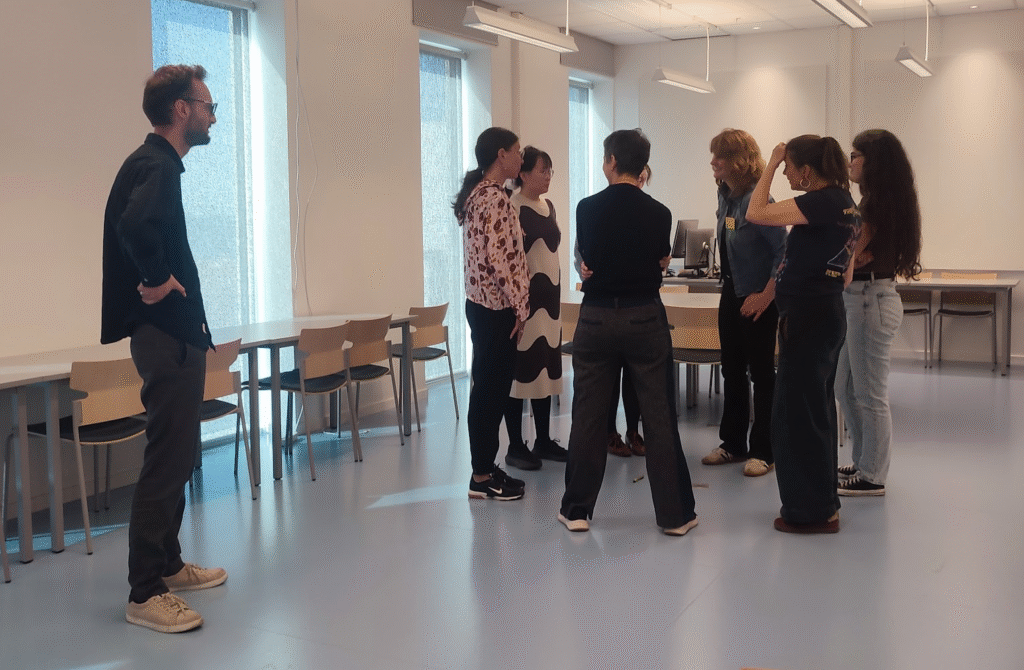
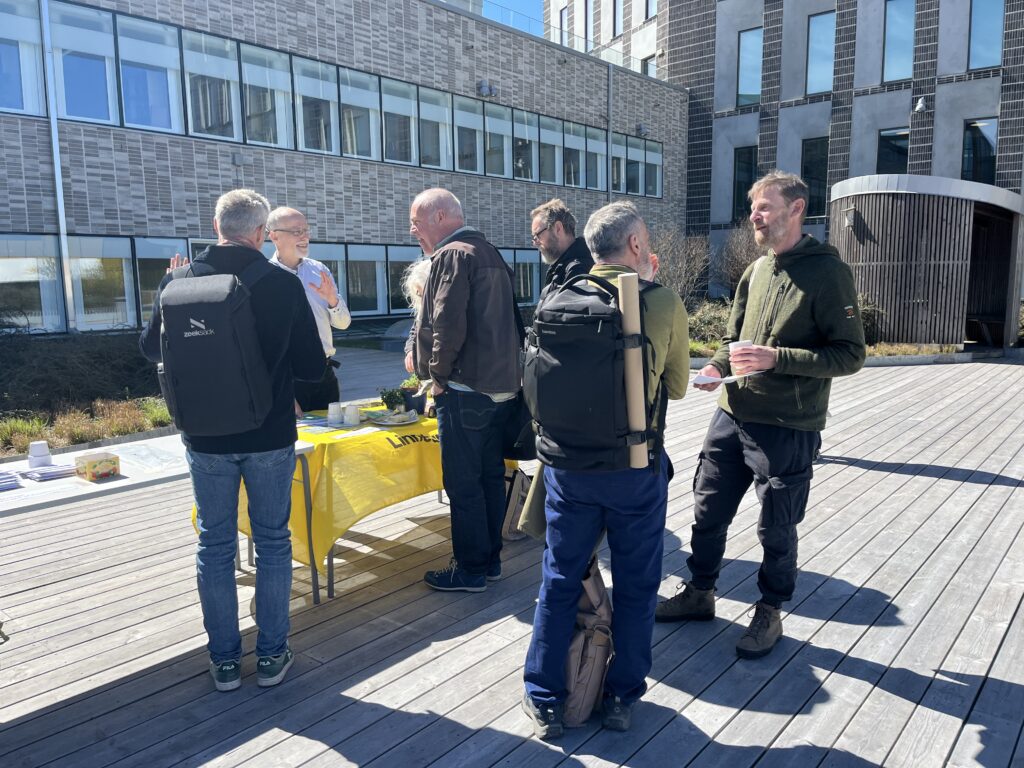
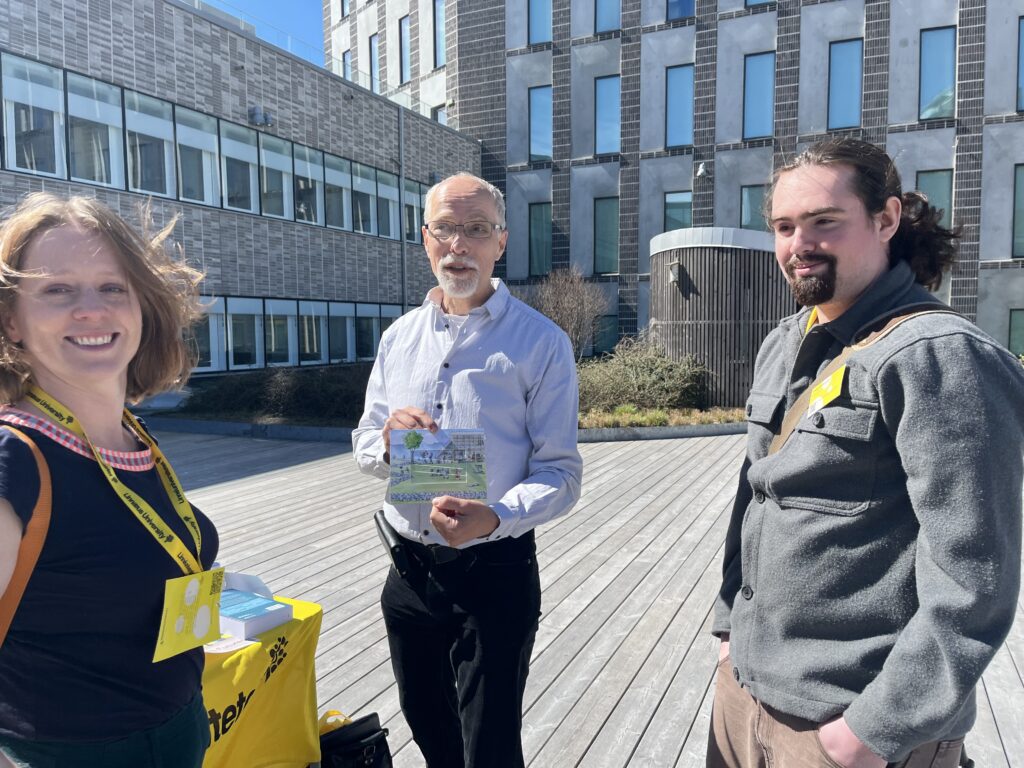
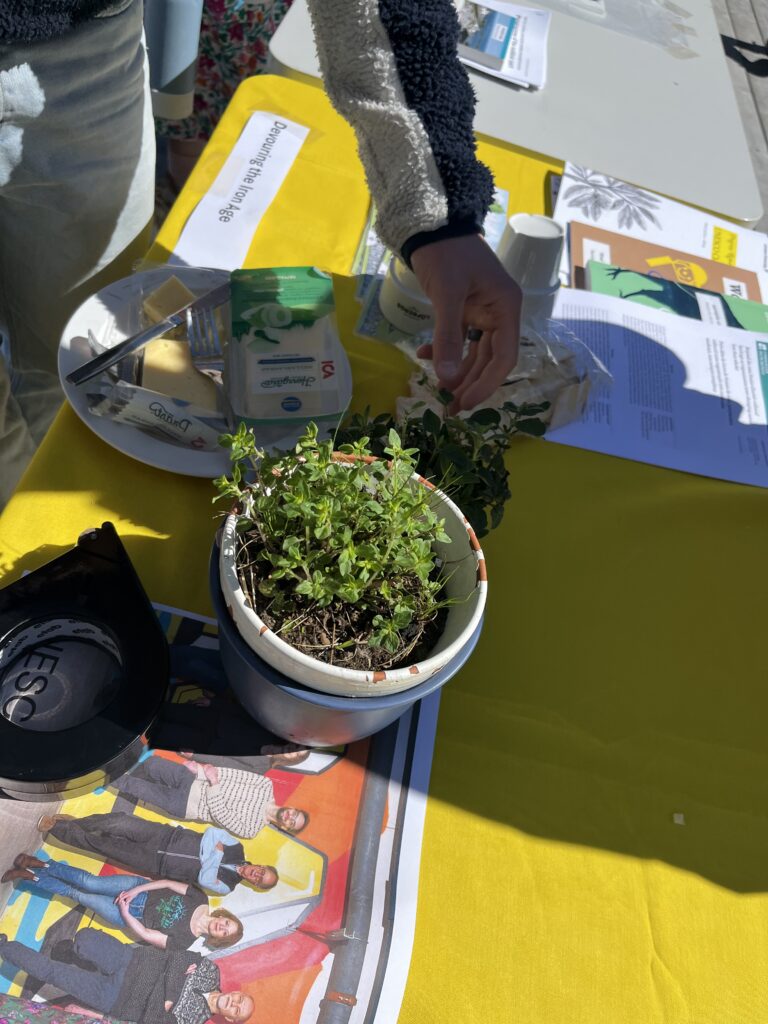
Among the ways of working were group work, artistic expression, and fieldwork in Kalmar, involving all the senses.
The creativity and playfulness in methods amounted to what participant called “epistemic disobedience”. It also resulted in much enjoyment among the participants and led to concrete discussions of future collaboration in a number of specific contexts.
Importantly, we had glorious summer weather throughout the workshop and even on the excursion day to Öland on the final day!
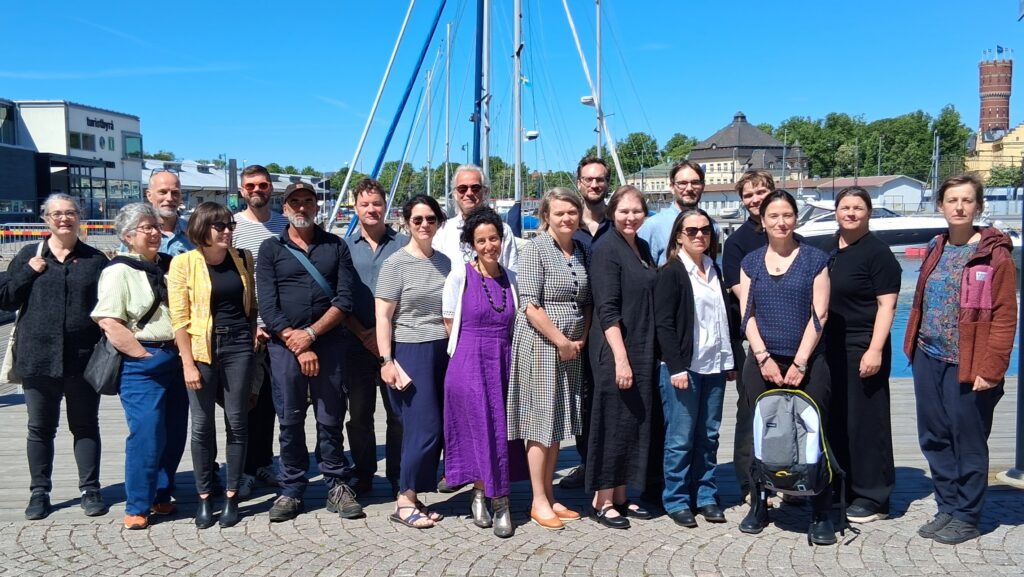
The following members of the UNESCO Chair on Heritage Futures participated in addition to Marcy Rockman and myself: Anders Högberg, Gustav Wollentz.
A more detailed report about the precise aims and results of the workshop is being prepared and will be made available via this blog in due course.
[…] The new funding for this and a number of additional smaller projects, means that the Climate Heritage Network is…
[…] Chair on Heritage Futures « Culture, cultural heritage and COP26 […]
[…] mer på Unescoprofessurens blogg http://blogg.lnu.se/unesco/?p=1061 Besök Öland 2050! […]