UNESCO

Chair on Heritage Futures

Various activities January – March 2026

2026-01-14

Cornelius Holtorf, at the invitation of SVT Drama, formulated a short text about culture and cultural heritage in Sweden and the world in the year 2030. The text is intended to help screenwriters identify the themes and conflicts that will shape societal development in the coming years, so that the series SVT is developing today—for release in 4–5 years—will feel relevant and resonate with their contemporary context (4 January 2025).

Cornelius Holtorf lectured on “Global Cultural Policy” for 15 students taking the course Possibilities and Limits of Cultural Policy as part of the Undergraduate Programme in Cultural heritage in present and future societies at Linnaeus University, Campus Kalmar (7 January 2026).

Marcy Rockman held a seminar on archaeology and the climate crisis for 25 students taking the course Archaeology I at Linnaeus University, Campus Kalmar (8 January 2026).

Cornelius Holtorf commented on the Draft ICOMOS Charter on Preparedness for Emergency Response to Cultural Heritage in Disasters and Conflicts prepared by the International Scientific Committee on Risk Preparedness (ICORP) (12 January 2026).

Anders Högberg was invited to run a workshop on Archaeology, heritage processes and futures making practices at the two Research Days of the Study Program Pre- and Protohistory Post-Anthropocene Archaeology at Institute für Ur- und Frühgeschichte und Vorderasiatische Archäologie, Heidelberg University (12-13 January 2026).

New histories for new futures

2026-01-11

Historian Sandra Mass reflected in an important new book on Zukünftige Vergangenheiten (Future Pasts) on what it means, and could mean, to be writing history in the Anthropocene. This is a timely topic very relevant to the concept of ‘heritage futures,’ for it addresses ‘history futures’. By that I do not only (even mainly) mean the future of researching and teaching history, as she mostly does, but rather the significance today of composing stories of the past that enhance people’s capacity of meeting the challenges of the future (but see her discussion on p. 46-7). As I see it, the primary question is not which future pasts (i.e. descriptions of our present) future historians should be presenting but which present and future histories (i.e. accounts of the past) are most likely to benefit future presents.

This does not mean that the future and people’s future needs are predetermined and can be foreseen. But Mass agrees as well that the future is no longer entirely open either, as climate change and nuclear waste, for example, create facts that reduce future human options (p. 33, 103-4). Following Zoltán Simon, it may even be that humanity as such will be threatened in an entirely novel future taking the hit of climate change, nuclear war, and/or artificial intelligence (p. 106). What does that possible prospect mean for future history, potentially lacking significance in an altogether different reality? Could history in such a world cease to exist even without humanity to end (p. 107)?

The end of history? An illustration of the present text by ChatGPT.

Sandra Mass writes particularly convincing and insightful in her extensive discussion of “More-Than-Human-History,” an emerging focus that is particularly pertinent for understanding the Anthropocene and goes far beyond existing environmental history. Such a non-anthropocentric history will be helpful for placing Homo Sapiens into a larger planetary perspective fostering much needed insights and understandings of past, present, and future realities that can push the historic disciplines beyond many past agendas that are possibly losing in significance.

In this context, what Mass missed is not only the many obvious (to me anyway) links to Archaeology and the work of archaeologists. Clearly, she is aware of the potential of archaeology (p. 35) and considers it easy to integrate archaeology and some other neighbouring disciplines into historical agendas (p. 179-80). Fine! More seriously is her omission of the significance of heritage and history culture (Geschichtskultur) for addressing the challenges of the Anthropocene.

Prominent scholars in historically oriented disciplines (including Pierre Nora, David Lowenthal, and Ian Hodder) argued that in a societal perspective, the significance of cultural heritage (and purposefully constructed sites of memory) has been superseding that of history (and living memory of the past). What will matter in future societies, I therefore suggest, is not primarily the extent to which scholarly knowledge will be able to represent important historical path dependencies during our and subsequent presents. Instead, what will matter more is the extent to which stories about the past manifested in cultural heritage relate, or will relate, to people’s lives and inform human behaviour by expressing and reinforcing particular collective identities, values, and mindsets that may or may not be in the best interest of future generations.

I argue therefore that historians, archaeologists, and others have important roles in shaping the future by giving attention to heritage futures now: the role of heritage in managing the relations between present and future societies.

Various activities October – December 2025

2025-12-31

Cornelius Holtorf participated in the World Heritage Council Meeting for the World Heritage property Agricultural Landscape of Southern Öland, Mörbylånga, Sweden (3 October 2025).

Cornelius Holtorf had an informal meeting in Yokohama with Noboru Takamura, Director of The Great East Japan Earthquake and Nuclear Disaster Memorial Museum, Futaba, Fukushima Prefecture, Japan, to discuss heritage futures in the narrative of the museum (8 October 2025).

Cornelius Holtorf had an informal meeting in Yokohama with Tatsuyoshi Saijo, Kyoto University of Advanced Science, to discuss his concept and practice of Future Design and how it relates both to heritage futures and to futures literacy (8 October 2025).

Cornelius Holtorf took part in the annual meeting of the Academic Advisory Board of the Leibniz Centre for Archaeology (LEIZA) in Mainz, Germany. He also chaired a meeting about a joint book project of the Board (15-17 October 2025).

Cornelius Holtorf contributed ideas about “The power of culture to advance intergenerational fairness” to the EU Citizens’ Engagement Platform informing policy-making on Intergenerational Fairness (25 October 2025). See https://citizens.ec.europa.eu/participation/processes/intergenerational-fairness/f/134/proposals/26071 .

Anders Högberg and Cornelius Holtorf started a course at Linnaeus University on Futures Literacy for Humanities Research (4.5 HEC) for nine research students from various Swedish Universities including Uppsala University, Malmö University and Linnaeus University. The introductory day on 27 October 2025 featured, among others, two lectures on aspects of heritage futures and futures literacy. The remainder of the course included supervision and a final seminar where the students’ work was presented and discussed.

Cornelius Holtorf lectured for three hours on “Cultural and heritage tourism – making choices for the future” for ten mostly international students taking the advanced-level course on Tourism and Sustainability in the Anthropocene 15 hec in Tourism and Recreation Studies at Linnaeus University, Kalmar (28 October 2025).

Cornelius Holtorf had an informal meeting with representatives of the Salama bint Hamdan Al Nahyan Foundation in Abu Dhabi about a new project they are developing in “Emirati Futurism”, a distinct way for shaping the future involving the arts, culture and heritage (29 October 2025).

Cornelius Holtorf had an informal meeting about Future Archaeology with Robert Duffley, Caitlin Nasema Cassidy and Helene Larsson Pousette in relation to a project entitled “Ungovernable” they are developing at Linnaeus University (30 October 2025).

Cornelius Holtorf lectured for two hours on “Background for Fieldwork on tourism in southern Öland” for twelve mostly international students taking the advanced-level course on Tourism and Sustainability in the Anthropocene 15 hec in Tourism and Recreation Studies at Linnaeus University, Kalmar (30 October 2025).

Cornelius Holtorf gave an invited online lecture entitled “Heritage Futures – what it is and why it matters” for MA and Doctoral students as well as researchers at the Centre for Heritage Revitalization and Sustainable Tourism Development linked to the UNESCO Chair on Sustainable Tourism in UNESCO Designated Sites at Fudan University, Shanghai, China (31 October 2025).

Cornelius Holtorf had an informal meeting with Rune Bjerkestrand and Bendik Bryde of the Arctic World Archive Foundation in Norway (3 November 2025). With their origins in the tech company Piql, their mission is to “preserve the world’s memory — securely, sustainably and freely accessible to all for generations to come.

Cornelius Holtorf discussed informally future collaboration at the interface of heritage futures and cultural tourism with Professor Chaozhi Zhang, Chairholder of the UNESCO Chair on Sustainable Tourism in UNESCO Designated Sites at Fudan University, Shanghai, China (4 November 2025).

Cornelius Holtorf presented an invited lecture on “Towards a Future Agenda for the Decorated Farmhouses of Hälsingland” for around 90 local and regional participated at the annual Knowledge Day for the Word Heritage property Decorated Farmhouses of Hälsingland 2025, Bollnäs, Sweden (5 November 2025).

Cornelius Holtorf presented an invited Inspirational Lecture on “Applying archaeology to solving challenges of present and future society: the significance of intersectoral collaboration and interdisciplinary methodologies” for cirka 80 Doctoral students and their supervisors from various disciplines and many Swedish Universities during the first Jubilee Doctoral Students network meeting of the Knowledge Foundation in Stockholm, Sweden (6 November 2025).

Cornelius Holtorf gave an invited online lecture for 20+ Japanese researchers entitled “Heritage Futures – what it is and why it matters” as the Canon Institute for Global Studies Future Design Workshop #88, hosted by the Future Design Research Center, Kyoto University of Advanced Science, Kyoto, Japan (7 November 2025).

Cornelius Holtorf had an online meeting with Sofia Wikelid, researcher for Swedish Television’s planned programme on The Future in Sweden (11 November 2025).

Cornelius Holtorf gave a talk entitled “From Loss and Damage to Offering Solutions for the Future” at the Centre for Climate Science and Policy Research, University of Linköping (13 November 2025).

Anders Högberg svarade på en Remiss om förslag till aktualiserad kulturmiljöstrategi för Kronobergs län 2026–2030 – Kulturmiljöer i en föränderlig tid (14 November 2025).

Cornelius Holtorf and Anders Högberg contributed to Linnaeus University’s Remisssvar till Strålsäkerhetsmyndigheten concerning SKB’s Fud-research program for 2025 (14 November 2025).

Cornelius Holtorf hosted a guest lecture on “Mind the Gap” by Vicky Karaiskou, Chairholder, UNESCO Chair on Visual Anticipation and Futures Literacy towards Visual Literacy, Open University of Cyprus, in the context of a Doctoral Course at the Faculty of Arts and Humanities on Futures Literacy for Humanities Research, held (18 November 2025).

Cornelius Holtorf ran a Heritage Futures Workshop at a conference on Charting New Horizons for Education for Sustainable Development, organized by VolkswagenStiftung, German Commission for UNESCO and German Rectors’ Conference in Hannover, Germany (20 November 2025).

Cornelius Holtorf was invited to the Cultural Heritage Forum 2025 of the Cultural Heritage Academy to attend an afternoon at the University of Gothenburg dedicated to a discussion of the cultural canon for Sweden. He presented a talk entitled “Future canon – from historical to future-oriented frames of reference” and participated in a panel with, among others, Lars Trägårdh who had led the government’s Commission to suggest the content of such a cultural canon for Sweden (27 November 2025).

Cornelius Holtorf had an informal meeting on “past-futuring” with Sophia Labadi, Professor of Cultural Heritage at the University of Kent, in Paris, France (1 December 2025).

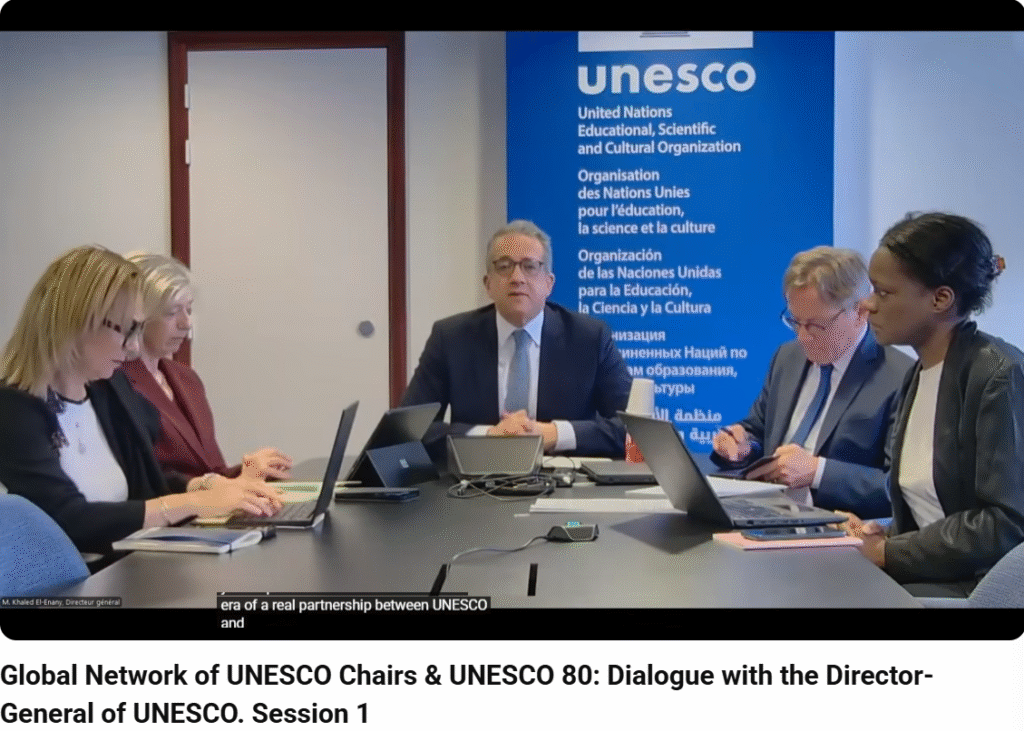
During World Futures Day (2 December 2025) at UNESCO Headquarters in Paris, France, Cornelius Holtorf had informal conversations with, among others, Clare Stark, Head of Unit for Foresight and Futures Literacy, SSH; Keith Holmes, Research Coordinator UNITWIN, Education; Maya Prince, UNESCO Chairs manager, Education; Karalyn Monteil, Head of Unit, Culture and Emergencies, Culture; Irakli Khodeli, new Head of Department, UNESCO MOST, SSH; Khaled El-Enany, new Director General for UNESCO.

Cornelius Holtorf submitted comments on the draft version of the ICOMOS International Charter for the Conservation of Earthen Architectural Heritage (10 December 2025).

Cornelius Holtorf participated in the Long-term Governance Network Meeting about ‘Long-term governance and wellbeing economics’ arranged by the School of International Futures (SOIF), featuring Katherine Trebek, Australia (political economist, writer and advocate for economic system change), Gareth Hughes, New Zealand (Wellbeing Economy Alliance Aotearoa), and Mads Falkenfleth, Denmark (Wellbeing Economy Lab) (11 December 2025). 

Living Heritage in a Changing World

2025-12-21

I argued recently, that cultural heritage has much to contribute to the world’s future agenda. In particular, it can help normalize transformation, in a world that changes and needs to change. Heritage sites like Stonehenge in England have been absorbing comprehensive transformations over longs period of time. Their story is not a story of conservation and continuity, whether of a monument or of a living tradition, but it is a story of managing and adapting to all kinds of changes, by again and again becoming something else.

A new book by Xuanlin Liu, significantly entitled Living Heritage in a Changing World and based on her PhD thesis at the University of York, shows that something similar can be said about a type of artefacts. In relation to the ger, or yurt, a traditional dwelling of nomadic communities in Mongolia and China, Liu shows how heritage is an evolving, adapting, and therefore dynamic process:

“The Mongolian ger, initially crafted from simple wooden frameworks, has undergone significant transformations due to cultural, industrial and environmental imperatives. Over time, it has incorporated new materials such as iron, concrete and hybrid steel-wood structures, reflecting shifting policy landscapes and environmental concerns.” (p. 175)

Figure: some modern gers for sale on the internet.

In Liu’s analysis, these adaptations underscore the inherently fluid nature of heritage. She considers such continuous transformations as “instrumental in ensuring that heritage endures across diverse cultural and societal landscapes” (p. 177). Such an “inclusive, dynamic and comprehensive” understanding of the ger and, by implication, of other objects, is what makes heritage into “living heritage”.

This is a welcome and timely argument, reminding me of the wider implications of what I once argued in my own PhD thesis about the life histories of prehistoric monuments in Northeast Germany, written during the 1990s. It also links the study of movable heritage to ongoing discussions in other sections of Heritage Studies and heritage management, including those dealing with the preservation of historic buildings and the management of intangible heritage. Heritage policy and legislation will need to find more ways of accommodating these views, embracing change, adaptation and creation—ultimately increasing the benefits of heritage for living and future generations in changing societies.

Liu concludes: “In this new framework, the essence of cultural heritage is no longer limited to the preservation of its material form but centres on the creative transformation of its cultural logic.” This perspective, for her, makes heritage management “a creative, forward-looking cultural practice” (p. 182), and I agree.

EU Intergenerational Fairness

2025-12-20

The 2025 Scoping Report for the EU Intergenerational Fairness Strategy, under the remit of Glenn Micallef, European Commissioner for Intergenerational Fairness, Youth, Culture and Sport, is a very interesting document for ‘heritage futures’. It does not give culture a specific role. But heritage and the past are explicitly considered, which is interesting.

The report stresses the benefits of “intergenerational dialogue” and adopts a perspective of human generations as “intertwined lives” resulting in “intergenerational solidarity”, leading to the conclusion that “it is our responsibility to care for past, current, and future generations’ well-being” (p. 13).

Significantly, the authors argue that “the intertwining can be extended to past generations, with their heritage, legacy and traumas, and future generations, with their needs, interests, and rights. (…) This new approach extends the focus from the now to a broader horizon, encouraging us to act as “a good ancestor” to future generations.” (p. 13)

The report expresses among the preliminary elements of a vision for an intergenerationally fair EU that what may be required includes “bringing the past and the heritage to enrich the long-term perspective” (p. 21).

These formulations remain a little vague and it remains open not only how we can care today for past generations’ well-being but also how the distinct contribution of heritage differs from that of knowing the past. But this is still the first time I can remember having seen in such a transnational document an explicit appreciation of a positive value of heritage in the context of future-making (and not just in the context of present-day benefits for living people or in relation to safeguarding existing forms of culture in the future).

Hopp och kultur

2025-12-09

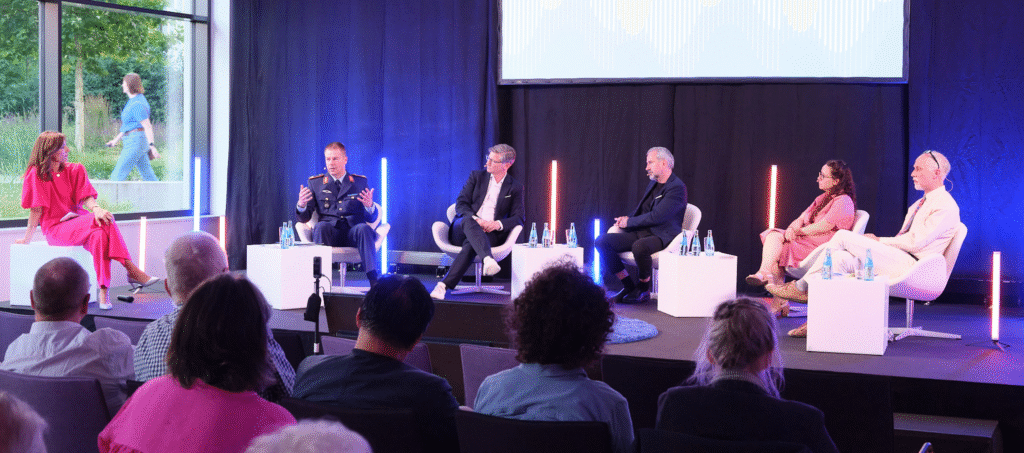
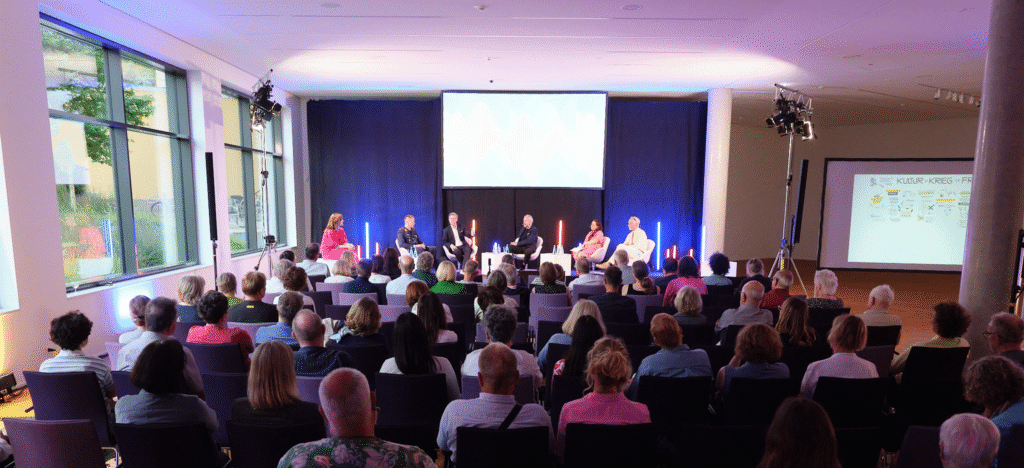
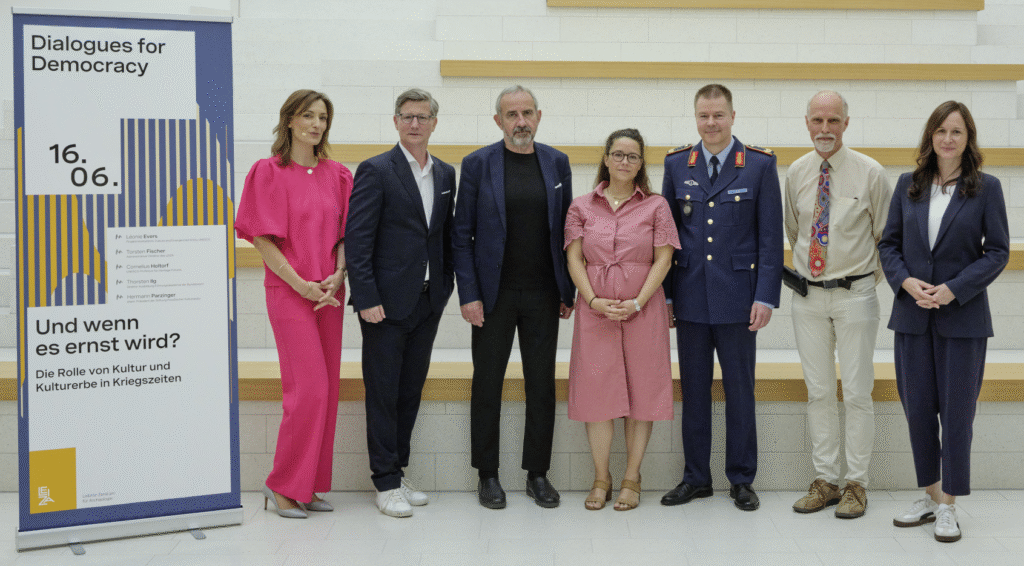
Idag 9 dec 2025 höll vi en paneldebatt till temat “Att skapa hopp med kulturvetenskap – bortom katastrofen” på Kulturhuset Strömmen inom ramen för Nobelveckan i Kalmar kommun. Med

  • Johan Höglund, professor i engelska litteratur
  • Felicia Stenberg, doktorand i engelska litteratur
  • Ulrika Söderström, forskningssamordnare, Kalmar läns museum
  • Gustav Wollentz, lektor i arkeologi
  • Cornelius Holtorf, professor i arkeologi

Det blev en bra debatt mellan panelen och med publiken. Också en tjuvstart för ett nytt gemensamt projekt 2026 om Hopemaking…

Foto: Mathias Lafolie

Sammanfattning: vi lever i en tid då framtiden ofta framställs som hotfull – klimatkris, krig, oro och kollaps präglar både nyheter och populärkultur. Samtidigt finns ett växande behov av att föreställa sig något annat: att tänka och känna bortom katastrofen.

Kulturvetenskapen kan här spela en avgörande roll. Genom att undersöka våra berättelser, bilder och idéer om framtiden kan den hjälpa oss att odla hopp och handlingskraft i krisernas tid. Det är utgångspunkten för eftermiddagens samtal.

Futures Workshop on Southern Öland

2025-12-05

On 4 December 2025, Cornelius Holtorf ran a futures workshop about sustainable futures on southern Öland at Linnaeus University, Kalmar. The event was part of a collaboration of the UNESCO Chair on Heritage Futures with the University’s Knowledge Environment Sustainable Tourism (KEST) and funded internally.


Contributors to the workshop were Marianna Strzelecka of KEST and Thomas Bartoli currently working with us as an Erasmus Trainee. Among the 14 participants were representatives from regional and local stakeholders dealing with cultural heritage, cultural policy and the visitor economy on Öland and in the Counties of Kalmar and Blekinge.

In the workshop we were, among others, drawing on Causal Layered Analysis and asked about the underlying logic and worldview that drives the present system and its consequences for southern Öland.

Framtidskanon

2025-11-28

Cornelius Holtorf was invited to the Cultural Heritage Forum 2025 of the Cultural Heritage Academy to attend an afternoon at the University of Gothenburg dedicated to a discussion of the cultural canon for Sweden. He presented a talk entitled “Future canon – from historical to future-oriented frames of reference” and participated in a panel with, among others, Lars Trägårdh who had led the government’s Commission to suggest the content of such a cultural canon for Sweden (27 November 2025).

The other members of the panel were

  • Lars Trägårdh, professor i historia och ordförande i den kommitté som regeringen tillsatt som tagit fram en svensk kulturkanon.
  • Åsa Arping, professor i litteraturvetenskap vid Göteborgs universitet.
  • Karin Nilsson, Verksamhetschef och tf överintendent ArkDes.
  • Moderator: Lena Ulrika Rudeke, verksamhets- och programansvarig för Göteborgs universitets programverksamhet vid Jonsereds herrgård och koordinator, Unesco Litteraturstaden Göteborg, medlem i CCHS advisory board.

A review of the event written by Vivian Smits has been published here: https://www.gu.se/nyheter/med-kulturkanon-i-centrum.

Abstract for my contribution:

Framtidskanon: från historiska till framtidsinriktade referensramar

Det svenska samhället är en del av en värld där mänskligheten står inför avgörande utmaningar: klimatkrisen, krig, ojämlikhet, pandemier, den globala ekonomin med mera. Kultur och kulturarv, som rör hur människor förstår världen, varandra och sig själva, är centrala för att kunna möta dessa frågor. De skapar gemensamma referensramar som formar medborgarnas självbilder, värderingar, uttryckssätt och handlingsmönster. I mitt bidrag vill jag förskjuta perspektivet från en historiskt inriktad referensram till en framtidsinriktad. Jag utgår från att framtiden är större än Sverige, men belyser med exempel hur en framtidskanon kan bidra till att människor i Sverige: tänker långsiktigt och hoppfullt, blir bättre rustade att hantera förändringar, utvecklas till sådana de vill bli framöver, samt stärker sammanhållning, solidaritet och tillit både inom och mellan samhällen. En framtidskanon kan dessutom sprida den kunskap som bedöms vara mest angelägen för framtiden i Sverige och i världen.

Constructing heritage for future-making

2025-10-16

On 11 March 2011, Eastern Japan was hit by a triple disaster caused by the combination of the impacts of an earthquake, tsunami and nuclear meltdown. Many people lost their lives, their homes, or their livelihoods, and are still affected by the aftermath now.

Figure 1: Central area of the Disaster Memorial Park under construction in Futaba, Fukushima

Over fourteen years later, the region most affected is now covered by a plethora of topical museums, exhibitions, memorial stones, and even some largescale memorial parks that either opened over the last few years or are still under construction. They all do not only aim at recalling what happened but also intend to create a better future.

Figure 2: 3.11 Densho Road connecting disaster memorial facilities in Eastern Japan

I first explored the topic on an exploratory trip to Fukushima Prefecture (with Tomas Nilsson and Tom Holtorf) in spring 2023. Now I was able to return for some days in connection with a NEA (OECD) conference on Nuclear Waste Management I participated in in Yokohama. I could even spend two days in Miyagi Prefecture this time. I am more than ever convinced that Eastern Japan provides a good case for studying the role of cultural heritage in negotiating the relations between present and future societies, i.e. what we call heritage futures.

Figure 3: Display in the Great East Japan Earthquake and Nuclear Disaster Memorial Museum in Futaba, Fukushima


I found evidence that remembering the 3.11-Disaster related present and future societies in at least the following interrelating but different ways:

1. Restoring and continuing after hiatus

  • Restoring shrines and other cultural heritage to reconnect with the past for the future
  • Passing down memories and lessons of the disaster to protect lives around the world in the future, e.g. building higher seawalls and promoting tsunami alert response (e.g. memorial facilities along 3.11 Densho Road)
  • Expressing personal memories of the disaster to continue life
  • Revitalizing the region by promoting and rebuilding economic development, e.g. through high-tech and tourism (e.g. Great East Japan Earthquake and Nuclear Disaster Memorial Museum in Futaba)

2. Making up for past failure

  • Accepting apologies and accountability that come with the responsibility to make up for the damage (Tepco)
  • Honouring the victims forever (memorial stones)

3. Finding a better way forward

  • Increasing resilience by improving the human ability to embrace loss, change, transformation, adaptation and renewal in the future (e.g. inspired by Sakura, the reoccurring cherry blossoming)
  • Learning from the mistakes of modernity and capitalism to create a more sustainable society for the future.

4. Restarting and regenerating life

  • Partial forgetting of the disaster in order to move on with new life (e.g. resprouting of burned trees, see Figure 4)
  • International support and joint remembering as an opportunity for connecting people around the world (Ishinomaki City Kadonowaki Elementary School exhibit)
  • Recovering from the disaster to regenerate our lives for the future refocusing human priorities (e.g. some eye-witness storytelling).

Figure 4: a tree outside Ishinomaki City Kadonowaki Elementary School burned by the disaster in 2011 but now resprouting with new life

In sum, preliminary outcomes of my fieldwork reveal how past, present, and future can be strongly interconnected: the way we tell the past in the present strongly correlates with our assumptions and anticipations of the future. This becomes particularly pertinent in the case of the 3.11.-Disaster which brought about extensive losses of lives and livelihoods, including entire town areas and much essential infrastructure.

The future we are building today in the aftermath of the disaster depends on how we describe and remember what actually happened, e.g. by constructing cultural heritage sites, as currently happens in the area affected by the 3.11 disaster along the Japanese East Coast. There are different ways of recalling the disaster and different futures following on from that. That is why cultural heritage is of great importance in future-making, and why heritage futures matter in the present.

Heritage Futures for Nuclear Waste

2025-10-09

Cornelius Holtorf presented a talk entitled for cirka 100 participants at the Symposium on Information, Data, and Knowledge Management for Radioactive Waste: Challenges Across All Timescales, organised by the Nuclear Energy Agency (NEA) of the OECD and hosted by the Nuclear Waste Management Organization of Japan (NUMO) in Yokohama, Japan (7-10 October 2025).

Heritage Futures: Archaeological Insights for the Long-term Management of Radioactive Waste

Cornelius Holtorf, UNESCO Chair on Heritage Futures, Linnaeus University

Managing radioactive waste is a challenge that extends across many generations, requiring long-term safety measures. Archaeologists, like myself, are familiar with time scales of thousands of years as we seek to understand the distant past. A key part of our work involves questioning assumptions rooted in the present and learning to imagine past worlds that were vastly different from today. This is very difficult, but only after doing so can we draw meaningful insights from the past to inform the present. The same principles should apply when communicating information, knowledge, and guidance about radioactive waste repositories to societies of distant futures. This calls for a strengthened capacity in ‘futures literacy,’ a concept developed and promoted by UNESCO.

Futures literacy consists of three core dimensions: 1. Becoming aware of the assumptions we hold about the future, 2. Learning to imagine multiple alternative futures, and 3. Reframing the original issue and developing new strategies to address it.

In this paper, I explore this argument and discuss its implications for a long-term, safe and responsible management of radioactive waste. The paper is based on extensive research conducted by the UNESCO Chair on Heritage Futures at Linnaeus University in Kalmar, Sweden. The research has been carried out in collaboration with the radioactive waste sector in Sweden and internationally, including through participation in several expert groups of the NEA.