UNESCO

Chair on Heritage Futures

Various activities April – June 2023

2023-06-30

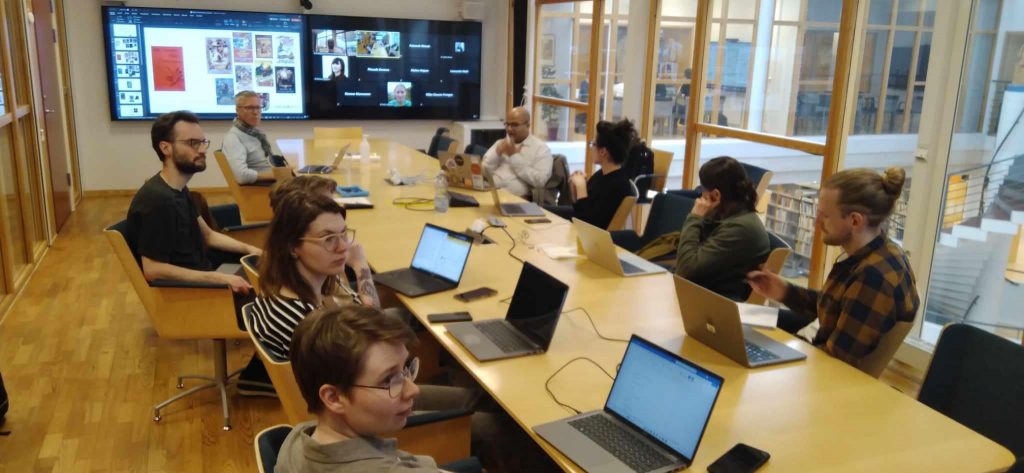
Gustav Wollentz co-managed and Cornelius Holtorf participated, together with ca 90 others, in the online Foresight Workshop “Insight into the Future” organised by ARCHE, the EU-funded Alliance for Research on Cultural Heritage in Europe (4 April 2023).

Cornelius Holtorf and Anders Högberg participated in the third meeting of the Expert Group on Awareness Preservation (EGAP) within the project on Information, Data and Knowledge Management (IDKM) at the Nuclear Energy Agency, held at the OECD in Paris, France (17-19 April 2023). They held presentations on “Heritage Processes” and “Futures Literacy” respectively. Cornelius Holtorf undertook among others to prepare for the EGAP Task Force on International Mechanisms a short document on the opportunities for long-term memory provided by the 1972 UNESCO World Heritage Convention.

Cornelius Holtorf had an informal meeting discussing ongoing priorities and shared interests with Mikael Schultz (Deputy Permanent Representative for UNESCO) and Louise Oscarsson (Attaché for UNESCO) at the Delegation of Sweden to the OECD and to UNESCO in Paris, France (17 April 2023).

Cornelius Holtorf had an informal meeting with Christin Pfeiffer, Head of Futures Literacy and Foresight, at UNESCO, Paris (20 April 2023).

Cornelius Holtorf had an informal meeting with Berta de Sancristobal, Head of Unit, and Stefanie Grüssinger, Junior Professional Officer in the Unit for Europe and North America, at UNESCO’s World Heritage Centre, Paris (21 April 2023).

Cornelius Holtorf had an informal meeting with Beate Strøm, Directorate for Cultural Heritage of Norway, currently seconded to the Unit for Europe and North America at UNESCO’s World Heritage Centre, Paris (21 April 2023).

Cornelius Holtorf presented a lecture on “Conflict Resolution, Conflict Prevention and Cultural Heritage” to the Student Society Linnaeus Kultura at Linnaeus University, Kalmar, Sweden (26 April 2023)

Cornelius Holtorf submitted a response in the Consultation of UNESCO Chairs and Category II Centers on the implementation of the United Nations’ 76/214 Resolution on Culture and Sustainable Development (Reporting period: June 2021 –June 2023) conducted under the aegis of UNESCO in view of the preparation of the United Nations Secretary-General’s report on the implementation of Resolution 76/214 on Culture and Sustainable Development, to be presented at the 78th United Nations General Assembly in September 2023 (5 May 2023).

Cornelius Holtorf attended a webbinar organised by the Swedish Foresight Network on “Where do Imagined Futures come from?” featuring Riel Miller, formerly Head of Foresight and Futures Literacy at UNESCO (8 May 2023). Among other things he said, Riel Miller encouraged the audience to “be good compost” in the future.

Anders Högberg attended a half-day seminar at Malmö Museum on the topic ”Nuclear Cultural Heritage: How are we to remember the Barsebäck nuclear power plant in the future?” (10 May 2023).

Cornelius Holtorf submitted comments on the draft Key Information File (KIF) containing essential information on the spent nuclear fuel repository in Forsmark, Sweden, prepared by Thomas Keating as part of a project at the University of Linköping funded by the Swedish Nuclear Fuel and Waste Management Company (SKB) (12 May 2023).

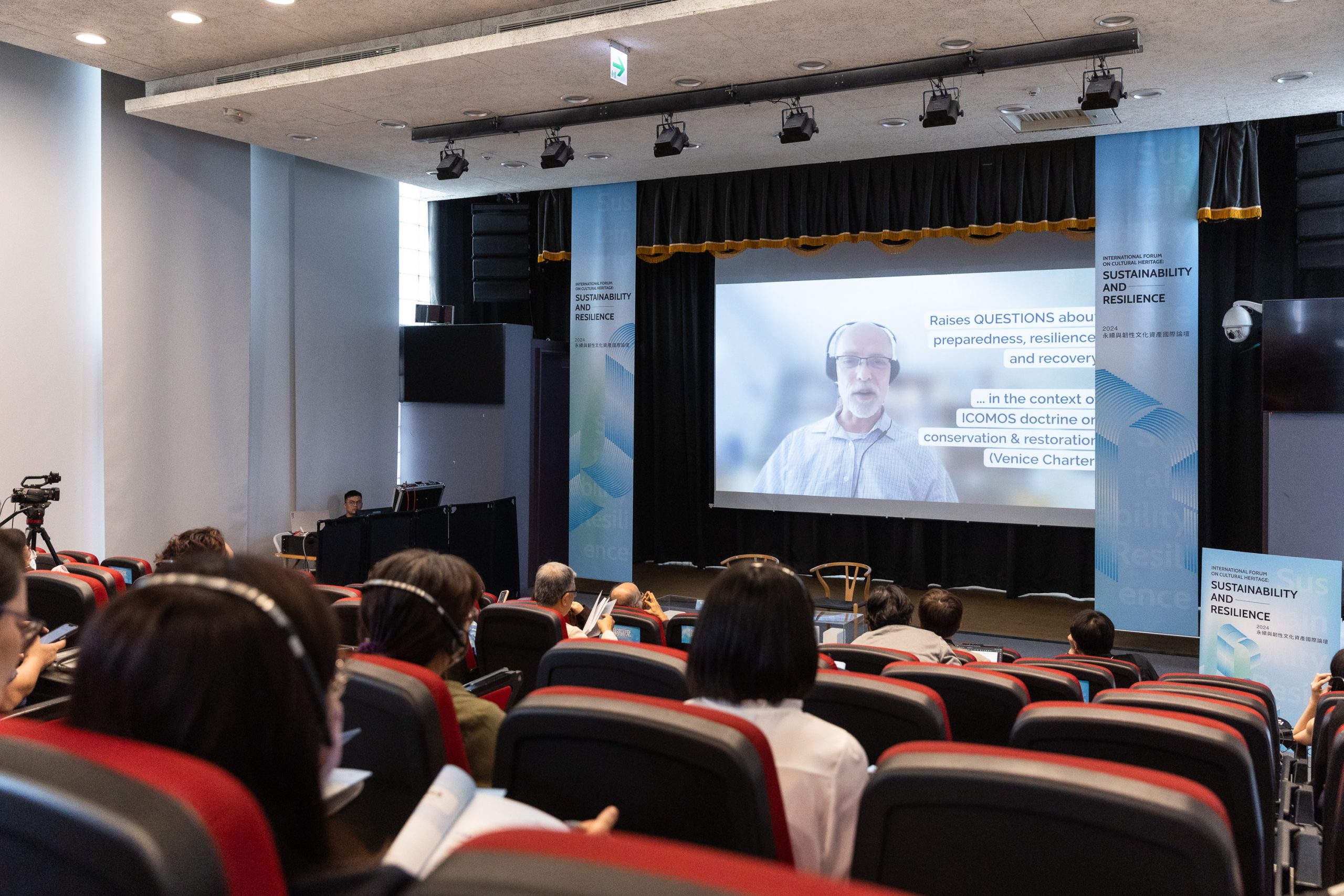
Cornelius Holtorf attended virtually the 2023 Annual Meeting of the American Institute for Conservation in Jacksonville, Florida, USA attended by some 900 registered participants. For the conference, he had co-organized (with W. Wei) a General Session on “Preserving the Legacy of Humanity: What Is It That We Want to Preserve?” (19 May 2023).

Cornelius Holtorf assisted Bill Wei in running a Socratic Dialogue on the question “Was würdest Du auch für die Nachhaltigkeit nicht aufgeben wollen. Warum nicht?” at the Conference Angst. Ekel. Scheitern. Ein Symposium zu den blinden Flecken der Nachhaltigkeit, at Oberhafen Hamburg, Germany (25 May 2023).

Anders Högberg presented a research seminar on “Futures Literacy: what it might mean for archaeology and heritage practices” at the Saxo Institute, University of Copenhagen, Denmark (26 May 2023).

Cornelius Holtorf and Tomas Nilsson held a conversation on “Storytelling, hope tourism, and future-making after the Great East Japan Earthquake in 2011” in a research seminar at the Department of Marketing och Tourism Science, Linnaeus University, Växjö, Sweden (7 June 2023).

Cornelius Holtorf presented the annual Alumni Lecture on “Why cultural heritage is about the future (not the past)” for the Masters students in Archaeology and Heritage Studies at the University of Aarhus, Moesgård, Denmark (9 June 2023).

Cornelius Holtorf discussed future collaborations with Adam Gordon, UNESCO Chair in Anticipatory Leadership and Futures Capabilities at the University of Aarhus, Aarhus (9 June 2023).

Cornelius Holtorf participated in the 5th virtual UNESCO Chairs Seminar on “Science Benefitting Society: the role of the right to science” featuring not only Keith Holmes, UNITWIN/UNESCO Chair Programme Team at UNESCO and Helle Porsdam, UNESCO Chair in Cultural Rights at the University of Copenhagen, Denmark (14 June 2023).

Cornelius Holtorf presented for an audience of almost 50 conference participants on “How can culture and heritage contribute to empowering futures?” at the 23rd Futures Conference 2023 Empowering Futures – Long-term Governance, Democracy and Futures Research, Finland Futures Research Centre and Finland Futures Academy of the University of Turku, Finland (16 June 2023).

Kultur för krig?

2023-06-28

Jag lyssnade imorse på ett seminarium som genomfördes som del av Kultur i Almedalen 2023. Det handlade om “En stark kultur är ryggraden i ett lands försvar och krisberedskap”. De medverkande var Gunvor Kronman (VD, Hanaholmen), Stefan Wallin (tidigare kulturminister och försvarsminister i Finland), Mikael Brännvall (VD, Svensk Scenkonst) och Gunnar Ardelius (generalsekreterare, Sveriges Museer).

Det var mycket samförstånd bland alla medverkande att kultur, kulturarv, konst och humanistisk vetenskap bidrar till samhällets mentala motståndskraft, t.ex. genom byggande av tillit, samhörighet och identitetskänsla, som alla skapar samhällsresiliens och gör kulturen lika viktigt som militären. I kontrast till Finland, påpekades att Sverige har inte kommit lika långt att integrera kultursektorn i beredskapsplanerna och totalförsvaret. Det krävdes t.o.m. att kultursektorn bör få medel från alla nya storsatsningar på försvaret!

Det som var riktigt skrämmande var inte bara en fullständig brist på mångfald av åsikter i panelen men även att

  • komma ihåg att samhörighet i Sverige är splittrat och har stora brister så länge det saknas en verklig samhällsintegration — det pratas mycket om klaner och parallella samhälsstrukturer, och det är bara ett år sedan ‘påskkravallarna’ mellan Svenska muslimer och polisen,
  • ingen ens nämnde rollen av kultur i fredsskapande och konfliktlösning,
  • kulturens huvuduppgift i fall av krig kan vara att främja globala perspektiv och humanistiska värden, att bekämpa fördomar mot andra samhällen och samhällsgrupper, och att skapa fred!
  • man var medveten om kulturens betydelse i opinionsbildning och propaganda men inte hur det egna arbete verkar främja krig snarare än fred.

Kultur i Almedalen tar Sverige ett steg närmare till krig och det är mycket allvarligt tycker jag. Humaniora och kultur bör motstå nu den typen retorik!

Zeit Raum Reise

2023-06-20

Cornelius Holtorf presented an invited keynote lecture on “Time Travel as Archaeological Practice” for a Workshop on Zeit. Raum. Reise. Frühgeschichte als Erlebnis organised by Museumsakademie Universalmuseum Joanneum (Graz, Austria) in collaboration with Westfälisches Landesmuseum für Archäologie, in Herne, Germany (19 June 2023). 

Holtorf also participated in an associated workshop on speculative design entitled “Aus der Zukunft lernen: Einblick in die Welt von morgen durch Design, Fiktion und reverse Archäologie” run by Ceren Topcu-Weigand. 

One of the results of the workshop was to demonstrate the potential of time travelling as a unique form of understanding other times, combining the potential for bodily engagements, using the senses and emotions, with the need to work creatively with future scenarios. Time travels today do not only employ physical role play but can also make use of advanced digital technology.


Increasing future awareness in the cultural heritage sector…

2023-05-18

A new report on Increasing future awareness in the cultural heritage sector using the SoPHIA model just published!

The report presents results from a project that aimed at increasing future awareness in the cultural heritage sector, using the SoPHIA model. The project was run by the Centre for Applied Heritage at Linnaeus University, with funding from the university. Work on the report was carried out in 2021 and 2022 by NCK (The Nordic Centre of Heritage Learning and Creativity AB) under the direction of Gustav Wollentz, in co-operation with Kalmar County Museum, Jamtli Museum, and Daniel Laven from the Department of Economics, Geography, Law and Tourism at Mid Sweden University.

Results from the project show that the model succeeded in exploring possible future effects of a heritage intervention, defined as any action that results in a physical change to an element of a historic place, and related these effects to prioritized issues for societal development, such as participation, inclusion, and well-being. It managed to expand the range of potential action in the present. Furthermore, it also provided a useful tool for identifying significant areas where there is the potential to think more innovatively and creatively regarding future change and effects. The model helped in identifying the necessary steps and actions needed for realizing the interventionin accordance with a desirable scenario. The model failed in anticipating long-term futures or futures radically different from the present. It mostly provided insights into how the intervention could have an impact upon future change, but not on how future change would have an impact upon the intervention. Ways of adapting the model for increased future awareness are suggested. These include ways to make the model more suitable for anticipating long-term futures as well as futures of radical change. 

Visit from Cyprus

2023-05-05

We have been visited by Vicky Karaiskou, UNESCO Chair on Visual Anticipation and Futures Literacy towards Visual Literacy at the Open University of Cyprus. Her Chair is part of UNESCO’s Futures Literacy network, which is the context where we first met.

She offered a lecture on Visual Literacy for our students in Archaeology and took part in an informal seminar with colleagues where we exchanged view on issues of mutual interest in regard to UNESCO, the future, interpreting heritage, and teaching in the digital age. 

(Here are we together with my colleague Peter Skoglund.)

PhD on heritage in urban planning

2023-04-21

Ulrika Söderström, PhD student in Archaeology at Linnaeus University and associated researcher at the UNESCO Chair on Heritage Futures, held on 21 April 2023 the final seminar (slutseminarium) ahead of her disputation expected to be held in the autumn. The seminar opponent was Björn Nilsson, Head of the Department of Cultural History at the University Museum of Bergen, Norway. 

Ulrika’s research is about archaeological heritage as a resource in socially sustainable urban development for the future. Her Doctoral research is supervised by Anders Högberg, with Cornelius Holtorf having responsibility as the internal examiner. Even Gustav Wollentz, another affiliated researcher of the UNESCO Chair, participated in the seminar.

Seminar opponent Björn Nilsson pointed among others to the relevance to Ulrika’s research of Johan Asplund’s work Theories about futures (Teorier om framtider, 1979), which was published in collaboration with the Swedish Committee for Future-Oriented Research.

Fieldwork in Fukushima

2023-04-18

Cornelius Holtorf undertook with his colleague Tomas Nilsson of the Faculty of Economics a week-long field visit to Tokyo and various places in the Prefecture of Fukushima investigating strategies of storytelling and remembering in relation to the threefold 2011 Eastern Japan-disaster, consisting of a major earthquake followed by a devastating tsunami and a large-scale evacuation in response to a nuclear meltdown of several reactors of the Fukushima Daiichi powerplant.

The tsunami reached up to second floor of this school (where all pupils and teachers survived)

Twelve years after the disaster, today the region of Fukushima is occupied with a comprehensive strategy of revitalization and remembering. We visited the main exhibitions and met representatives of Nuclear Waste Management Organization of Japan (NUMO), the Fukushima Innovation Coast Promotion Organization (FIPO), the University of Fukushima, and the Fukushima Prefecture Tourism & Local Products Association, among others.

Meeting with the Director of Tourism and some of his staff, Fukushima Prefecture

What struck me most was the general ambition to recover and revitalize what (even who!) was there before the disaster rather than embracing the transformations caused by it, while looking for new strategies of living and flourishing. Remembering the hardship of the community since 2011 but otherwise continuing to believe in modern progress based on technology and innovation seems to be the general idea here at the moment.

An extensive memorial park is currently being built in Futaba, including a huge mound with a chamber to commemorate the ca 4,000 who lost their lives here

The new protective measures built along the entire coastline provide safety for the new beginnings and are said to be able to withstand the height of tsunamis occurring once every 1000 years. Those structures are doubtless the most enduring legacy of the disaster.

The new coastal sea defenses. In the background the nuclear power station Fujushima Daini which could be prevented from meltdown.

Climate Change and Coastal Erosion

2023-04-06

Cornelius Holtorf was invited to Norwich in the UK to attend a British Academy-funded conference and expert workshop on Measuring Loss and Damage to Heritage from Climate Change for Effective Policy Reporting at the University of East Anglia (UEA).

Holtorf argued in favour of replacing the emphasis on ‘loss and damage’ with a stronger appreciation of the potential use of heritage for enhancing people’s well-being in the face of climate change and its implications. But another focus of the 2-day discussions was how to measure the loss of culture and heritage so that it can be included in high-level climate discussions.

Food heritage is partly intangible and selling points are mobile – a good thing when the coast is eroding rapidly.

The days of discussion were followed by an excursion to the coast of Norfolk to witness coastal erosion and get engaged in informal discussions on the mobility of cultural heritage and peoples’ lives under changing conditions.


Various activities January – March 2023

2023-03-31

Cornelius Holtorf joined the Swedish Foresight Network (Jan 2023).

“Här samlas vi som är verksamma inom framsyn, framtidsstudier, scenarioanalys och liknande inom näringsliv, akademi och offentlig sektor. Gruppen syftar till att lära av varandra, dela exempel och bygga relationer. Framtidsnätverkets syfte är att främja framtidskunnighet, det vill säga förmågan att enskilt och tillsammans med andra identifiera, analysera och använda sig av troliga, möjliga och önskvärda framtider. Framtidsnätverket uppnår detta syfte genom att skapa mötesplatser där offentliga, privata och ideella aktörer kan utforska, testa och dela erfarenheter om framsyn. På så sätt bidrar Framtidsnätverket till att stärka kapaciteten att proaktivt hantera framtida möjligheter och utmaningar på ett sätt som stärker resiliensen hos deltagande organisationer och samhället i stort.”

Cornelius Holtorf attended parts of the hybrid Symposium “The Future of Futures” to mark the retirement of UNESCO Chairholder Ted Fuller as Editor in Chief of Futures; the Journal of Interdisciplinary Study of Futures, Anticipation and Foreight, London, UK (25 Jan 2023).

As a member of the World Heritage Council, Cornelius Holtorf submitted suggestions for the Draft Management Plan 2023-2030 of the UNESCO World Heritage Property Agricultural Landscape of Southern Öland (29 Jan 2023).

Cornelius Holtorf held informal meetings discussing possible future collaboration with Martin Calnan, Chairholder at the UNESCO Chair for the Future of Finance, École des Ponts ParisTech in Paris (2 December 2022) and online (3 February 2023).

Cornelius Holtorf took place in a seminar on the historic environment and joint development of visitor destinations, held by the Governor of the County of Kronoberg in Växjö, Sweden (7 February 2023).

Cornelius Holtorf and Anders Högberg attended digitally the Third Plenary of the Working Party on Information, Data and Knowledge Management of the Nuclear Energy Agency, OECD, Paris (7-8 February 2023).

Cornelius Holtorf and Gustav Wollentz took part in a meeting with José Luiz Pedersoli and Alison Heritage representing the International Centre for the Study of the Preservation and Restoration of Cultural Property (ICCROM) to discuss future collaboration on heritage and foresight (13 February 2023).

Cornelius Holtorf took part in a seminar on Heritage and Identity in Times of War and Peace, organised by ICOMOS-UK (23 February 2023).

Cornelius Holtorf participated in a meeting of the network of Swedish UNESCO Chairs arranged by the Swedish National Commission for UNESCO (2 March 2023)

Cornelius Holtorf lectured on Designing Futures for 15 students in Design, reading a course on Design Processes and Methods focussing on Time at Linnaeus University, Campus Växjö (3 March 2022).

Cornelius Holtorf presented an invited lecture on “Conflict Resolution, Conflict Prevention and Cultural Heritage” for an audience of 100+ staff and students at the 29th Blanquerna Conference on Communication and International Relations entitled Global Challenges in an Uncertain World at Ramon Llull University, Barcelona, Spain (8 March 2023)

Cornelius Holtorf had an informal meeting discussing possible future collaboration with Onno Seroo, member of the UNESCO Chair in Education, Development and Technology, Ramon Llull University, Barcelona, Spain (8 March 2023).

Cornelius contributed to a UNESCO Survey on the contribution of UNESCO Chairs to Culture in emergencies, connected to the MONDIACULT 2022 declaration (16 March 2023).

Cornelius Holtorf participated in a regular World Heritage Council meeting for the World Heritage property Agricultural Landscape of Southern Öland representing Linnaeus University, held in Mörbylånga, Sweden (17 March 2023).

Cornelius Holtorf and Anders Högberg discussed, as part of a delegation of the Graduate School in Contract Archaeology (GRASCA) visiting the Swedish National Heritage Board in Stockholm, the future of contract archaeology in Sweden as well as future needs of research in cultural heritage, meeting Deputy Director, Susanne Thedéen, the Head of Research, Helena Victor, and the Head of the Department of Cultural Heritage Development, Eric Fugeläng  (28 March 2023).

Cornelius Holtorf met with Elene Negussie, World Heritage Coordinator at the Swedish National Heritage Board in Stockholm, to discuss the role of world heritage in relation to ongoing wars and conflicts and Sweden’s submission to the World Heritage Periodic Reporting Exercise (28 March 2023).

Cornelius Holtorf presented an invited lightning talk “The unfulfilled potential of heritage in the age of climate change” at the British Academy-funded conference on Measuring Loss and Damage to Heritage from Climate Change for Effective Policy Reporting at the University of East Anglia (UEA) in Norwich, UK (30 March 2023). He argued for an audience of ca 70 specialists and students for replacing the focus on ‘loss and damage’ with a stronger appreciation of the potential of heritage for people’s well-being in the face of climate change and its implications. 

AI om kulturarv och framtiden

2023-03-21

Anders Högberg ställde några relevanta frågor om ‘heritage futures’ till ChatGPT. Här är svaren:


Vilken eller vilka olika framtider bevarar vi kulturarv för?

Vi bevarar kulturarv för framtiden i allmänhet, oavsett vilken framtida värld vi ser framför oss. Kulturarvet är en del av vårt gemensamma kulturarv som vi är skyldiga att skydda, bevara och överföra till kommande generationer. Genom att bevara kulturarvet kan vi lära oss av vår historia och förstå vår kulturella identitet och utveckling.

Men det är också viktigt att erkänna att kulturarvets betydelse och relevans kan skilja sig åt beroende på vilken kontext och vilken framtid man talar om. Till exempel kan en framtid där teknologisk utveckling spelar en central roll kräva att vi bevarar digitalt kulturarv, medan en annan framtid där miljöhoten är avgörande kanske kräver att vi fokuserar på att bevara och återställa miljö- och naturarv.

Sammanfattningsvis bevarar vi kulturarv för framtiden i allmänhet, men hur vi definierar, bevarar och förvaltar kulturarvet kan variera beroende på den specifika framtiden och de utmaningar och möjligheter som den erbjuder.


Till vilken nytta? Hur kan vi avgöra vad som är bra för framtida generationer?

Bevarandet av kulturarv är viktigt av flera skäl, bland annat:

  • För att bevara vår historia och kulturella arv: Genom att bevara kulturarvet kan vi lära oss av vår historia och förstå vår kulturella identitet och utveckling. Kulturarvet ger oss också en känsla av samhörighet med vårt förflutna och vårt samhälle.
  • För att främja turism och ekonomisk utveckling: Kulturarvet kan också ha en ekonomisk betydelse genom att främja turism och skapa arbetstillfällen inom området.
  • För att främja utbildning och forskning: Kulturarvet kan användas som en resurs för utbildning och forskning, vilket kan leda till nya upptäckter och förståelse.

När det gäller att avgöra vad som är bra för framtida generationer finns det ingen enkel formel. Det är viktigt att ta hänsyn till flera faktorer, inklusive den kulturella, sociala, ekonomiska och miljömässiga kontexten för framtida generationer.

En viktig del av att avgöra vad som är bra för framtida generationer är att ta hänsyn till deras intressen och behov. Det är också viktigt att vara medveten om de potentiella konsekvenserna av våra handlingar för framtida generationer och för miljön.

Det är också viktigt att involvera framtida generationer i beslutsprocessen och ge dem en röst i frågor som rör deras framtid. På så sätt kan vi göra vårt bästa för att ta hänsyn till deras perspektiv och intressen och säkerställa att vi lämnar en värld som är hållbar och rättvis för alla.


Hur kan vi globalt öka framtidskompetensen (”futures literacy”) för de som arbetar i kulturarvssektorn?

Att öka framtidskompetensen (“futures literacy”) för de som arbetar inom kulturarvssektorn är viktigt för att säkerställa att vi bevarar och förvaltar kulturarvet på ett hållbart och relevant sätt för framtida generationer. Här är några sätt som kan hjälpa till att öka framtidskompetensen inom kulturarvssektorn:

  • Uppmuntra till tvärvetenskapliga samarbeten: Ett sätt att öka framtidskompetensen inom kulturarvssektorn är att uppmuntra till samarbeten mellan kulturarvsorganisationer och andra branscher, såsom teknologi, miljö och sociala innovationer. Genom att samarbeta med experter inom andra områden kan kulturarvssektorn lära sig om nya teknologier, trender och innovationer som kan vara relevanta för framtiden.
  • Skapa forum för dialog och diskussion: Skapa forum där professionella inom kulturarvssektorn kan träffas och diskutera framtida trender och utmaningar. Dessa forum kan fungera som en plattform för att utbyta idéer, erfarenheter och insikter om hur man kan anpassa sig till framtida förändringar.
  • Utbilda personalen: En annan viktig faktor för att öka framtidskompetensen inom kulturarvssektorn är att utbilda personalen om framtidsinriktade verktyg, metoder och tekniker. Utbildning kan inkludera workshops, seminarier, onlinekurser och andra former av professionell utveckling.
  • Skapa en kultur av innovation och förändring: För att öka framtidskompetensen inom kulturarvssektorn är det också viktigt att skapa en kultur av innovation och förändring. Detta kan innebära att uppmuntra personalen att utforska nya idéer och tillvägagångssätt, att uppmuntra till experiment och att ta risker i arbetet.
  • Använd framtidsverktyg och metoder: Slutligen kan kulturarvsorganisationer använda framtidsverktyg och metoder som scenarioplanering, trendanalys och framtidsforskning för att förstå framtida trender och förbereda sig för framtida utmaningar.

Genom att ta en helhetsapproach som inkluderar tvärvetenskapliga samarbeten, utbildning, dialog och användning av framtidsverktyg och metoder, kan vi öka framtidskompetensen inom kulturarvssektorn och säkerställa att kulturarvet bevaras och förvaltas på ett hållbart och relevant sätt för framtida generationer.