“We are interested in how heritage can shape the present and future. Mostly people think of heritage as something that ‘has been’, something in the past, but heritage is produced in the present and shapes the future. (…)
One of the debates that we want to engage is the emerging conversation around Heritage-based Solutions (HbS) to global challenges, like the climate emergency and social and economic inequality. For us, heritage is an important route towards social justice, hence the theme for the first year of the research programme is ‘Decolonial Futures’ in which we engage with difficult and contested questions of coloniality and its shaping effects in Denmark and more broadly. (…) In the second year we will explore the subject of utopia/dystopia. (…)
The emerging debate around Heritage-based Solutions understands heritage as a ‘solutions archive’ that we can draw on to address contemporary challenges. We are an ingenious species, and we have faced many challenges in the past, including the challenge of rapidly transforming climatic conditions. (…) In this moment of crisis, it makes sense to draw on the archive of heritage to find solutions and inspiration.
The audioguide was produced by Umami Productions and they describe the task as follows (automated translation of the Norwegian original):
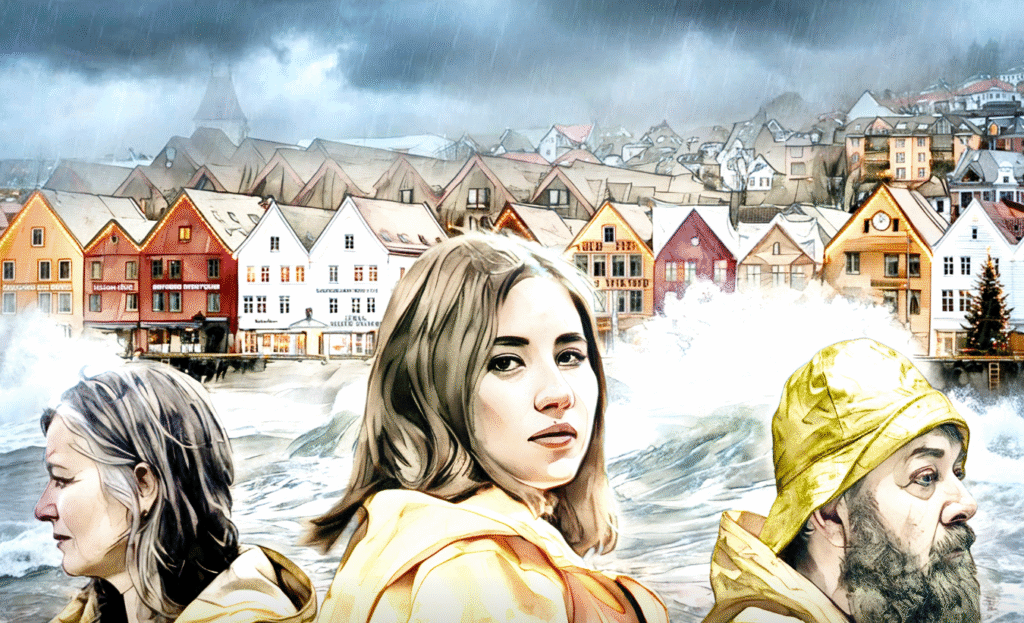
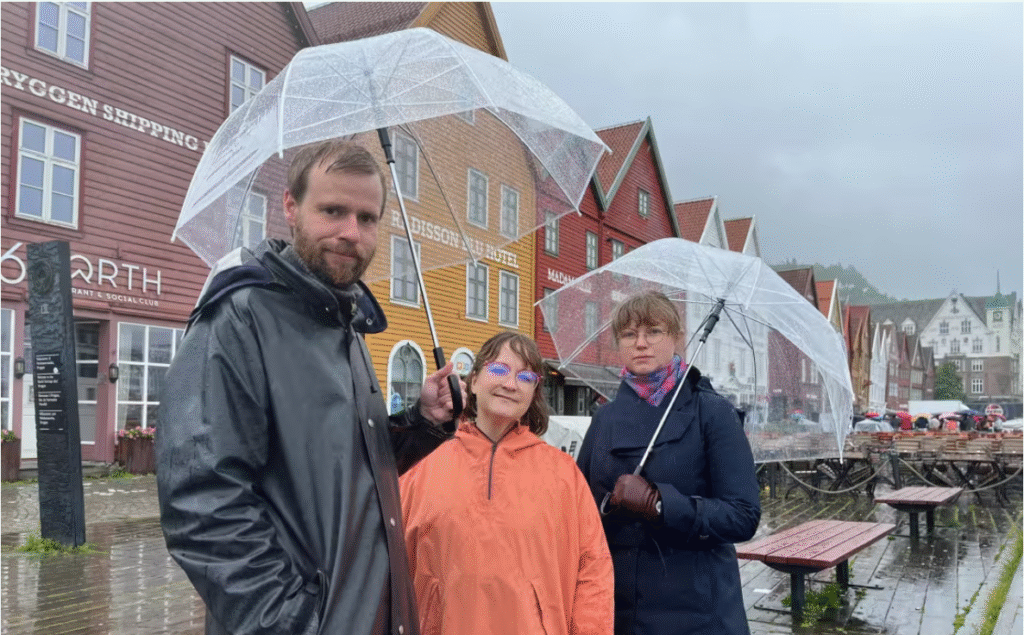
The World Heritage Site of Bryggen is located right by the water in Bergen, Europe’s rainiest city. What will happen to the World Heritage Site in the future is an open question, given that the problems caused by flooding and storm surges will become increasingly severe as the years go by. In Bergen, intensive work is underway to assess the future in order to make informed decisions about how infrastructure needs to change. However, the primary language of climate research is numbers and graphs—and it can be difficult to understand their real implications, even for experts working with future analyses.
To solve the task at hand, Umami wrote two stories based on very different scenarios. They describe the underlying key ideas as follows:
Bye Bye Bryggen is a fictional story about the lives of two siblings. They are born in the early 2020s and experience the great storm that hits Bryggen in 2072. Almost thirty years later, one of the siblings’ grandchildren is given a school assignment: go home and interview your relatives about something that has happened in their lives. Tonje, the granddaughter, has always wondered what really happened during the storm. The only thing she knows is that her grandfather, her mother, and her grandfather’s sister were at Bryggen when the storm struck, where the family had a shop. And that her grandfather and his sister have not spoken to each other since then.
Bye Bye Bryggen is based on the idea that all our decisions—both major political decisions and the small decisions we make in our everyday lives—affect the future. This is what we explore through the story of the siblings. Their private conflict mirrors larger conflicts in the society in which they live. The concept allows you to choose between two different futures. One takes place in a world where major conflicts have been resolved through various forms of agreement. The other is a future in which the conflicts remain unresolved. The idea is that the different versions will stimulate conversations about what kind of future we want, what we are prepared to sacrifice, and which values matter when we are forced to compromise because of climate change.
The project may be called Applied Heritage Futures: set in 2100, it makes audiences think about the role of cultural heritage in managing the relations between present and future societies. This is clearly expressed at the very end of the audioguide when the narrator gives this advice:
“Remember, there are endless possible futures, and whatever future may come, we create it together.”
You can listen to the two versions of the audioguide through The World Heritage of Bryggen at Bergen by downloading the Climaginaries app for free. Highly recommended!
Heritage is often imagined as something we preserve for the future: we identify what matters, protect it from change, and hope it survives long enough for others to encounter it. That is the popular picture, at least.
But Nature suggests another way of thinking about continuity — and it may deserve a place in that conversation.
A soil, a sediment layer or a peat deposit can act as an environmental archive. It records traces of what has happened, yet it never stays untouched.
Material is deposited, transformed, mixed, eroded and redistributed; radioactive substances decay; new ones are formed.
The archive changes continuously — and still it keeps information about the past.
This made me wonder: could it be a useful way of thinking about heritage?
Nature does not preserve by standing still
My recent work concerns a rather obscure radioactive isotope, lead-210 (210Pb), which environmental scientists use to study atmospheric fallout and to date relatively recent sediments, soils and peat.
The interesting point for me was not the isotope itself but the idea of the environment as an archive.
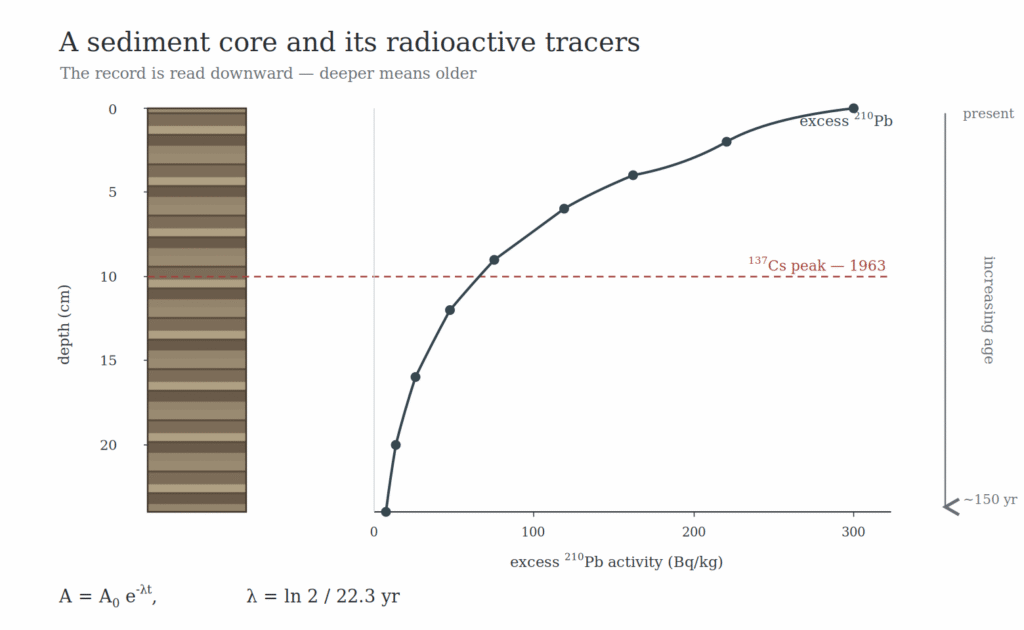
The 210Pb record is not a document filed away intact. It is produced by natural processes that never stop: material arrives, radionuclides transform, sediments shift, and the record that results has to be read and interpreted.
A sediment layer need not stay identical to its original state to tell us something about its history. In other words, the archive stays useful not despite change but through it.
The real question may be less whether something stays exactly as it was, and more whether, as it changes, it still holds on to a pointer to what came before.
This is not a new thought in heritage studies.
Cornelius Holtorf has argued for years that heritage strengthens cultural resilience precisely by helping us accept loss and transformation rather than resist them, and more recently that conservation itself can be understood as regeneration — ever changing, never less than whole. What the environmental sciences add is a very concrete example of the same idea.
Schematic: excess ²¹⁰Pb decays with depth while the ¹³⁷Cs peak fixes 1963 — a record that keeps time while never ceasing to change. (Illustration by the author)
What about human traces?
The uranium-mining landscapes that prompted my study make this more interesting still.
Mining leaves behind long-lived material: tailings, waste rock, stockpiles, open workings and other residues. These keep interacting with air, water, soil, plants and sediments long after the mining itself has stopped. Uranium mines also release radon gas, which travels in the air and, in turn, generates 210Pb.
This raised a specific worry. Most of the 210Pb in soils and sediments comes from radon gas emanating naturally out of the ground; the steady amount that settles each year is what lets scientists read the record, rather as one reads tree rings. Could that extra radon from uranium mines add enough 210Pb to distort the record?
For documented mine sizes, the answer is largely reassuring: the added radon is far too little to shift regional 210Pb levels in any measurable way. Close to a site the picture can differ, and there it is dust and eroded material that could disturb the record.
What I find more intriguing is what the question reveals.
Human activity does not only leave heritage objects behind. It also leaves materials that enter the ongoing processes of nature.
The landscape itself can become part of the recording mechanism.
What this really describes is archaeology — an archaeology that faces the other way. The archaeologist reads a record already deposited; here the record is still being laid down, as heritage or as mining residue, and the question is how some later present will read it.
Memory without stasis
This brings me close to an idea that seems important for heritage:
that keeping memory is about more than keeping things unchanged.
Something can change a great deal and still work as a memory, so long as it keeps some capacity to point beyond itself — to an event, a place, an action, a history.
The pointer may itself change. What matters is that the relationship holds.
Nature offers no end of examples. A landscape can be transformed and still carry traces of earlier uses. Sediments can be disturbed and still preserve a chronology. Material can move, decay and recombine while some trace stays legible.
The archive, in this sense, is not a container. It is a process.
Learning from Nature
The heritage sector will recognise all this; it has been working in this direction for some time. What Nature offers is a reminder of how ordinary the principle really is. It invites a small shift of emphasis — from asking only:
How do we preserve this for future generations?
to also asking:
How might this change through time and still point back — remaining a past that some future can still read?
That is a different kind of responsibility. It does not mean giving up on preservation, nor assuming that every trace will survive.
It means only that continuity and sameness are not the same thing.
Nature does not keep its records by stopping time. It keeps them while time is passing — and culture, in its own way, does much the same.
That is less a lesson Nature teaches heritage than a resemblance worth sitting with: good company, perhaps, for a field already moving this way.
Further reading
Pescatore, C. (2026) An upper bound on uranium-mining radon contributions to regional environmental 210Pb inventories. Journal of Environmental Radioactivity 299, 108143. https://doi.org/10.1016/j.jenvrad.2026.108143
Pescatore, C. (2026) When Nuclear Waste Becomes Archaeology. UNESCO Chair on Heritage Futures blog, Linnaeus University, 25 August 2026. https://blogg.lnu.se/unesco/?p=4834
Holtorf, C. (2018) Embracing change: how cultural resilience is increased through cultural heritage. World Archaeology 50(4), 639–650. https://doi.org/10.1080/00438243.2018.1510340
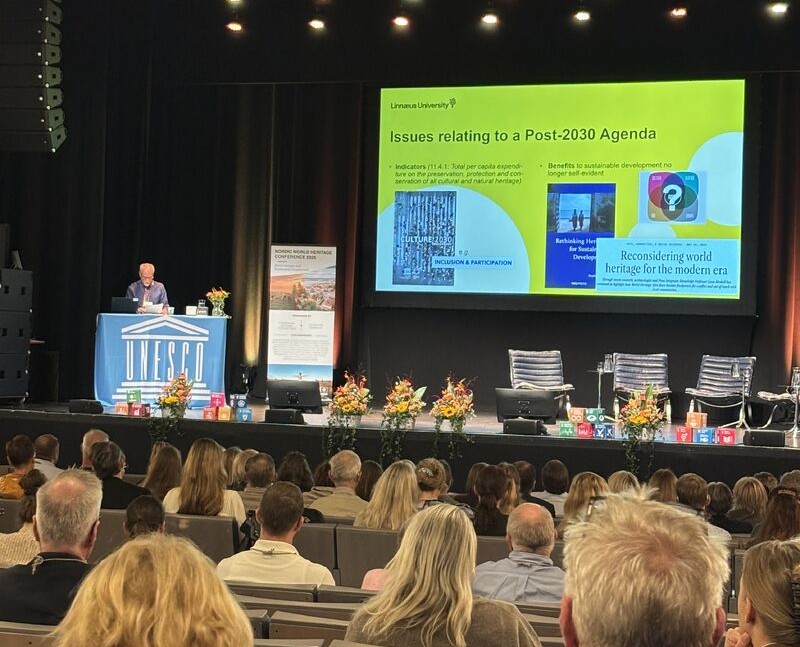
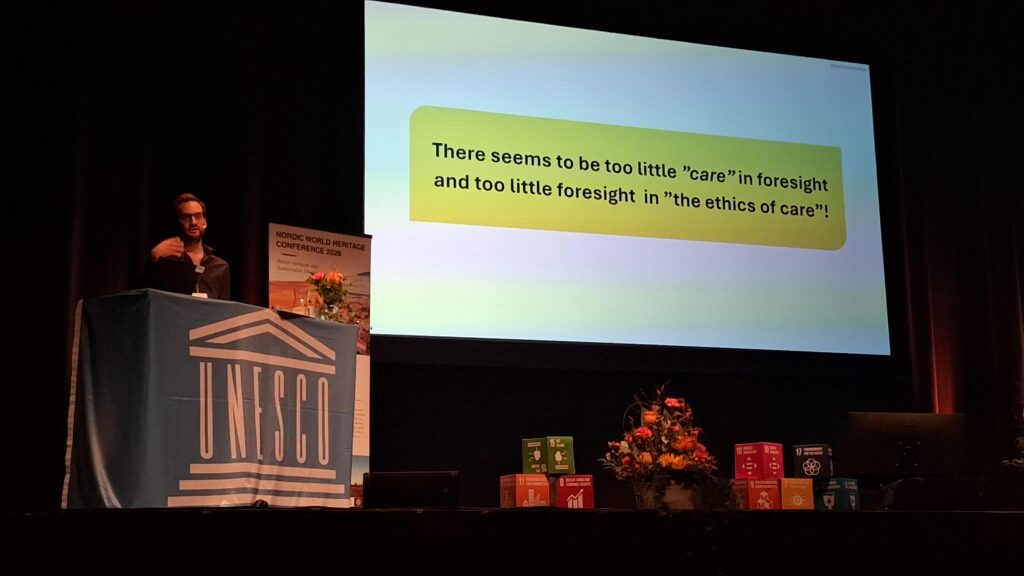
Cornelius Holtorf and Gustav Wollentz were invited speakers at the Nordic World Heritage Conference 2026 attended by about 200 World Heritage managers and policy-makers from all the Nordic countries and held in Karlskrona and on Öland (15-16 October 2026). The theme was “World Heritage and Sustainable Development.”
The conference was officially opened by H.R.H. Prince Carl-Phillip.
Cornelius Holtorf presented a keynote entitled “World Heritage in a Post-2030 Agenda”. He explored the ongoing international dialogue around a post-2030 agenda and its implications for World Heritage. The session highlighted how heritage can relate to future frameworks for sustainable development.
Gustav Wollentz talked about “The value in futures thinking for World Heritage”. He reflected on how future perspectives can—and should—be integrated into World Heritage work.
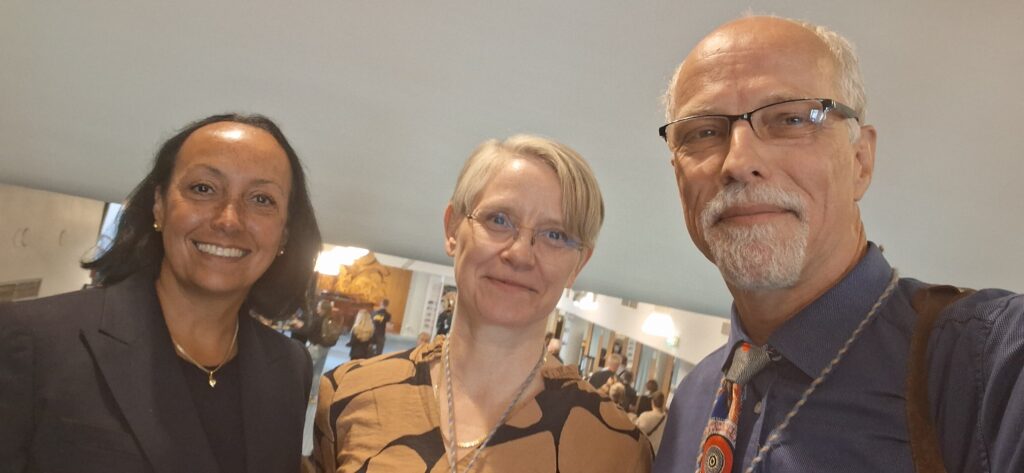
The meeting also provided an opportunity for meetings with colleagues from near and far. Here, from left to right: Elene Negussie (World Heritage Coordinator, Swedish National Heritage Board), Maria Wilenius (Secretary General, Swedish UNESCO Commission, and Cornelius Holtorf).
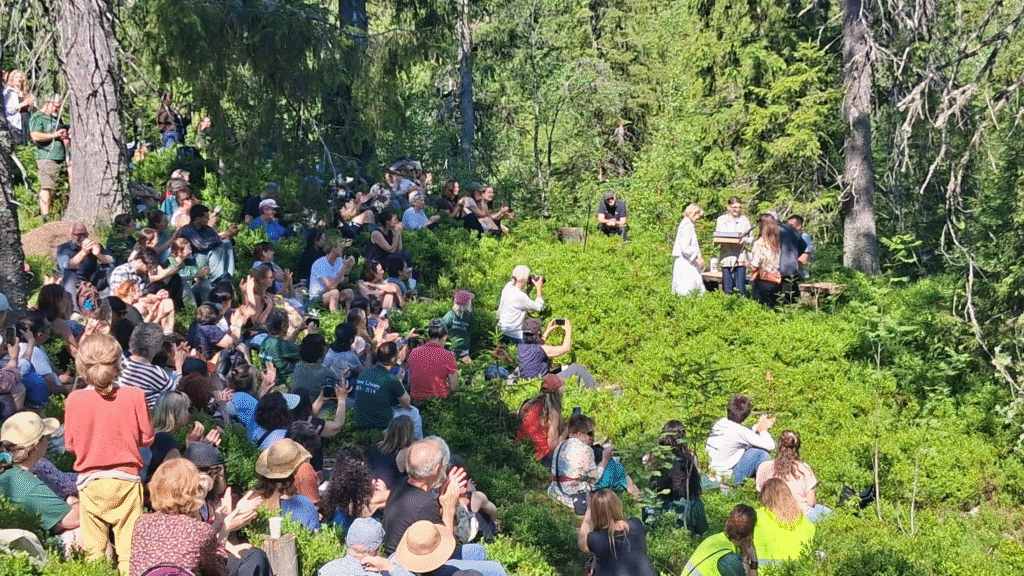
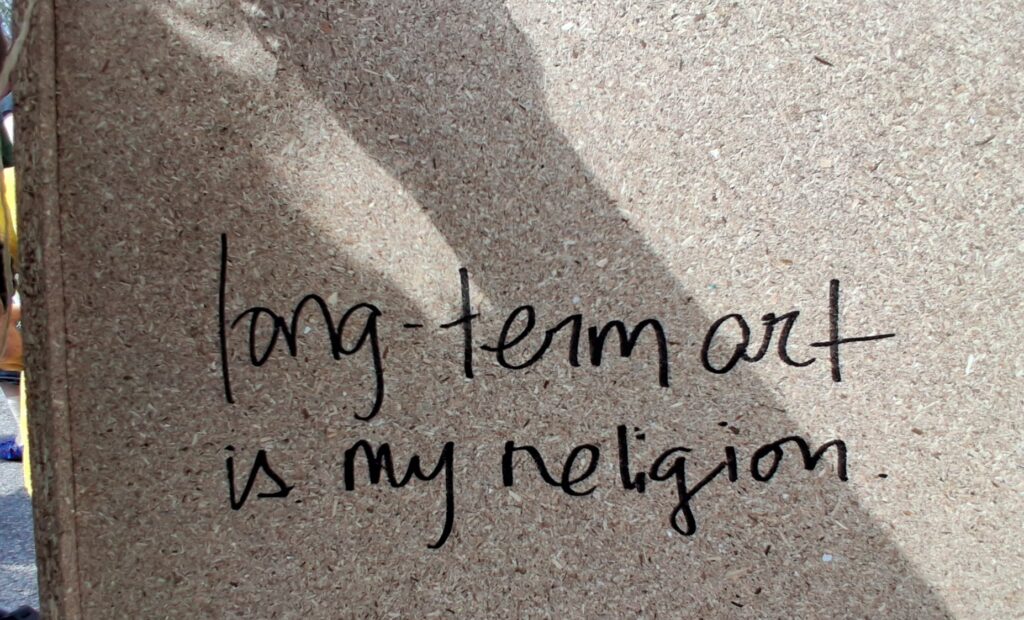
I participated 27-29 June 2026 in a weekend with the Future Library project in Oslo. The occasion was the handover of the manuscripts of Tommy Orange and Amitav Ghosh to this 100-year project created by Katie Peterson in 2014. All three were present. On the main day, some 150 people participated: from Norway, many other European countries, Mexico, and the US.
The handover ceremony on 28 June 2026 in the Future Library forest.
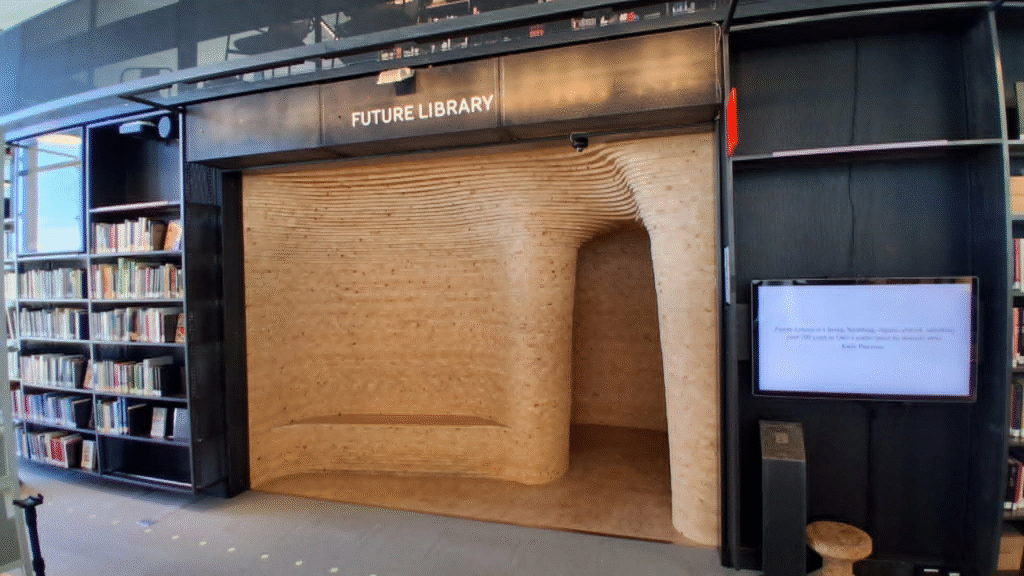
The weekend involved various performances including a handover ceremony in the Future Library forest north of Oslo (see picture above), the placing of the unread manuscripts until 2114 into the Future Library room in the Deichman Bjørvika Public Library in Oslo (see picture below), and a Symposium of the Long-Term Art Projects (LTAP) initiative entitled “What Can Art Do for the Future?”. I contributed by co-chairing (with Richard Sandford, UCL) a panel offering “Perspectives on a Long Future”, with three present custodians of long-term art projects from Germany, the Netherlands, and Austria.
Among the participants of the Symposium were Marianne Borgen (former Mayor of Oslo), Anne Beate Hovind (curator of the Future Library project), Michael Münker (founder and co-ordinator of LTAP) and Lydia Caldana (Foresight Policy Analyst at EU Policy Lab).
I like to see the Future Library project in Oslo, as many of the other long-term art projects elsewhere, as an exercise in practicing heritage futures.
The heritage is in this case is both natural and cultural. The natural heritage is the Future Library forest where in 2014 the trees have been planted that in 2114 are anticipated to be used to produce the paper on which the manuscripts of the (by then) 100 manuscripts will be printed. The cultural heritage are not only the unread texts, the public library where they will be stored until 2114, and the books then to be printed, but also the annual public handover and placing rituals in which many people participate, celebrating the power of art and culture.
The Future Library room, eventually containing 100 unread texts to be printed after 2114.
This heritage is negotiating the relations between present and future societies in several ways. On one level, it transmits texts for up to one century into the future. On another level, it involves a community of authors and project facilitators in the present that takes on a commitment for the future and in doing so spreads hope and trust in many uncertain events and processes that lie ahead of all of us.
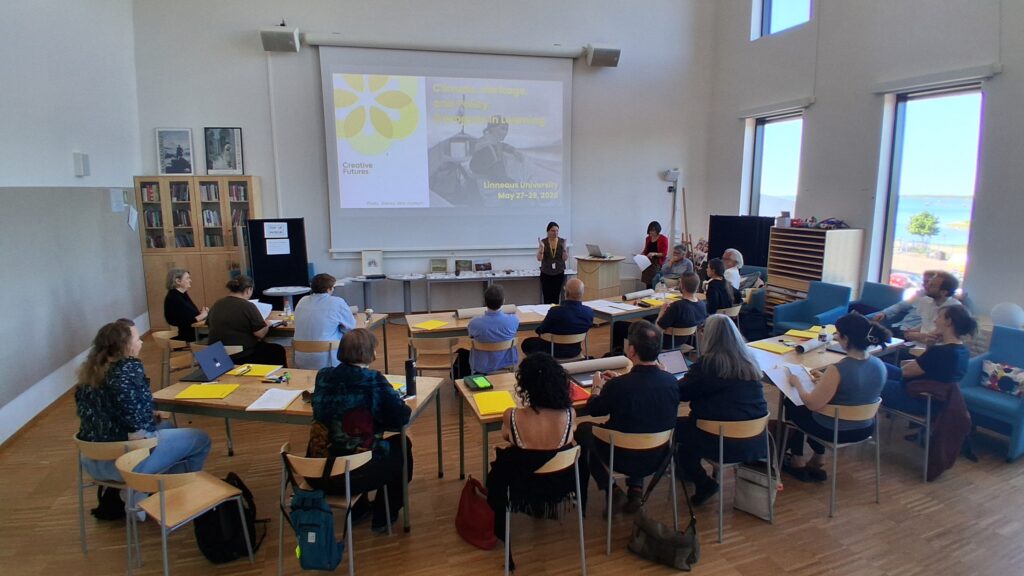
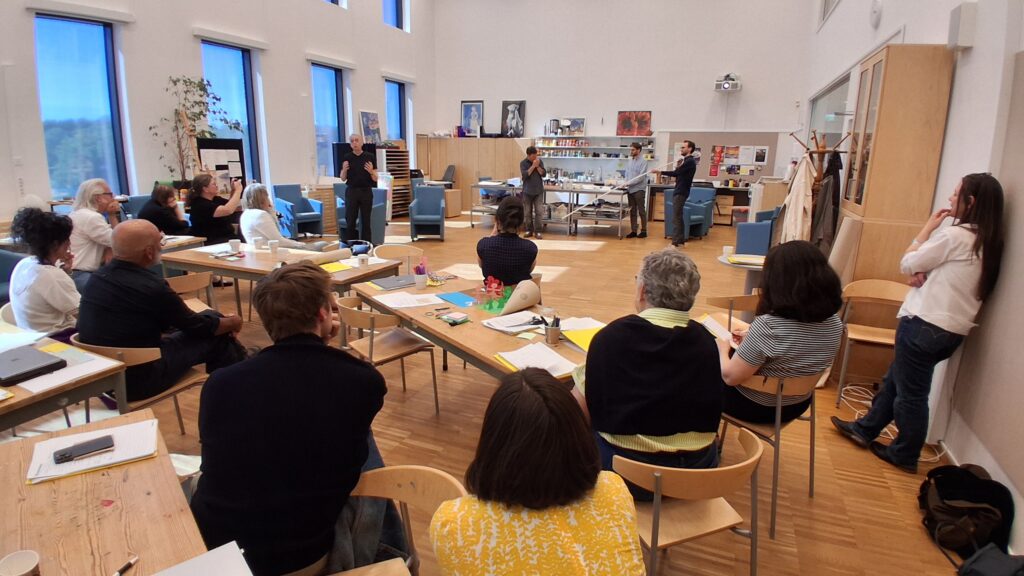
Around 20 specialists in cultural heritage and climate change from Sweden, Norway, Denmark, France, the UK, and the US attended the workshop on “Climate, Heritage, and Policy: Dialogues in Learning”, organised by Marcy Rockman at Linnaeus University on campus Kalmar (27-30 May 2026). The workshop was supported by a grant from the Swedish Research Council.
The workshop related directly to heritage futures, i.e. the role of cultural heritage in managing the relations between present and future societies. Its aim was to develop a framework of learning and dialogue to promote a body of practice that integrates across fields of climate change, archaeology/heritage, and governance practices.
The discussions generally prioritised people over objects, change over preservation, global over national concerns, and the future over the past.
The workshop asked a series of timely questions over the course of the four days. What I have been taking away includes thoughts about the following issues (others will have taken away different thoughts):
how are we to discuss climate change in relation to cultural heritage that is deeply problematic?
what happens when we recognise that knowledge about climate change is based on social truths?
how are we to draw on the potential of cultural heritage to make climate change deeply personal?
are there better terms than the homogenising notion of “community” for describing the humans affected by climate change?
is unlearning possibly more important than learning?
how can we best harness the power of engaging with collaborators as human beings rather than as experts?
is climate change necessarily a threat or can it also be considered as an opportunity?
who do we want to be and how do we want to live, now and in the future?
Among the ways of working were group work, artistic expression, and fieldwork in Kalmar, involving all the senses.
The creativity and playfulness in methods amounted to what participant called “epistemic disobedience”. It also resulted in much enjoyment among the participants and led to concrete discussions of future collaboration in a number of specific contexts.
Importantly, we had glorious summer weather throughout the workshop and even on the excursion day to Öland on the final day!
The following members of the UNESCO Chair on Heritage Futures participated in addition to Marcy Rockman and myself: Anders Högberg, Gustav Wollentz.
A more detailed report about the precise aims and results of the workshop is being prepared and will be made available via this blog in due course.
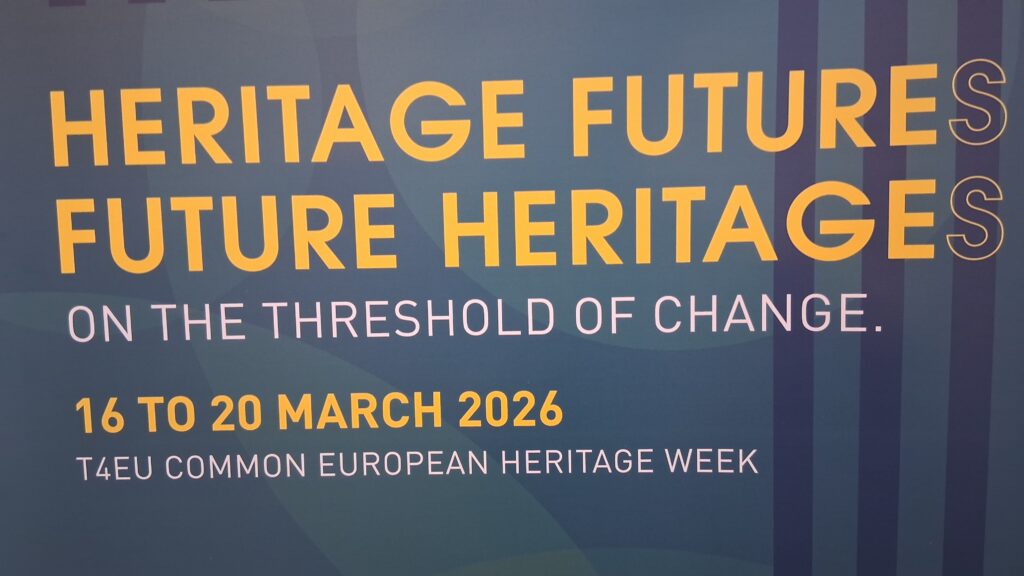
Cornelius Holtorf presented an invited keynote lecture on “Heritage Futures: From Conservation to Change” for an audience of almost 100 students, researchers and University teachers, attending the international conference EPoCH2026 · Heritage future(s) / future heritage(s): on the threshold of change held at Católica University, Porto, Portugal. The slogan of Católica is “The University of the Future” (19 March 2026).
EPoCH is an annual scientific conference, organized by the Heritage & Conservation-Restoration Focus Area of the Centre for Science and Technology of the Arts (CITAR) of Universidade Católica Portuguesa, intended as a forum for discussions on future directions in heritage and conservation-restoration research, embracing collaborative conversations driven by emerging perspectives and the exploration of a diverse array of practices, theories, and approaches. In 2026, EPoCH was organized in connection with the Transform4Europe (T4EU) alliance and was part of the broader framework of the T4EU Sustainable Heritage Conference and T4EU Common European Heritage Week.
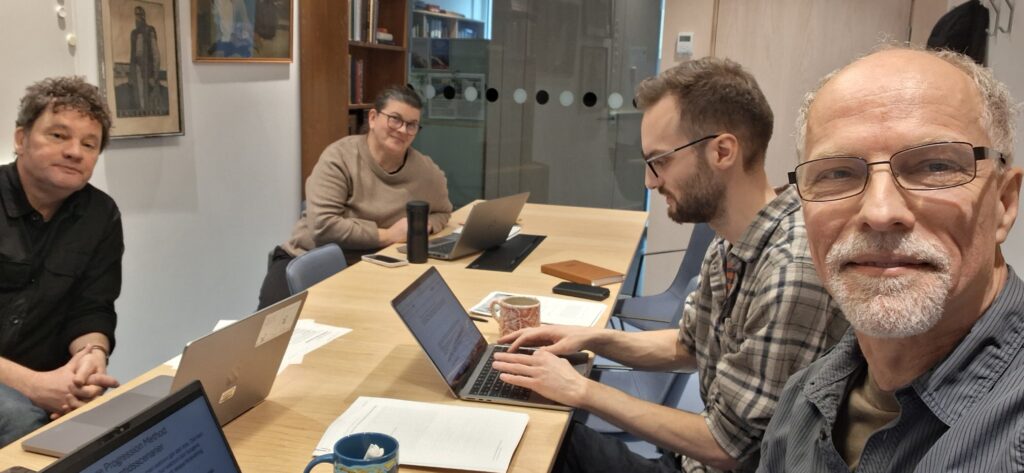
The team at Linnaeus University working on behalf of the Swedish National Heritage Board on a future national research agenda on sustainability spent most of the day to hold an internal futures workshop (16 March 2026).
Anders Högberg, Ulrika Söderström, Gustav Wollentz, and Cornelius Holtorf used Causal Layered Analysis to rethink cultural heritage and identify new perspectives to be taken and new questions to be asked concerning cultural heritage and social sustainability.
One underlying metaphor for cultural heritage in the future might be: “The cultural heritage of the future, we create ourselves, together.”
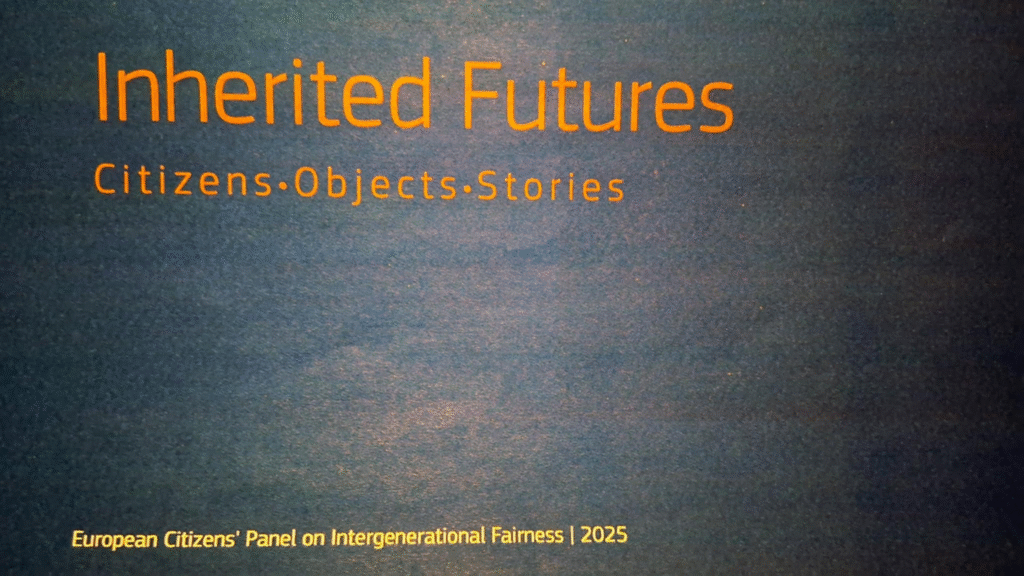
The EU Commissioner för Intergenerational Fairness recently published a report entitled Inherited Futures. Citizens – Objects – Stories. I downloaded it here I think but it is no longer available there now (if anybody finds it please let me know).
This 200+pages-report documents the objects and stories of 150 randomly selected citizens from all 27 EU Member States who were asked what intergenerational fairness means to them.
The objects and stories they selected make intergenerational relations tangible and personal. Many of these citizens chose what reminds them of their grandparents, what they care about for the future, and/or what they choose to pass on to their children or grandchildren. As the Introduction to the report concluded, many objects are small bridges between past and future.
This collection of citizens’ objects and stories is in fact a collection of ‘heritage futures’, exemplifying how cultural heritage can manage the relations between present and future societies in people’s ordinary lives.
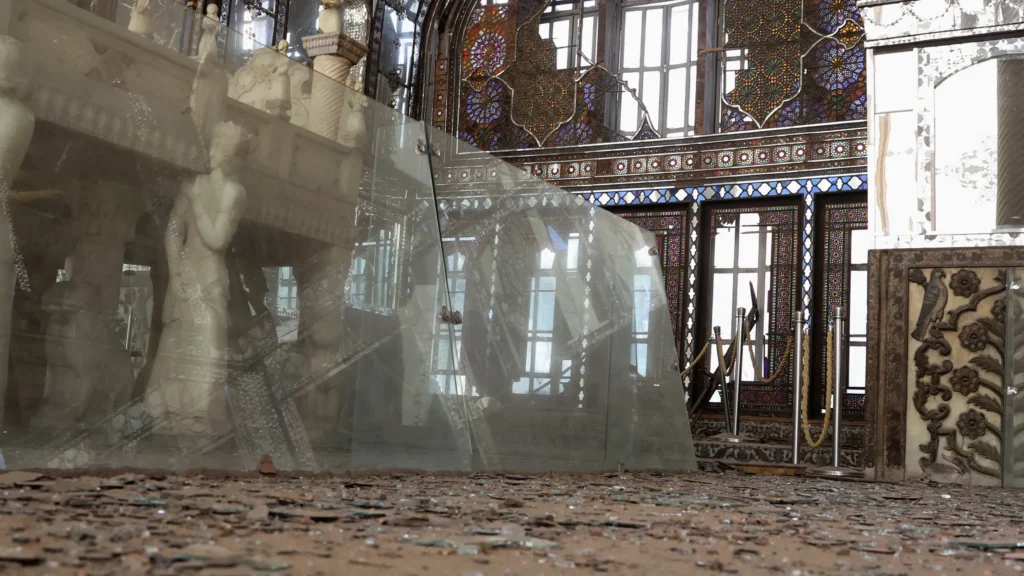
Golestan Palace, a UNESCO World Heritage site, was severely damaged on 2 March 2026 during the USA–Israel war against Iran. According to Khabaronline (2026), portable artefacts had been transferred to storage during the twelve-day war in June, and only the buildings themselves were affected by the explosions. The palace dates back to the fifteenth century and includes several buildings, gardens, exhibition halls, and galleries. It was used and developed mainly during the Safavid (1501–1736) and Qajar (1789–1925) dynasties, and was added to the UNESCO World Heritage List in 2013. It remains the only UNESCO-registered site in the capital city of Iran.
One of the most significant aspects of the palace is its vast archive, which includes more than 60,000 historical photographs, 9000 negatives and videos, and around 1,520 albums. For many years, independent scholars, researchers who do not work for the Iranian state, had great difficulty accessing this archive. In June 2024, however, an anonymous individual or group uploaded part of the photographic collection online (about 3200 photos). Their identity has never been revealed, and it remains unclear how they were able to access, digitize, and publish the albums in the public domain.
When the archive became available, I began to reflect on why access to these materials had been so restricted. The albums contain hundreds of photographs from the late nineteenth century, particularly images from the court and the harem of Naser al-Din Shah Qajar (1831–1896) and his many wives. These photographs reveal social norms or communities that the Islamic Republic has long denied or labeled as “westernized”: enslaved people, men holding hands, same-sex lovers, the king’s wives posing semi-nude before his camera, and a society far more complex and diverse than the homogenized image of the past promoted by the state.
Among these albums, one is especially important for understanding the concept of heritage in modern Iran: Album 137. I first learned about this album in 2011 after one of my students (S.) told me she had encountered it in Golestan Palace while she was there for another reason. She mentioned that the album contained photographs related to the archaeological excavations at Susa.
Maryam Dezhamkhooy, S., and I went to the palace to search for it. By chance, we met Dr. Chahriar Adl (1944-2015), an Iranian archaeologist, there. He kindly helped us obtain permission to make copies of the photographs. This was something that would have been nearly impossible without his support.
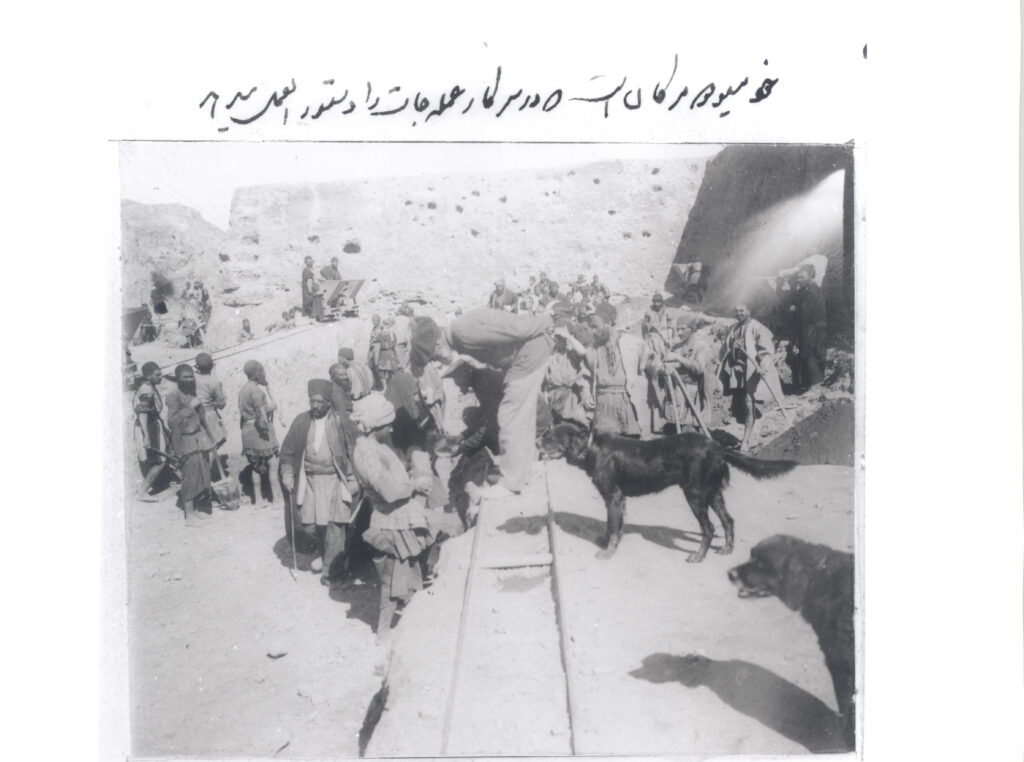
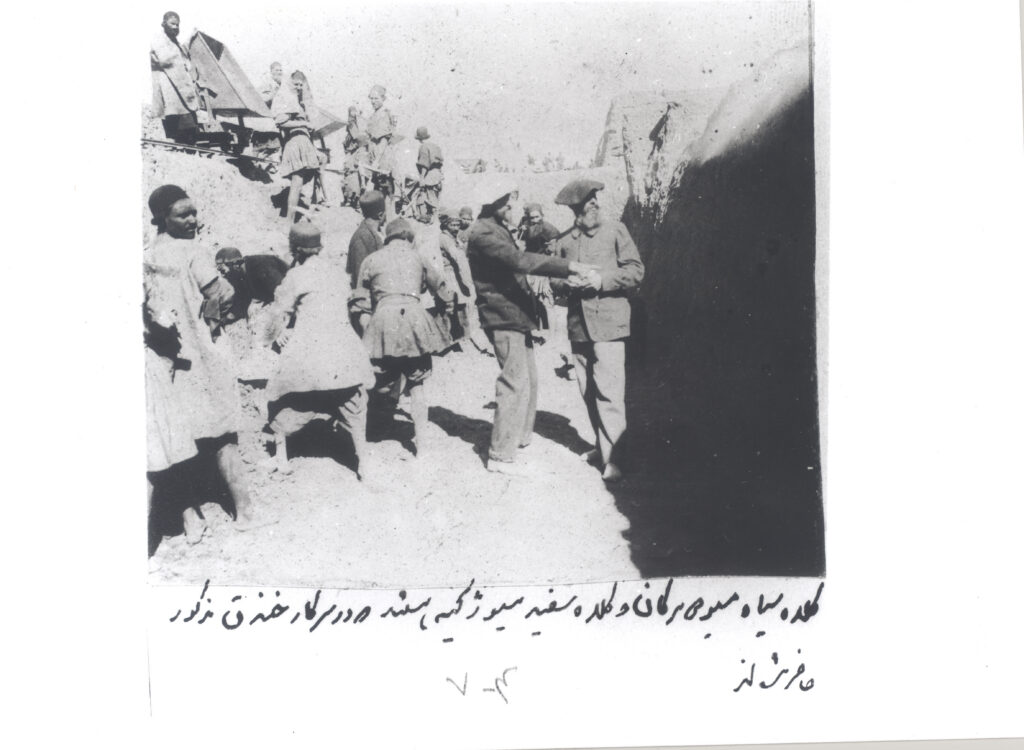
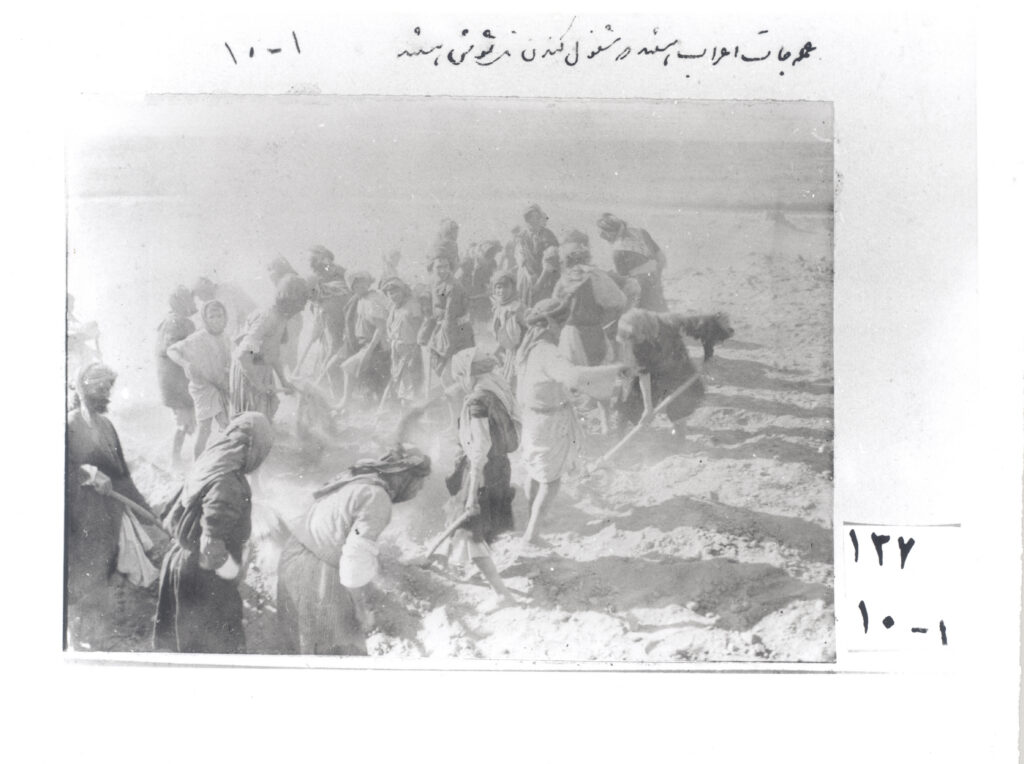
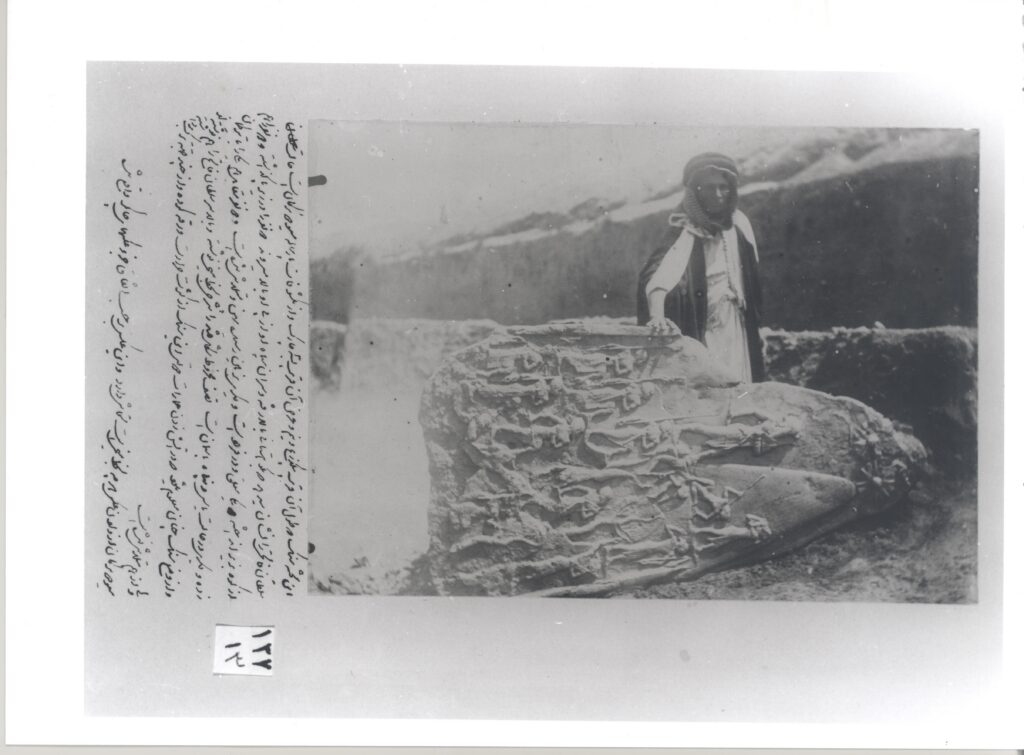
These photographs were later made public together with the rest of the archive. Album 137 contains 27 photographs related to the excavations at Susa led by Jean-Jacques de Morgan (1857–1924). According to the album’s description page, the photographs were taken in 1899–1900 (1317 A.H.) by a man named Heidar Milani while he was passing through Susa on his return mission from the southwestern province of Iran (Arabestan at the time and now, Khouzestan). In his note, Milani uses the phrase hasab-al amr-e al-a’laa, indicating that he took the photographs following an order from a higher political authority.
People consisting of de Morgan (Figure 2), his assistant (Figure 3), and workers (Figure 4) appear in eleven of the photographs, offering a rare glimpse of how he conducted his excavations. De Morgan, originally a geologist, used mining techniques to excavate archaeological sites and caused considerable damage to sites in Iran and Egypt, such as Susa. He dug a large tunnel through the main mound at Susa and destroyed the archaeological layers, made big holes that compromised the preservation of the site very difficult till now. Milani’s captions note that the workers visible in the photographs were indigenous Arab inhabitants of the region.
Another revealing detail appears on the cover of the album: a note written by a retired Iranian archaeologist who, after the 1979 revolution, had been responsible for overseeing archaeological institutions (Papoli-Yazdi, 2023). The note is dated 10 April 2011 and records that three other members of the Iranian Cultural Heritage Organization and the University of Tehran accompanied him on his visit (which indicates the importance and formality of the visit).
In the photographs where de Morgan appears, he is always positioned at the center. The large groups of local workers surrounding him remain anonymous through the photographer’s lens, or their bodies are only used as a scale to promote the size of an archaeological finding (Figure 5).
French missionaries, antiquarians, and archaeologists played a crucial role in shaping the modern idea of the identity of Iranians as a nation-state in the late nineteenth and early twentieth centuries. They transformed a largely mythical past into one defined by monuments and archaeological sites such as Susa, without considering the narratives of local communities and indigenous researchers.
During the past century, heritage in Iran has repeatedly been at the center of tensions between state power and nationalist narratives. At times, these two forces have overlapped, jointly marginalizing the perspectives of indigenous communities as well as those of independent researchers. Yet there has always been a third force, colonialism, one whose influence is often denied by both the state and nationalist discourse. Iranian nationalism frequently frames the country’s heritage as exceptional and uniquely its own, leaving little room to acknowledge external structures of power.
Today, however, the role of colonialism is bolder. The buildings of Golestan Palace have been damaged by explosions for the first time in their long history, despite standing in the center of a city that has endured Russian imperial influence, revolutions, coups, invasion by Allies, and two world wars.
However, Golestan Palace is not merely a collection of buildings. It also houses one of the largest historical archives in the world, whose preservation ensures the possibility of recovering at least part of the past, which has been mainly written by the states and colonizers; the preservation of this archive allows the denied and ignored heritage and past to be reinterpreted, re-narrated, and rewritten in the future. The destruction of Golestan Palace will transform the future of the past.
This destruction raises new questions about the future of the palace and its archive, as well as the future of archaeological narratives and the history of the heritage idea in Iran. Where is the archive? Is it possible that authorities/colonizers destroy unwanted parts of it? Will independent researchers be able to access the materials of Golestan Palace in the future? Or will the next political order conceal, reinterpret, or selectively reveal them in order to shape a new narrative in the future about Iran’s heritage and the history of archaeology within the country?
Leila Papoli-Yazdi Archaeologist of the contemporary past and Garbologist and member of the UNESCO Chair on Heritage Futures
Papoli-Yazdi, L. (2023) Confessions of a Green Notebook: Reading Unpublished Documents About the Oppression of Iranian Archaeology Professors During the 1980s. Archaeologies. https://doi.org/10.1007/s11759-022-09468-9
Captions:
Figure 1- Debris at the historical monument Golestan Palace after it was damaged in an Israeli and U.S. strike, amid the U.S.-Israeli conflict with Iran, in Tehran, Iran, March 3, 2026. Photographer: Majid Asgaripour
Figure 2 – The caption reads: “Monsieur de Morgan, himself giving instructions to the workers” (photo 137-7-1, from Album 137). Photographer: Heidar Milani.
Figure 3 – The caption reads: “The man with the black hat is Monsieur de Morgan, and the man with the white hat is Monsieur Jacquier (?), present at the work taking place in the mentioned ditch” (photo 137-7-4, Album 137). Photographer: Heidar Milani.
Figure 4 – The caption reads: “Arab workers digging the mentioned ditch” (photo 137-10-1, from Album 137). Photographer: Heidar Milani.
Figure 5- Victory of Naram-Sin over the mountain tribe of the Lullubi and their king Satuni, Louvre. The caption describes the scene of the stele (photo 137-13, from Album 137). Photographer: Heidar Milani.


[…] The new funding for this and a number of additional smaller projects, means that the Climate Heritage Network is…
[…] Chair on Heritage Futures « Culture, cultural heritage and COP26 […]
[…] mer på Unescoprofessurens blogg http://blogg.lnu.se/unesco/?p=1061 Besök Öland 2050! […]