UNESCO

Chair on Heritage Futures

Intangible Cultural Heritage and Climate Change

2024-06-19

I have been invited by UNESCO to contribute to a meeting of nearly 40 international experts and UNESCO staff on Safeguarding intangible cultural and climate change, held on 19-20 June 2024 at UNESCO in Paris.

Among the attendents I was presenting for were Fumiko Ohinata, Secretary of the UNESCO 2003 Convention, Susanne Schnüttgen, Chief of Unit for Capacity Building and Heritage Policy, Culture Sector, UNESCO, and two more UNESCO Chairs: Heba Aziz, UNESCO Chairholder for World Heritage and Sustainable Tourism Management in the Arab region at the German University of Technology in Oman—GUtech, and Susan Keitumetse, UNESCO Chairholder for African Heritage Studies and Sustainable Development, University of Botswana.

See UNESCO’s news report here.

Venice Charter Reframed

2024-05-28

Cornelius Holtorf presented a talk entitled “The Climate Heritage Paradox — considering regeneration” for ca. 30 international heritage experts at the conference Venice Charter [Re-] framed 1964-2024: New Heritage Challenges held at the Faculty of Arts and Humanities, University of Lisbon, in co-operation with ICOMOS Portugal, in Lisbon, Portugal (28 May 2024).

In my paper I argued for a shift in the approach to cultural heritage management. Moving beyond the Venice Charter’s focus on conservation as preservation of historical evidence, I advocate for a perspective of regeneration. This involves viewing cultural heritage not as static artifacts but as dynamic, ever-changing entities akin to ecosystems. By embracing change and transformation, cultural heritage can contribute to human and non-human well-being, resilience, and sustainability in the face of contemporary challenges like the climate crisis. (summary provided by Chat GPT)

In relation to the main theme of the conference addressing 60 years since the Venice Charter, it seems to me that what has changed since 1964 may be summarised like that:

The Venice Charter focuses a great deal on establishing fairly restrictive policy in the name of preserving ancient fabric as a living and authentic witness of the past. But today many experts are more interested in what cultural heritage does (or can do) for people and society, not the least in the light of challenges like those caused by climate change.

Do we need a revised policy maximizing the benefits of heritage for people?

UCLA Talk

2024-02-22

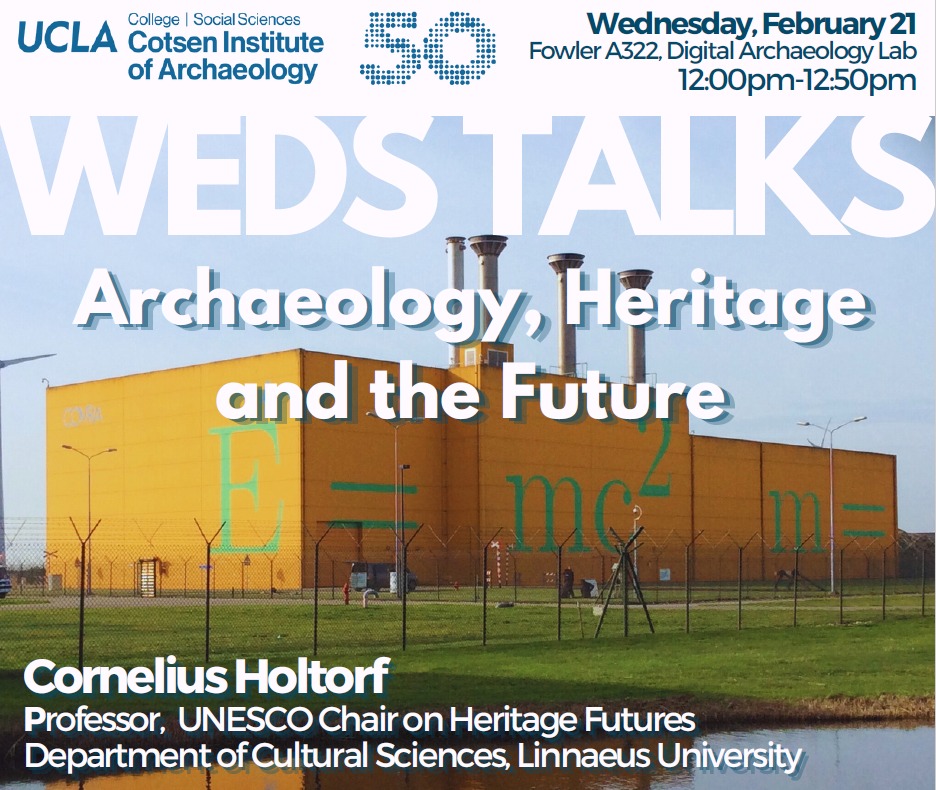
My Wednesday Pizza Talk at the Cotsen Institute of Archaeology attracted an audience of cirka 40 undergraduate and graduate students, researchers and Faculty.

I discussed the connections between Archaeology, Heritage and the Future, using examples ranging from prehistoric futures to UNESCO World Heritage properties to contemporary long-term repositories for nuclear waste. I also discussed the concept of ‘heritage futures’ and how it matters in relation to sustainable development and to addressing challenges posed by climate change and violent human conflicts.

I concluded summarising what the Archaeology of the Future is all about and what it takes to become a Future Archaeologist oneself – with inspiration from Disneyland.

Getty Scholarship

2024-01-31

January through March, Cornelius Holtorf spends in Los Angeles, USA as a Getty Conservation Guest Scholar.

During this time he is concerned with a project entitled “Heritage in Transformation”. His main question is this: if the future will be (and must be) changing in relation, among others, to the climate crisis, what does that mean for how the past and cultural heritage will be changing and have to change?

Climate Change and Coastal Erosion

2023-04-06

Cornelius Holtorf was invited to Norwich in the UK to attend a British Academy-funded conference and expert workshop on Measuring Loss and Damage to Heritage from Climate Change for Effective Policy Reporting at the University of East Anglia (UEA).

Holtorf argued in favour of replacing the emphasis on ‘loss and damage’ with a stronger appreciation of the potential use of heritage for enhancing people’s well-being in the face of climate change and its implications. But another focus of the 2-day discussions was how to measure the loss of culture and heritage so that it can be included in high-level climate discussions.

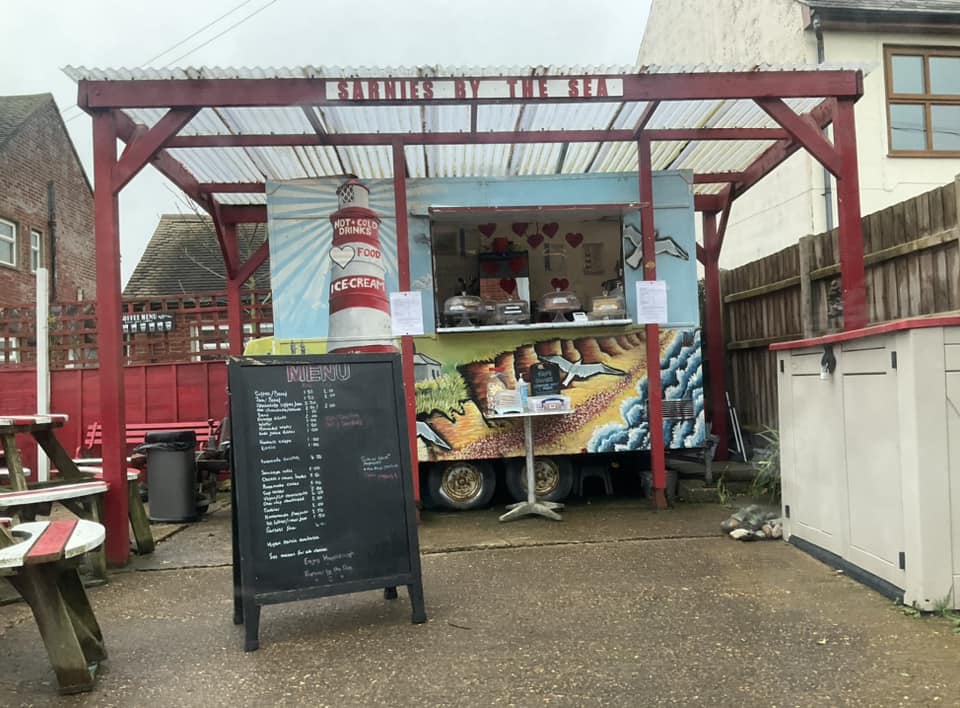
Food heritage is partly intangible and selling points are mobile – a good thing when the coast is eroding rapidly.

The days of discussion were followed by an excursion to the coast of Norfolk to witness coastal erosion and get engaged in informal discussions on the mobility of cultural heritage and peoples’ lives under changing conditions.


COP 27 on loss and damage

2022-11-18

The United Nations Climate Change Conference (COP 27) held in November 2022 in Sharm El-Sheik, Egypt, featured among many other events a session entitled “Losing the Irreplaceable: Loss & Damage, Culture & Heritage” which was arranged as part of the Resilience Hub on 17 November 2022.

This session, which Cornelius Holtorf attended digitally, was about cultural dimensions of loss and damage as a result of climate change. It asked: How does one grieve from the loss of the irreplaceable? What is the price of cultural extinction? Does loss mean the same thing in every culture?

In this perspective, heritage represents something irreplaceable that needs to be saved from loss and protected from damage.

But another way of looking at some of these issues is by asking: can heritage help us to increase resilience and adapt culture and heritage to changing natural conditions? What heritage is being created as a result of climate change? How can we enhance wellbeing of future generations despite major transformations we anticipate? 

As Hannah Fluck of the National Trust in the UK explained, one innovative strategy forward is focussing on “adaptive release”.

Responding to the climate emergency

2022-10-01

I have been attending the UNESCO World Conference on Cultural Policies and Sustainable Development MONDIACULT 2022 in Mexico-City (28-30 September 2022). My University made a story out of it!

My formal role was an invited statement in the session “Responding to the climate emergency: new imperatives for cultural policy”, organised by the Climate Heritage Network. The session attracted an audience of more than 60 participants in the room (plus an unknown number of digital listeners) and it was very well received.

In my short contribution, I emphasized the significance of culture for mitigating the climate crisis and for preparing for a different world in the future. I also noted what I called the Climate Heritage Paradox:

  1. Heritage promotes continuity when we in fact need change.
  2. Heritage is framed in a local/national context when in fact we need global and multilateral collaboration.

(Similar issues are now also discussed in a White Paper on “The role of cultural and natural heritage for climate action” which resulted from the  International Co-Sponsored Meeting on Culture, Heritage and Climate Change co-arranged by IPCC, UNESCO, and ICOMOS in December 2021.)

I concluded with two action items. Capacity building is necessary …

  • for the cultural sector generally: integrate foresight and long-term futures thinking throughout the sector (as also recommended in the UN Secretary General’s 2021 report on Our Common Agenda)
  • for the cultural heritage sector and education in heritage: (a) embrace more often change (or cultural diversity over time), not as much continuity and conservation, as well as (b) strengthen global thinking in the field.

World heritage and looking forward…

2022-06-15

Architect and world heritage expert Roha Khalif recently published a very interesting paper on “Periodic Reporting under the World Heritage Convention: Futures and Possible Responses to Loss” in the journal The Historic Environment.

Partly drawing on our work on heritage futures, Khalif proposes

adding future-oriented questions to the questionnaire before the start of the fourth cycle [of the periodic reporting exercise]. This proposal offers actors in the World Heritage system an opportunity to have constructive discussions on futures and possible responses to loss. As a result, periodic reporting may become more forward-looking, proactive, and relevant to the challenges of the twenty-first century, especially climate change.

We will be following her work and may be able to establish some collaboration with Khalif in the future!

Climate Ruins

2022-05-23

‘Carbon Ruins’ is an exhibition project aiming to transport the visitor into a future where transitions to post-fossil society has already happened. The project is the result of several initiatives at Lund University, most notably the Narrating Climate Futures Initiative, the Climaginaries project and the think tank LU Futura.

Here is the pretext of the exhibition.

It is 2053. The Swedish government has just opened its landmark museum FOSSIL with its first exhibition Carbon Ruins. The exhibition and its grand opening is a celebration of the fact that global net-zero emissions of carbon dioxide were reached in 2050. Sweden, in line with its 2017 targets, reached net-zero emissions of greenhouse gases already in 2045, being the first country in the world to step out of the fossil era, which globally lasted between 1849 and 2049.

Intriguing, especially from a perspective informed by archaeology and cultural heritage (which does not seem to have informed the design of the exhibition)! I hope to be able to see it one day…

White Paper published

2022-04-19

Collaboration between the two Joint Programming Initiatives “Cultural Heritage and Global Change” (JPI CH), and “Connecting Climate Knowledge for Europe” (JPI Climate) 2019-2022 has now led to a White Paper on Cultural Heritage and Climate Change: New Challenges and Perspectives for Research. Cornelius Holtorf was among the 26 authors.

The goal of the White Paper is to support the two JPIs to generate policy-relevant research outcomes. Thanks to our input, the 31 page-document emphasizes explicitly the significance of ‘heritage futures’ for informing future research agendas:

Among the White Paper’s recommendations for research are…

  • to generate more knowledge on how, in different contexts, cultural meanings and values can enhance climate adaptation and mitigation,
  • to understand better the future risks and opportunities of different perceptions and uses of cultural heritage, not the least for planning climate adaptation,
  • to make sure that more training is available for stakeholders and decision-makers regarding feasible solutions for climate adaptation, including effective methods to evaluate benefits and harm of conservation actions,
  • to investigate threats and opportunities of reducing, renewing, reconstructing, and regenerating cultural heritage for enhancing social cohesion.