
When Nuclear Waste Becomes Archaeology
2026-08-25
By Claudio Pescatore
Most archaeological sites are places where the past resurfaces. Nuclear waste repositories may become places where the future does.
Deep geological repositories are usually described as engineering projects designed to isolate radioactive waste for hundreds of thousands of years. But from a heritage perspective, they are also something else:
- deliberate structures meant to outlast civilizations
- physical archives of technological activity
- long-lived material inheritances left by the present for societies that may no longer remember why they were created.
The repository is not an archaeological site in the ordinary sense. It is not a ruin, a monument, or a cultural treasure. Yet it shares one troubling feature with archaeology: it depends on the survival, loss, and possible reconstruction of meaning over long periods of time.
Future societies may not recognise these sites as we intend. They may intersect them through mining, drilling, construction, land use, or curiosity. What was meant to remain isolated may be brought back into history.
1. The paradox of disposal
Geological disposal promises closure. Once a repository is sealed, the waste is meant to disappear from human affairs. The site is meant to pass from politics into geology.
Yet this aspiration sits uneasily with human history. Buried things do not always remain buried. Mines are reopened. Landscapes are reworked. Ancient structures are excavated, misread, reused, damaged, or turned into resources. The surface and the subsurface are repeatedly reconnected by human action.
This is the paradox of disposal. The repository is designed to leave history, but history has a way of rediscovering what was placed underground.
The safety case therefore depends not only on geology and engineering, but also on memory, meaning, and the possibility that future societies may no longer understand what lies below.
2. The drilling scenario: when isolation is bypassed
In nuclear safety assessments there is a scenario called inadvertent human intrusion. A future driller accidentally intersects the repository and brings radioactive material to the surface.
Technically, this scenario is treated as a test of repository robustness. It asks whether a localised disturbance would compromise the disposal system as a whole. From a heritage-futures perspective, however, it also marks something else: the point at which a deliberately isolated material inheritance is reactivated.
This is not archaeology in the narrow professional sense. The future actor may not be an archaeologist at all, but a driller, miner, builder, land user, or technician. The analogy lies elsewhere. Archaeology reminds us that buried human traces do not necessarily remain outside history. They can return under new conditions, with meanings very different from those intended by their creators.
Human intrusion is therefore not simply an encounter with the past. It is a bypass of isolation. It is the moment when material intended to remain outside surface life is brought back into soil, water, work practices, land use, and possible future memory.
And this moment may be closer to us than the phrase “deep future” suggests. In safety assessments, loss of memory is often assumed, for modelling purposes, only a few centuries after closure.
3. Where the safety model stops
In current safety assessments, the drilling scenario is usually resolved through a short-term radiological exposure calculation for selected receptors. The model may estimate the dose to drilling workers, residents, farmers, or other stylised individuals.
But the material brought to the surface does not disappear when the calculation ends. It remains present. It can be dispersed, diluted, leached, handled, forgotten, remediated, reused, or incorporated into the landscape.
At that point, the waste is no longer only an isolated technological object within a repository model. It has become surface material again: part of soils, waters, biota, land use, and possible future stewardship.
This is where the safety model often stops precisely as environmental history begins.
4. Continuity with nature
Heritage scholars often think about the continuity of human traces through time. Nuclear waste asks us to think about another kind of continuity: the continuity of hazardous materials within Earth systems.
Once brought to the surface, substances such as uranium, plutonium, neptunium are not only entries in a dose model. They are persistent materials. They can remain in soils and waters for very long periods, interact with living systems, and raise chemical as well as radiological concerns.
The issue is therefore not only whether the repository remains robust after a local disturbance. It is also what happens to the material that has crossed the isolation boundary.
This is what I call continuity with nature: the need to follow the material beyond the repository model, into the ordinary environmental systems from which geological disposal was meant to isolate it.
5. What this means for heritage thinking
Seen from this perspective, nuclear waste is not only a technological problem. It is also a cultural and temporal one. It raises questions about:
- how societies transmit knowledge across generations
- how responsibility persists when institutions disappear
- how material traces of the present shape distant futures
- how hazardous materials may re-enter landscapes and ecologies
- how future societies may interpret, ignore, disturb, or inherit what we have buried.
Geological repositories may therefore become among the most consequential heritage sites humanity leaves behind. Unlike most archaeological sites, however, this inheritance would not only tell the story of our civilization. It could continue to shape the environments encountered by those who rediscover, disturb, or live with it.
Thinking about nuclear waste therefore requires more than engineering foresight. It invites a broader reflection on heritage, responsibility, environmental continuity, and the material traces we leave to the deep future.
For readers interested in the technical and social sciences dimension of this question — particularly how nuclear safety assessments model future drilling scenarios and where those models end — I explore the issue in more detail in my recent paper, “From Model Closure to Continuity with Nature: Reframing Safety in Deep Geological Disposal.”
Pescatore, Claudio (2026) From model closure to continuity with nature: Reframing safety in deep geological disposal. Energy Research & Social Science 138, 104810. https://doi.org/10.1016/j.erss.2026.104810
Meaningful dose in geological disposal safety cases: human intrusion and normal evolution as competing exposure pathways
Front. Nucl. Eng., 24 August 2026, Volume 5 – 2026
https://doi.org/10.3389/fnuen.2026.1921673
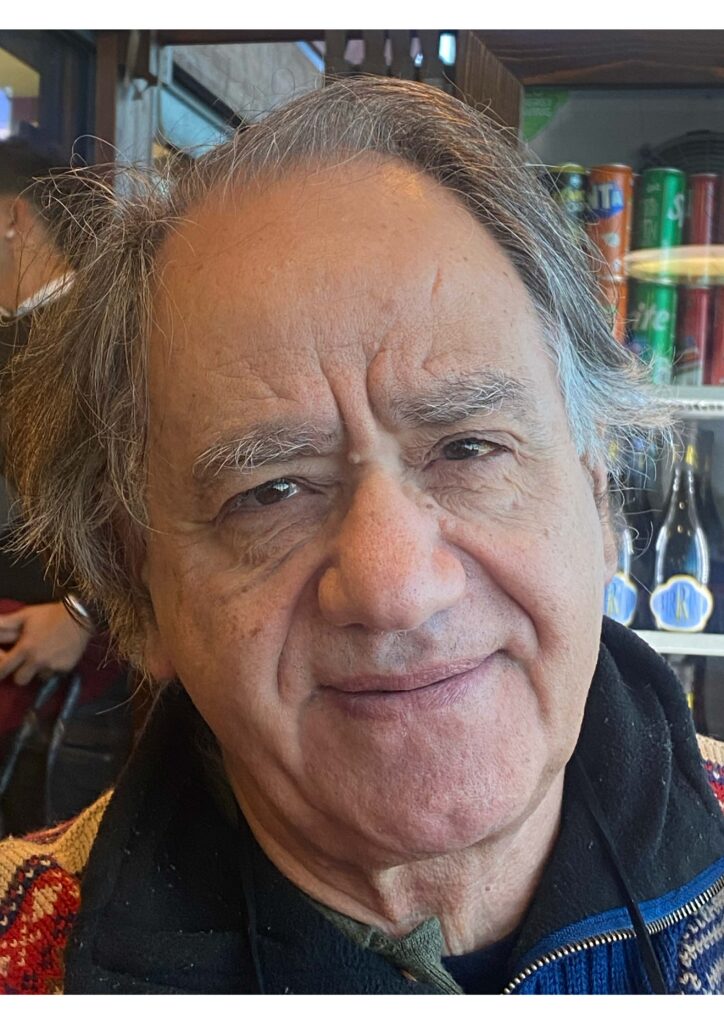
Claudio Pescatore is a member of the UNESCO Chair on Heritage Futures at Linnaeus University
[…] The new funding for this and a number of additional smaller projects, means that the Climate Heritage Network is…
[…] Chair on Heritage Futures « Culture, cultural heritage and COP26 […]
[…] mer på Unescoprofessurens blogg http://blogg.lnu.se/unesco/?p=1061 Besök Öland 2050! […]