
Representing Future Generations
Postat den 15th November, 2026, 19:54 av Cornelius Holtorf
“The failure of existing forms of international law-making and global governance to adequately respond to the climate change crisis means that there is an urgent need to explore new forms of governance. Mechanisms involving proxy representation of future generations are one such form that can play a modest role in helping to insure the long-term consequences of political actions are incorporated into law and policy-making. If this does not happen, the ecological consequences of inadequate action on climate change are at risk of becoming so dramatic that future generations will suffer massively from these effects. The current political and legal debates on how best to respond to the ongoing and worsening consequences of climate change can be understood as an attempt to address this question.”
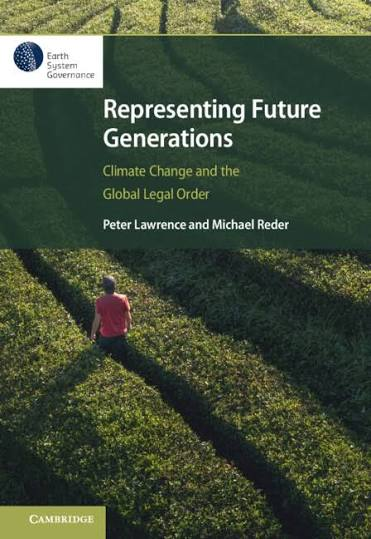
This is the intriguing beginning of the conclusion of a new volume discussing among others the legitimacy and effectiveness of a suggested UN Special Envoy for Future Generations:
Lawrence, P. and Reder, M. (2025) Representing Future Generations: Climate Change and the Global Legal Order. Cambridge: Cambridge University Press.
The theme of the book is clearly relevant to global governance and intergenerational justice generally, including heritage futures. But from the style and content I got the impression that it was written primarily for legal scholars and political philosophers which are the disciplines of its authors.
The volume is unfortunately lacking much broader discussion of wider relevant issues. Consideration of how to represent future generations in present decision-making about culture and heritage are missing entirely. Indeed, it was difficult for me to make my way through the 230+ pages. Although priced at £115, I trust the book will have a greater value for other readers.
Det här inlägget postades den November 15th, 2026, 19:54 och fylls under blogg