
UNESCO

Chair on Heritage Futures

A Fossil Discovered in an Iron Age Excavation by archaeology students in Löt, Öland

2026-10-02

By Nur Esin Karaosman, Visiting PhD student at the UNESCO Chair on Heritage Futures, Linnaeus University

During an archaeological excavation in Löt, Öland, conducted as part of a large research project on ringforts on Öland and of Linnaeus University’s archaeology program, what may be the oldest find of the excavation was brought to the UNESCO Chair on Heritage Futures.

It was found on 17 September 2026, during a conversation among the students about how to distinguish a fossil from “just-a-stone”. Helena Deller, a Master’s student in archaeology, noticed the fossil and, just before removing it from the trench, showed it to Esin Karaosman, a visiting doctoral student at the Chair who was taking part in the excavation that day.

It was important enough for Esin to keep, but not important enough to be archived as part of the Iron Age excavation. The find has been documented at the Chair, where the investigation continues.
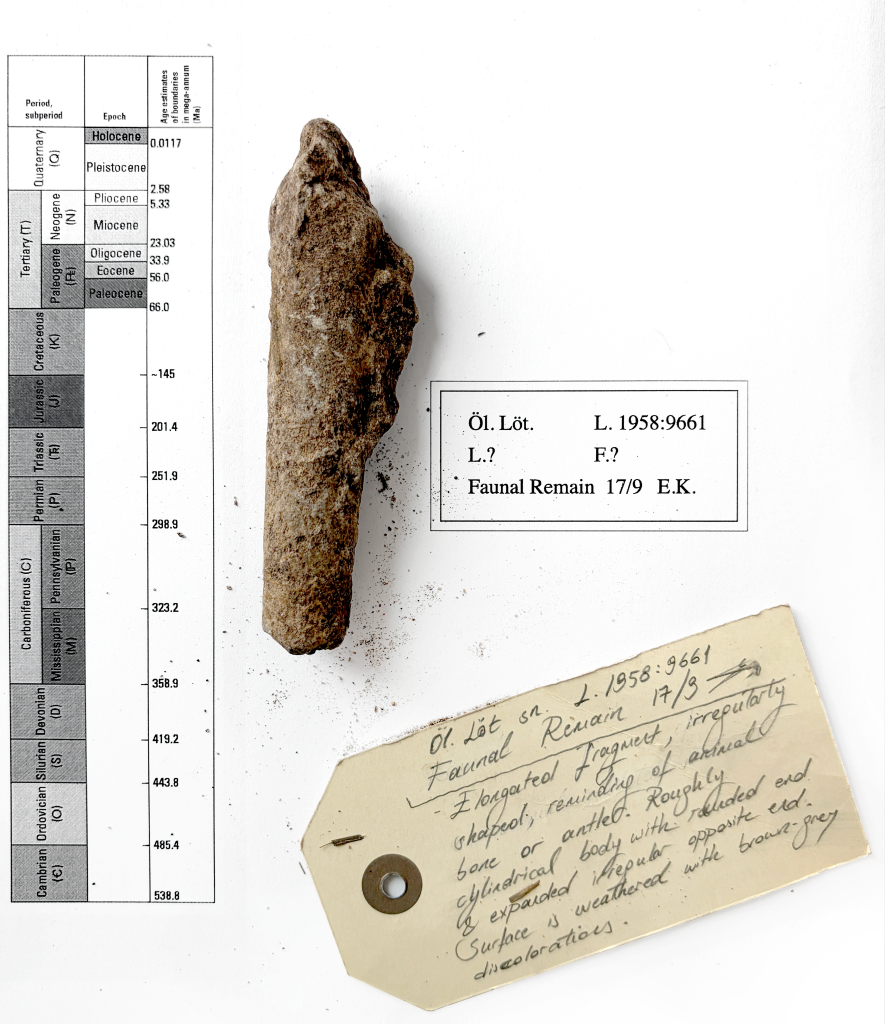
Fig.1: The documentation of the find, including its speculative future. (Photograph by Esin Karaosman.)

It is very possible that the find was already here when the Iron Age settlement was inhabited. Esin considers the find an important object for archaeological practice. “Perhaps someone living here in this Iron Age house picked it up too, because it reminded them of something,” she says. “Then we would be looking at the same stone or the same fossil, only making sense of it in different ways today.”

Whether or not the fossil was a part of the history of the site, therefore the past human lives, it has already become an archaeological find.

A conversation with a geologist at Linnaeus University, Christopher Allen, confirmed that it is a fossil. The find holds the traces of an animal that was once alive in the same place, but in a sea that covered Öland 450 million years ago.

Esin recalls a quote from Cornelius Holtorf which he said at another Iron Age site nearby, on 12 September at around 3.19 pm: “We are looking at the same sky as people in the Iron Age, sitting in the same place. We will probably look at the same sky, also in the future.” The fossil, too, will be looked at again, and its story will continue to unfold in the future.
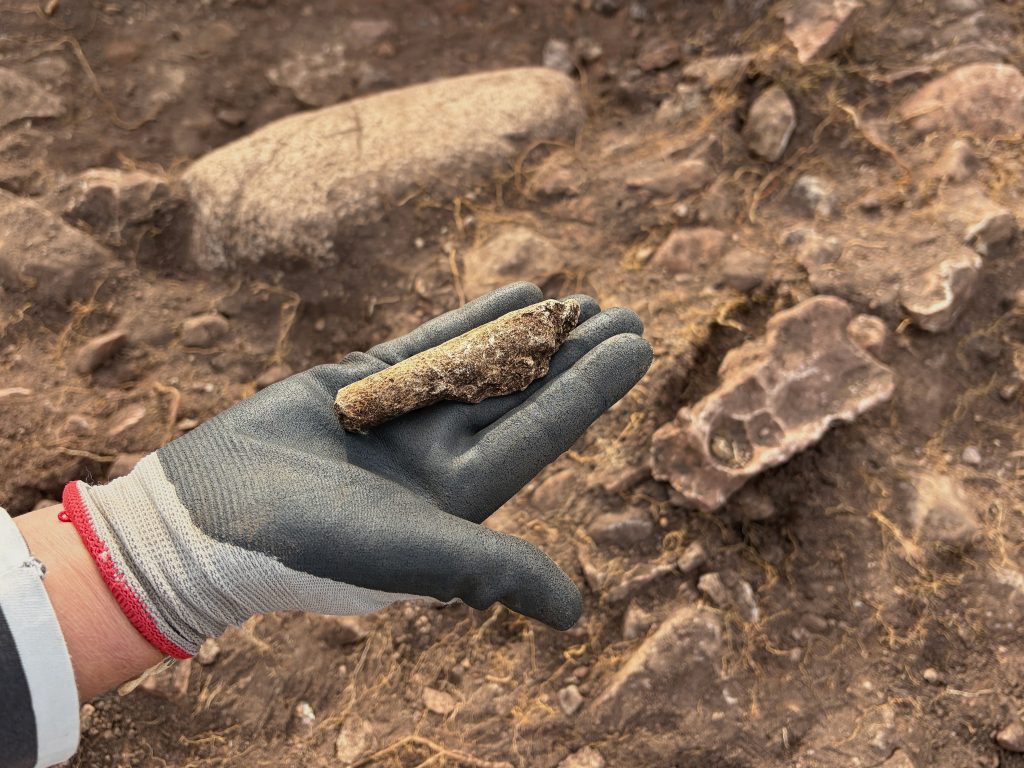
Fig.2: The re-enactment of the moment when the fossil became an archaeological find. (Photograph by Esin Karaosman.)

The find is already evidence of a life that reaches far beyond the site’s Iron Age. It is also the evidence of the very recent past: of archaeological sensibility and of students being trained how to see; of the class that took place that day; and of the conversation between Helena and Esin about what counts as evidence for the story of a site.

Not only these stories change the life of the find, but also the finds and their stories change how the site will be remembered, known and imagined. Having escaped the Iron Age archive, the find continues its travels and transformations. (1)

Note: This article is inspired by the following article: Holtorf, C. 2006. “A silver ring discovered by Swedish archaeologists in Portugal.” World Archaeological Congress eNewsletter no. 12, and The European Archaeologist no. 26, 16.

(1) This endnote is left for the texts that will change the enduring life of the artifact, and of the site.
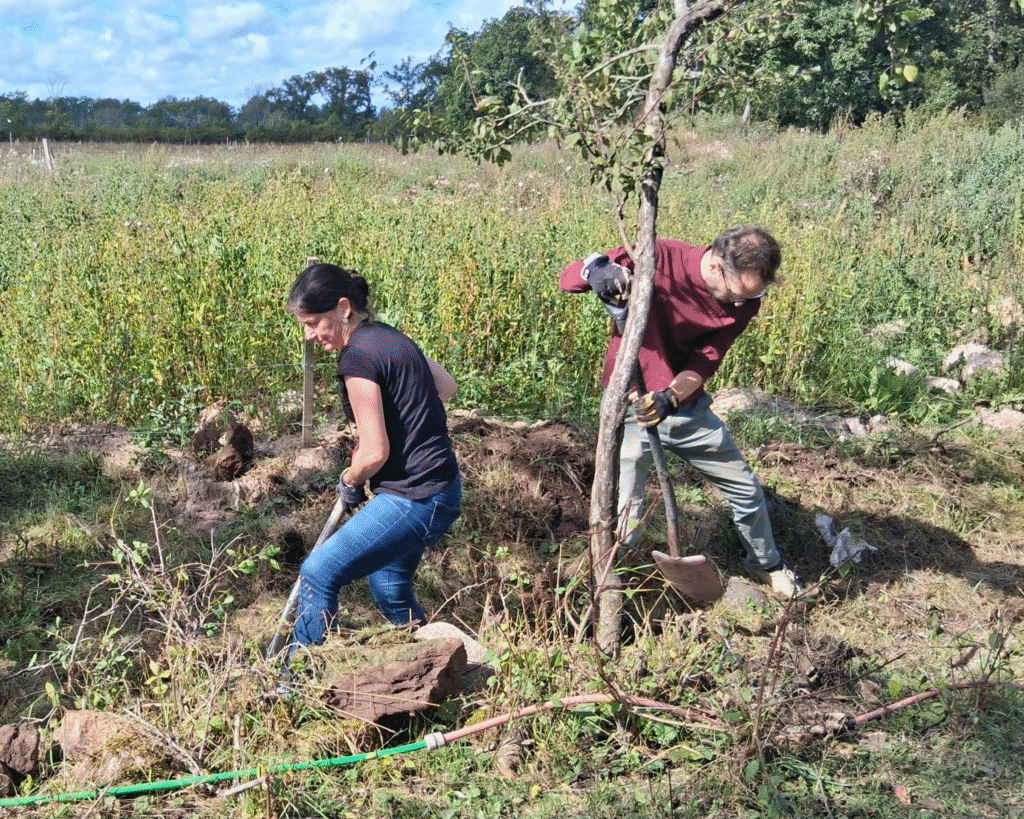
Various activities July – September 2026

2026-10-01

Cornelius Holtorf was among nearly 300 attendants of the UNESCO Futures Dialogues on ‘African Knowledge and Governance Systems for a Culture of Peace’ organized in the lead-up to the 4th edition of the Biennale of Luanda – the Pan-African Forum for the Culture of Peace in Africa (8 July 2026). In his introduction, Mohamed Elfarnawany (UNESCO) reminded the audience of the significance of the minds of people for peacebuilding because it is in the minds that people’s attitudes, behaviour and values are shaped. He suggested that the world needs African intellectual leadership in this area. George Ladaah Openjuru, Vice Chancellor of Gulu University in Uganda, pointed to the significance of the African ‘land-based’, indigenous knowledge system and Ubuntu, advocating a shift from ego to eco, i.e. promoting harmony with the environment and respect for people and nature to advance cultural peace. Others in the audience pointed to the fact that Africa consists of 54 countries, each with a plethora of tribes and languages, and unique forms of governance.

Cornelius Holtorf attended a regular online seminar of the Long-Term Governance Network, chaired by Sophie Howe (17 July 2026). Among the presenters were Manuel Castañón, President of the Foundation for the Protection and Defence of Future Generations, and Daouia Chalali who leads a project on long-term governance at the United Nations University’s Centre for Policy Research.

Cornelius Holtorf participated in the Inauguration of the Linnaeus Garden at Linnaeus University in Kalmar, Sweden, and served cheese cookies with wild oregano grown in soil at the Iron Age site of Gamla Skogsby (18 August 2026). Marcy Rockman, Gustav Wollentz and Emily Hanscam attended too.

Cornelius Holtorf gave a short talk on UNESCO, intangible cultural heritage and Swedish peace culture for more than 200 participants of the Peace & Climate Festival, arranged in Mellstabylund on Öland, Sweden, by the local Cultural Association “Karneval” (22 August 2026).

Cornelius Holtorf took part in an internal meeting with the Vice-Chancellor and other senior administrators and senior researchers discussing the future potential of Linnaeus University as a hub in UNESCO MOST-BRIDGES (27 August 2026).

Anders Högberg, Gustav Wollentz, and Cornelius Holtorf, among many others, took actively part in a 2-day workshop in Sigtuna, Sweden, organised by the Swedish National Heritage Board in connection with their project on Sustainable Cultural Heritage (27-28 August 2026).

Cornelius Holtorf, Marcy Rockman, Emily Hanscam, and Gustav Wollentz, took part in the second workshop of the internally-funded interdisciplinary Hope-making project in which they collaborate with colleagues in English Literature, and artists. The two days hosted by the artist collective Kultivator in Dyestad on Öland was dedicated to preparing a future project involving not only archaeologists and literature scholars but also biologists, artists, and various non-human species. The days featured even some collaborative ditch digging and was in parts attended by some horses and a few dogs and cats (2-3 September 2026).

Cornelius Holtorf attended “Day Break”, an event facilitating meetings between 100 investors, entrepreneurs, and innovators from Linnaeus University, held at Vida Art Museum, Öland, Sweden (4 September 2026). Among those inspiring us was Björn Ulvaeus of ABBA fame and also holding an Honorary Doctorate from our University.

Cornelius Holtorf had an informal meeting about future collaboration with Johanna Blokker, Chairholder of the UNESCO Chair in Heritage Studies at the Brandenburg University of Technology (BTU), Cottbus-Senftenberg, Germany (10 September 2026).

Cornelius Holtorf attended a digital seminar of the ICOMOS International Scientific Committee on Aerospace Heritage on the topic of “Protecting Lunar Heritage: Developing Guidelines and Recommendations for Controlled Lunar Deorbiting” (14 September 2026) and engaged subsequently in correspondence with Bryan Lintott, the Committee’s Secretary-General, concerning questions of emphasis and strategy.

Cornelius Holtorf completed the Member Survey of the ICOMOS International Committee on Interpretation and Presentation (ICIP) responding to proposals for the planned Revision of the 2008 ICOMOS Charter for Interpretation and Presentation of Cultural Heritage Sites (16 September 2026).

Gustav Wollentz and Anders Högberg held a futures workshop in Malmö, Sweden, for 8 professionals in the cultural heritage sector in southern Sweden. The purpose was to inform the ongoing study on the sector’s future research needs in relation to social sustainability (22 September 2026).

Gustav Wollentz and Cornelius Holtorf held a futures workshop in Göteborg, Sweden, for 11 professionals in the cultural heritage sector in western Sweden. The purpose was to inform the ongoing study on the sector’s future research needs in relation to social sustainability (24 September 2026).

Cornelius Holtorf attended the European Heritage Hub’s online Policy Talk on how cultural heritage should fit into future European AI policies, featuring presentations by Hermann Parzinger, Executive President of Europa Nostra, Georg Häusler, Director of Culture, Creativity and Sport in the European Commission, and Mariya Gabriel, Assistant Director General for Communication and Information at UNESCO, among others (29 September 2026). The occasion was the publication of a new policy paper entitled “Beyond adopter and supplier: putting cultural heritage at the heart of Europe’s Public AI ecosystem,” emphasizing the needs to innovate in Europe, to protect cultural diversity and heritage in Europe, and to empower creators and people in Europe through the development of Public AI.