UNESCO

Chair on Heritage Futures

UNESCO MOST Winter School

2025-02-27

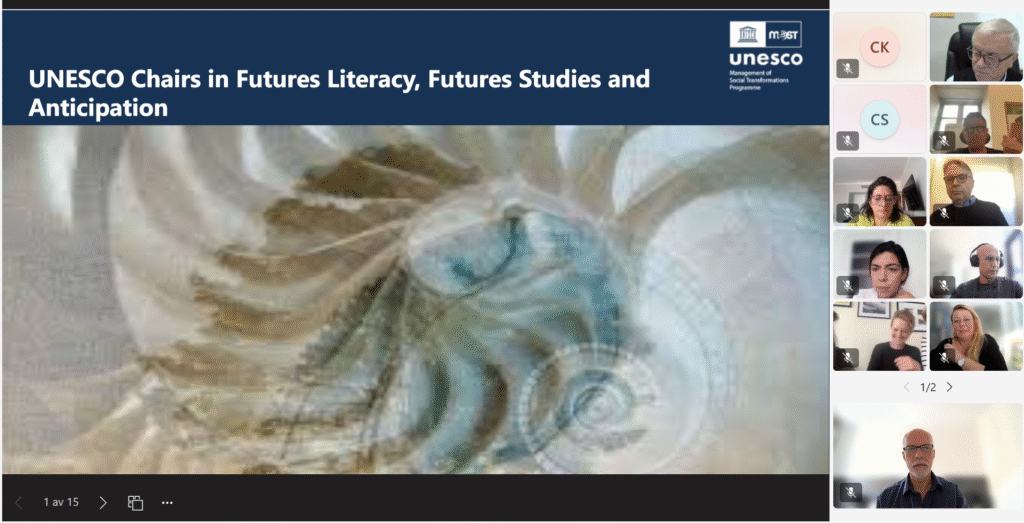
I was lecturing this week on ”The Climate Heritage Paradox – towards a paradigm shift in cultural heritage” for an audience of 70+ physical and online participants coming together for the 7th UNESCO MOST Winter School held at the Institute of Advanced Studies in Köszeg (iASK), Hungary.

On the same panel were also also Gábor Soós, Secretary-General of UNESCO Hungary, Klaus Wölfer, former Ambassador of Austria, Anna Zeichner of ICCROM, and Tamás Fejérdy of ICOMOS and iASK, among others

The meeting was organised in collaboration with the UNESCO Chair for Cultural Heritage Management and Sustainability held by Professor Ferenc Miszlivetz at the University of Pannonia, Hungary.

The Climate Heritage Paradox – towards a paradigm shift in cultural heritage

For the cultural heritage sector to address adequately the global challenges of climate change, it needs to resolve the Climate Heritage Paradox which consists of two conundrums. Firstly, in contemporary society, when humanity anticipates and prepares for climate change and associated transformations, cultural heritage predominantly looks backward and emphasizes identities and continuities over time. Secondly, when humanity on Earth needs panhuman solidarity, trust, and collaboration to be able to face enormous global challenges together, cultural heritage is still managed and interpreted within frameworks of regional/national governance. There is, therefore, a need for developing new understandings of cultural heritage that (a) are predominantly about stories of change and transformation rather than continuity and spatial belonging, and (b) express a need for humanity to collaborate globally and overcome national boundaries. Such a paradigm change in cultural heritage will protect and enhance the benefits of cultural heritage for the future in the age of climate change.

Heritage Futures – origins and significance

2025-01-30

In an interview published by the Association of Critical Heritage Studies, I am talking about origins and significance of ‘heritage futures’, both for me and my work and academically in a more general sense.

Specifically, I am answering the following questions:

  1. What inspired your interest in the concept of “heritage futures,” and how do you see this concept reshaping the field of heritage studies and archaeology?
  2. Your work challenges traditional approaches to heritage by emphasizing its dynamic nature in contemporary society. Could you provide some examples of how this approach has influenced your own research or projects?
  3. In your view, what is the role of archaeology and heritage studies in addressing global issues such as climate change, sustainability, and cultural identity? 

The Power of History and Heritage

2025-01-29

Donald Trump’s Inaugural Speech on 20 January 2025, demonstrated the significance of history in building a narrative for national politics. These are some of the key passages in his speech:

The American dream will soon be back and thriving like never before.  …

Above all, my message to Americans today is that it is time for us to once again act with courage, vigor, and the vitality of history’s greatest civilization. …
 
The United States will once again consider itself a growing nation — one that increases our wealth, expands our territory, builds our cities, raises our expectations, and carries our flag into new and beautiful horizons.  …
 
Americans are explorers, builders, innovators, entrepreneurs, and pioneers.  The spirit of the frontier is written into our hearts.  The call of the next great adventure resounds from within our souls. 
 
Our American ancestors turned a small group of colonies on the edge of a vast continent into a mighty republic of the most extraordinary citizens on Earth.  No one comes close.
 
Americans pushed thousands of miles through a rugged land of untamed wilderness.  They crossed deserts, scaled mountains, braved untold dangers, won the Wild West, ended slavery, rescued millions from tyranny, lifted billions from poverty, harnessed electricity, split the atom, launched mankind into the heavens, and put the universe of human knowledge into the palm of the human hand.  If we work together, there is nothing we cannot do and no dream we cannot achieve.

We will come to see to what extent the Trump administration will even employ cultural heritage to signify its ‘historical’ mission. And whether heritage will be seen as a tool for future-making.

While campaigning for his first Presidential period, there was one example of Trump possibly using a type of ‘heritage futures’. That was the occasion of the fictitous war memorial erected in 2015 on one of his golf courses. The River of Blood monument was installed at the Trump National Golf Club in Lowes Island, Virginia, which purports to mark an American Civil War battle site even though no records to that effect are known. The intention seems to have been to connect Trump’s patriotic America-first agenda with a heritage site commemorating an imagined historic event during the American Civil War.

Lets see how all this plays out over the coming years.

The Atom & Cornelius

2025-01-27

Chairholder Cornelius Holtorf got interviewed by film-maker Vicki Lesley in her series entitled “The Atom & Us“. Vicki was the Director of The Atom: A Love Affair (2019).

She introduces the interview with Cornelius like this:

“Cornelius is a Professor of Archaeology, originally from Germany but now based in Sweden. But in an unusual twist, his work doesn’t focus on the past, but instead, on the future. And more particularly for our purposes, on the legacy of nuclear waste and what we in the present can leave behind to empower generations far in the future to manage this legacy safely.

“I’m fascinated by his work as these questions of nuclear knowledge and deep time have been a preoccupation of mine ever since I first got interested in nuclear issues back in the mid 2000s – and of course, they remain a live and pressing issue now, not just in the UK where I am, but in places across the globe who’ve experienced the footprints of nuclear activity, be they military or civilian.

“I find his perspective on this as an archaeologist insightful and stimulating. And on top of that, he also has a vivid tale to tell about his own personal relationship to the atom, shaped by the particular time and place he grew up in, as well as impactful encounters later in life.”

— (Cornelius writes:) I found the questions really stimulating and a good opportunity to tell about some sides of my interest in ‘the nuclear’ which I haven’t previously written about anywhere.

Various Activities October-December 2024

2025-01-15

Cornelius Holtorf had an informal meeting with Maria Wilenius, new Secretary-General, and Ellinor Hellberg, responsible for culture, Swedish National Commission for UNESCO, to discuss the renewal of our UNESCO Chair on Heritage Futures 2025-2029 (4 October 2024).

Gustav Wollentz lectured for two hours on heritage futures to XX students reading the course “An introduction to Cultural Heritage”, Linnaeus University, Kalmar students (TO BE COMPLETED).

Cornelius Holtorf lectured for three hours on “Cultural and heritage tourism – making choices for the future” for 14 students taking the advanced-level course on Tourism and Sustainability in the Anthropocene 15 credits in Tourism and Recreation Studies at Linnaeus University, Kalmar (10 October 2024).

Cornelius Holtorf held a class on culture and the future for about ten students taking the course “Ethics and Anthropology” at the University of Cork, Ireland (10 October 2024).

Cornelius Holtorf was invited to present for ca 50 participants of the Swedish County Museums Autumn Meeting (Länsmuseernas höstmöte) on the extent to which the Swedish County Museums are contributing to peace rather than preparing for war (17 October 2024).

Cornelius Holtorf introduced and led a discussion on the importance of the past and cultural heritage for civil defense and cultural mobilisation during the Meeting of the Scientific Council of the LEIBNIZ Centre for Archaeology (LEIZA) held in Schleswig, Germany (24 October 2024).

Cornelius Holtorf had an informal meeting with Steven Hartman, Executive Director, UNESCO-MOST BRIDGES Coalition, about future collaborations and mutual endorsements (4 November 2024).

Cornelius Holtorf held an informal meeting with Michael Münker of Milliongenerations Foundation in Utrecht, Netherlands, about future collaborations relating to global art and culture in relation to future generations (22 November 2024).

Gustav Wollentz and Anders Högberg ran a futures workshop for XX decision-makers at the Cultural Administration at Västragötalands Region in Göteborg, Sweden (22 November 2024). TO BE COMPLETED

Cornelius Holtorf was invited to contribute to a panel on 60 years Venice Charter, addressing the topic “Regeneration vs the Venice Charter”, for 20 members of ICOMOS Sweden attending the ICOMOS Sweden Advent meeting in Stockholm, Sweden (26 November 2024).

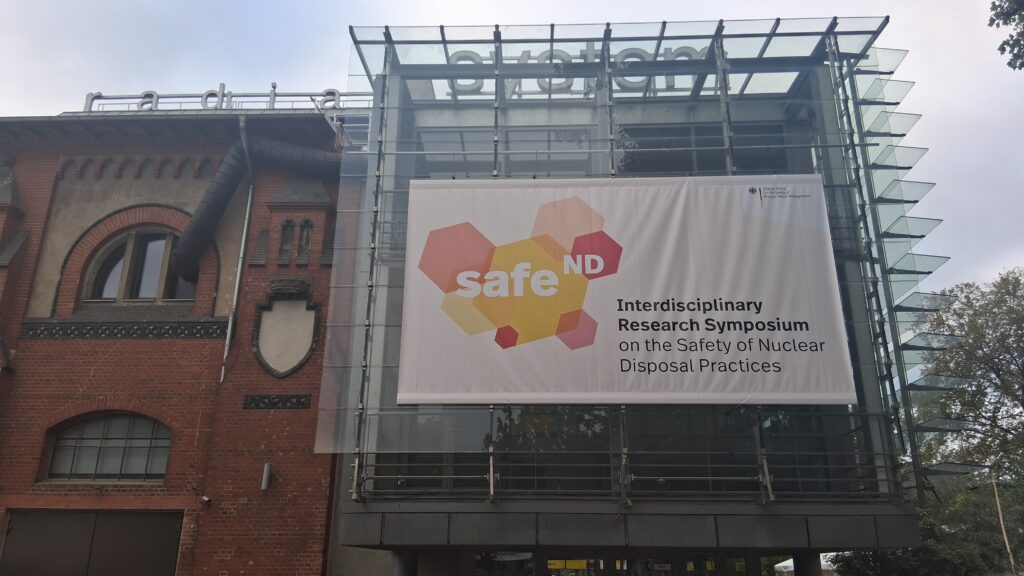
Cornelius Holtorf took part in the Transitional First Meeting of the Expert Group on Archiving and Awareness Preservation (EGAAP) of the Nuclear Energy Agency (NEA) of the OECD (27 November 2024).

Cornelius Holtorf contributed as a panel member to Linnaeus University’s internal “Future Day” on 3 December 2024.

Cornelius Holtorf took part in the online round table Exploring connections – climate action for living heritage co-organized by UNESCO, the Regional Centre for the Safeguarding of the Intangible Cultural Heritage of Latin America (CRESPIAL) and the ICH NGO Forum and held in the framework of the Nineteenth session of the Intergovernmental Committee for the Safeguarding of the Intangible Cultural Heritage in Asunción, Paraguay (3 December 2024).

Cornelius Holtorf met with Emma Rydnér, co-ordinator of the Agricultural Landscape of Southern Öland World Heritage property at the Municipality of Mörbylånga, Öland, to discuss future collaboration (4 December 2024).

Cornelius Holtorf presented an online talk on “The meaning of culture in global policy for sustainable development” for CultureSustain – a network researching Scandinavian museums’ impact on Cultural Sustainability based at the University of Aarhus, Denmark (5 December 2024).

Cornelius Holtorf had an informal meeting on heritage futures with Nataliya Oboznenko, researcher, Lecturer in Marketing, and Academic Director at the Lviv Business School of the Ukrainian Catholic University (13 December 2024).

Cornelius Holtorf lectured on “Archaeology, Climate and Sustainability” for 17 students taking the course “Archaeology I” at Linnaeus University, Campus Kalmar (18 December 2024).

Cornelius Holtorf lectured on “Global Cultural Policy” for 13 students taking the course “Possibilities and Limits of Cultural Policy”, which forms part of the Undergraduate Programme in Cultural heritage in present and future societies at Linnaeus University, Campus Kalmar (19 December 2024).

Climate action for living heritage

2024-12-08

Cornelius Holtorf was among a team of international experts contributing to a UNESCO Guidance note on climate action for living heritage, passed recently at the 19th Intergovernmental Committee for the Safeguarding of the Intangible Cultural Heritage in Asunción, Paraguay, 2 to 7 December 2024.

Among others, the Note refers to the significance of futures thinking in stating that

“The network of UNESCO Chairs and accredited non-governmental organizations should also be engaged in promoting research and education objectives, and in advocating for research programmes as a source of funding. Specific priorities for research might address:

  • (…)
  • engagement with the new fields of artificial intelligence and futures thinking;”

Gradually, heritage futures makes its way into UNESCO thinking regarding major challenges ahead…

Preparing MONDIACULT 2025

2024-11-22

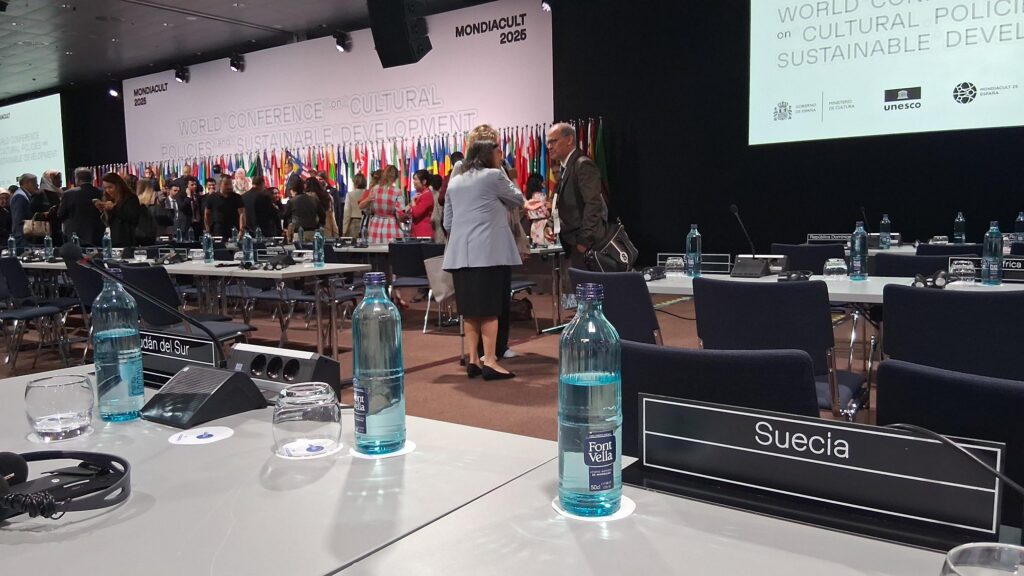
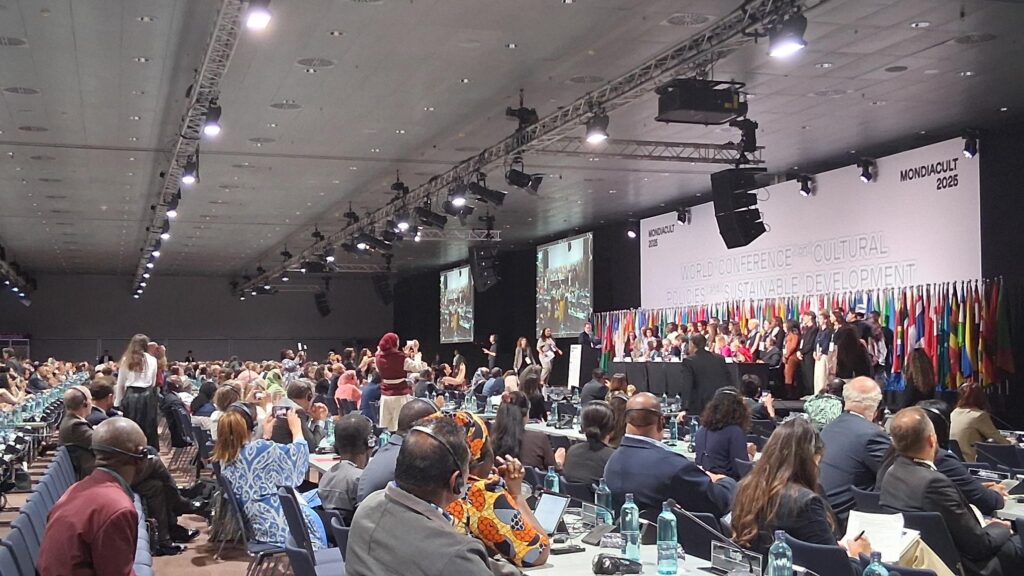
On 21 and 22 November 2024, Cornelius Holtorf was attending the Regional Consultation for Western Europe and North America in preparation of the UNESCO World Conference on Cultural Policies and Sustainable Development – MONDIACULT 2025, to be held 29 September – 1 October in Barcelona, Spain. I was one of three UNESCO Chairs participating in the meeting.

The meeting was introduced by the Vice-minister of Culture of the Kingdom of Spain. Mr. Jordi Martí Grau who emphasized the rights of all citizens to culture and creative work, stressing the significance of education in that respect, and that “there cannot be sustainable development without culture”. Grau emphasized the rights of all citizens to culture.

The meeting was attended, among others, by the Assistant Director General for Culture (ADG Culture), UNESCO, Mr. Ernesto Ottone-Ramírez, and by representatives of Cultural Ministeries from many European countries, the U.S. and Canada. It was moderated by the representative of Andorra and featured simultaneous translation of all contributions between Spanish, English, and French.

In my own short address to the participants I emphasized the opportunities for culture, UNESCO and MONDIACULT arising from the 2024 UN Pact of the Futures. In conclusion, I suggested for MONDIACULT 2025 to

  1. integrate foresight, anticipation, and the benefits of ‘futures literacy’ in cultural policy around the world,
  2. promote the potential of culture and cultural heritage for globally addressing the needs of future generations in the context of change and transformation.

Note: an interesting background of global cultural policy development in relation to the work of UNESCO is given in Justin O’Connor’s 2024 essay on Global Cultural Policy at the Crossroads: Reflections on the Summit of the Future.

History and Archaeology meet the Future

2024-11-11

On 11 November 2024, Cornelius Holtorf and David Staley ran a digital research seminar bringing together a unique gathering of historians and archaeologists from Ohio State University and Linnaeus University, working on the future. The title was “When history and archaeology meet the future” and the seminar was attended by 18 students and researchers from different disciplines and in different time zones.

Watch the full seminar here: https://play.lnu.se/media/t/0_us3m9ftw and here https://youtu.be/egs9t_QqgKM

Speakers included

  • Professor David Staley, Ohio State University
  • Professor Cornelius Holtorf, Linnaeus University
  • Professor Anders Högberg, Linnaeus University
  • Professor Noah Sobe, Loyola University Chicago
  • Dr Gustav Wollentz, Linnaeus University
  • Professor Christopher Nichols, Ohio State University

Among the participants and contributors to the half-day seminar were most members of the UNESCO Chair on Heritage Futures, including Sarah May, Emily Hanscam, Ulrika Söderström, Leila Papoli-Yazdi, and Helena Rydén.

Kultursektorns beredskap för fred

2024-11-08

Den 16 oktober 2024 var jag inbjuden att delta på Länsmuseernas höstmöte i Uddevalla. Mötets tema var ‘Länsmuseerna i en brytningstid – kultur, motståndskraft och innovation’. Under en session med rubriken Kulturarvets beredskap för krig och fred höll jag ett anförande där jag ställde frågan om Länsmuseerna och den svenska kultursektorn gör tillräckligt just nu för att förebygga krig.


På grund av Zoom-formatet och den begränsade tiden var det svårt att föra en fördjupad diskussion med publiken. Sedan dess har två deltagare skickat in en gemensam skriftlig kommentar, som jag har besvarat.

Läs debatten här:

Ett tidigare bidrag till samma tema publicerades redan förra året:

Högberg, A. och C. Holtorf (2023) Heritage practices and the mobilization of society in times of conflict: We can do better. The European Archaeologist (TEA), issue 78 (Autumn 2023).