UNESCO

Chair on Heritage Futures

Heritage Futures: Learning from Nature

2026-09-16

by Claudio Pescatore

Heritage is often imagined as something we preserve for the future: we identify what matters, protect it from change, and hope it survives long enough for others to encounter it. That is the popular picture, at least.

But Nature suggests another way of thinking about continuity — and it may deserve a place in that conversation.

A soil, a sediment layer or a peat deposit can act as an environmental archive. It records traces of what has happened, yet it never stays untouched.

Material is deposited, transformed, mixed, eroded and redistributed; radioactive substances decay; new ones are formed.

The archive changes continuously — and still it keeps information about the past.

This made me wonder: could it be a useful way of thinking about heritage?

Nature does not preserve by standing still

My recent work concerns a rather obscure radioactive isotope, lead-210 (210Pb), which environmental scientists use to study atmospheric fallout and to date relatively recent sediments, soils and peat.

The interesting point for me was not the isotope itself but the idea of the environment as an archive.

The 210Pb record is not a document filed away intact. It is produced by natural processes that never stop: material arrives, radionuclides transform, sediments shift, and the record that results has to be read and interpreted.

A sediment layer need not stay identical to its original state to tell us something about its history. In other words, the archive stays useful not despite change but through it.

The real question may be less whether something stays exactly as it was, and more whether, as it changes, it still holds on to a pointer to what came before.

This is not a new thought in heritage studies.

Cornelius Holtorf has argued for years that heritage strengthens cultural resilience precisely by helping us accept loss and transformation rather than resist them, and more recently that conservation itself can be understood as regeneration — ever changing, never less than whole. What the environmental sciences add is a very concrete example of the same idea.
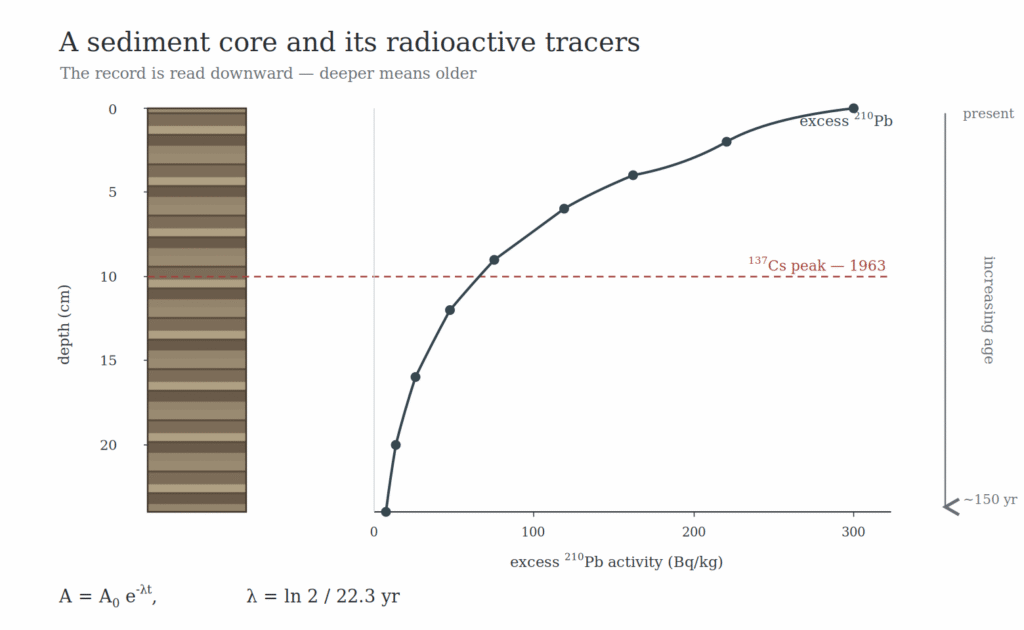
Schematic: excess ²¹⁰Pb decays with depth while the ¹³⁷Cs peak fixes 1963 — a record that keeps time while never ceasing to change.  (Illustration by the author)

Schematic: excess ²¹⁰Pb decays with depth while the ¹³⁷Cs peak fixes 1963 — a record that keeps time while never ceasing to change.  (Illustration by the author)

What about human traces?

The uranium-mining landscapes that prompted my study make this more interesting still.

Mining leaves behind long-lived material: tailings, waste rock, stockpiles, open workings and other residues. These keep interacting with air, water, soil, plants and sediments long after the mining itself has stopped. Uranium mines also release radon gas, which travels in the air and, in turn, generates 210Pb.

This raised a specific worry. Most of the 210Pb in soils and sediments comes from radon gas emanating naturally out of the ground; the steady amount that settles each year is what lets scientists read the record, rather as one reads tree rings. Could that extra radon from uranium mines add enough 210Pb to distort the record?

For documented mine sizes, the answer is largely reassuring: the added radon is far too little to shift regional 210Pb levels in any measurable way. Close to a site the picture can differ, and there it is dust and eroded material that could disturb the record.

What I find more intriguing is what the question reveals.

Human activity does not only leave heritage objects behind. It also leaves materials that enter the ongoing processes of nature.

The landscape itself can become part of the recording mechanism.

What this really describes is archaeology — an archaeology that faces the other way. The archaeologist reads a record already deposited; here the record is still being laid down, as heritage or as mining residue, and the question is how some later present will read it.

Memory without stasis

This brings me close to an idea that seems important for heritage:

that keeping memory is about more than keeping things unchanged.

Something can change a great deal and still work as a memory, so long as it keeps some capacity to point beyond itself — to an event, a place, an action, a history.

The pointer may itself change. What matters is that the relationship holds.

Nature offers no end of examples. A landscape can be transformed and still carry traces of earlier uses. Sediments can be disturbed and still preserve a chronology. Material can move, decay and recombine while some trace stays legible.

The archive, in this sense, is not a container. It is a process.

Learning from Nature

The heritage sector will recognise all this; it has been working in this direction for some time. What Nature offers is a reminder of how ordinary the principle really is. It invites a small shift of emphasis — from asking only:

How do we preserve this for future generations?

to also asking:

How might this change through time and still point back — remaining a past that some future can still read?

That is a different kind of responsibility. It does not mean giving up on preservation, nor assuming that every trace will survive.

It means only that continuity and sameness are not the same thing.

Nature does not keep its records by stopping time. It keeps them while time is passing — and culture, in its own way, does much the same.

That is less a lesson Nature teaches heritage than a resemblance worth sitting with: good company, perhaps, for a field already moving this way.

Further reading

Pescatore, C. (2026) An upper bound on uranium-mining radon contributions to regional environmental 210Pb inventories. Journal of Environmental Radioactivity 299, 108143. https://doi.org/10.1016/j.jenvrad.2026.108143

Pescatore, C. (2026) When Nuclear Waste Becomes Archaeology. UNESCO Chair on Heritage Futures blog, Linnaeus University, 25 August 2026. https://blogg.lnu.se/unesco/?p=4834

Holtorf, C. (2018) Embracing change: how cultural resilience is increased through cultural heritage. World Archaeology 50(4), 639–650. https://doi.org/10.1080/00438243.2018.1510340

Holtorf, C. (2026) Beyond the 1964 Venice Charter: cultural heritage as regeneration (ever changing never less than whole). Conservar Património. https://conservarpatrimonio.pt/article/view/37063

Holtorf, C. & Högberg, A. (2018) Archaeology and the future. In C. Smith (ed.), Encyclopedia of Global Archaeology. Springer. https://doi.org/10.1007/978-3-319-51726-1_2792-1
Claudio Pescatore is a member of the UNESCO Chair on Heritage Futures

When Nuclear Waste Becomes Archaeology

2026-08-25

By Claudio Pescatore

Most archaeological sites are places where the past resurfaces. Nuclear waste repositories may become places where the future does.

Deep geological repositories are usually described as engineering projects designed to isolate radioactive waste for hundreds of thousands of years. But from a heritage perspective, they are also something else:

  • deliberate structures meant to outlast civilizations
  • physical archives of technological activity
  • long-lived material inheritances left by the present for societies that may no longer remember why they were created.

The repository is not an archaeological site in the ordinary sense. It is not a ruin, a monument, or a cultural treasure. Yet it shares one troubling feature with archaeology: it depends on the survival, loss, and possible reconstruction of meaning over long periods of time.

Future societies may not recognise these sites as we intend. They may intersect them through mining, drilling, construction, land use, or curiosity. What was meant to remain isolated may be brought back into history.

1. The paradox of disposal

Geological disposal promises closure. Once a repository is sealed, the waste is meant to disappear from human affairs. The site is meant to pass from politics into geology.

Yet this aspiration sits uneasily with human history. Buried things do not always remain buried. Mines are reopened. Landscapes are reworked. Ancient structures are excavated, misread, reused, damaged, or turned into resources. The surface and the subsurface are repeatedly reconnected by human action.

This is the paradox of disposal. The repository is designed to leave history, but history has a way of rediscovering what was placed underground.

The safety case therefore depends not only on geology and engineering, but also on memory, meaning, and the possibility that future societies may no longer understand what lies below.

2. The drilling scenario: when isolation is bypassed

In nuclear safety assessments there is a scenario called inadvertent human intrusion. A future driller accidentally intersects the repository and brings radioactive material to the surface.

Technically, this scenario is treated as a test of repository robustness. It asks whether a localised disturbance would compromise the disposal system as a whole. From a heritage-futures perspective, however, it also marks something else: the point at which a deliberately isolated material inheritance is reactivated.

This is not archaeology in the narrow professional sense. The future actor may not be an archaeologist at all, but a driller, miner, builder, land user, or technician. The analogy lies elsewhere. Archaeology reminds us that buried human traces do not necessarily remain outside history. They can return under new conditions, with meanings very different from those intended by their creators.

Human intrusion is therefore not simply an encounter with the past. It is a bypass of isolation. It is the moment when material intended to remain outside surface life is brought back into soil, water, work practices, land use, and possible future memory.

And this moment may be closer to us than the phrase “deep future” suggests. In safety assessments, loss of memory is often assumed, for modelling purposes, only a few centuries after closure.

3. Where the safety model stops

In current safety assessments, the drilling scenario is usually resolved through a short-term radiological exposure calculation for selected receptors. The model may estimate the dose to drilling workers, residents, farmers, or other stylised individuals.

But the material brought to the surface does not disappear when the calculation ends. It remains present. It can be dispersed, diluted, leached, handled, forgotten, remediated, reused, or incorporated into the landscape.

At that point, the waste is no longer only an isolated technological object within a repository model. It has become surface material again: part of soils, waters, biota, land use, and possible future stewardship.

This is where the safety model often stops precisely as environmental history begins.

4. Continuity with nature

Heritage scholars often think about the continuity of human traces through time. Nuclear waste asks us to think about another kind of continuity: the continuity of hazardous materials within Earth systems.

Once brought to the surface, substances such as uranium, plutonium, neptunium are not only entries in a dose model. They are persistent materials. They can remain in soils and waters for very long periods, interact with living systems, and raise chemical as well as radiological concerns.

The issue is therefore not only whether the repository remains robust after a local disturbance. It is also what happens to the material that has crossed the isolation boundary.

This is what I call continuity with nature: the need to follow the material beyond the repository model, into the ordinary environmental systems from which geological disposal was meant to isolate it.

5. What this means for heritage thinking

Seen from this perspective, nuclear waste is not only a technological problem. It is also a cultural and temporal one. It raises questions about:

  • how societies transmit knowledge across generations
  • how responsibility persists when institutions disappear
  • how material traces of the present shape distant futures
  • how hazardous materials may re-enter landscapes and ecologies
  • how future societies may interpret, ignore, disturb, or inherit what we have buried.

Geological repositories may therefore become among the most consequential heritage sites humanity leaves behind. Unlike most archaeological sites, however, this inheritance would not only tell the story of our civilization. It could continue to shape the environments encountered by those who rediscover, disturb, or live with it.

Thinking about nuclear waste therefore requires more than engineering foresight. It invites a broader reflection on heritage, responsibility, environmental continuity, and the material traces we leave to the deep future.

For readers interested in the technical and social sciences dimension of this question — particularly how nuclear safety assessments model future drilling scenarios and where those models end — I explore the issue in more detail in my recent paper, “From Model Closure to Continuity with Nature: Reframing Safety in Deep Geological Disposal.”

Pescatore, Claudio (2026) From model closure to continuity with nature: Reframing safety in deep geological disposal. Energy Research & Social Science 138, 104810. https://doi.org/10.1016/j.erss.2026.104810

Meaningful dose in geological disposal safety cases: human intrusion and normal evolution as competing exposure pathways

Front. Nucl. Eng., 24 August 2026, Volume 5 – 2026 
https://doi.org/10.3389/fnuen.2026.1921673

Claudio Pescatore is a member of the UNESCO Chair on Heritage Futures at Linnaeus University

The Future of the Past: War and Heritage at Golestan Palace

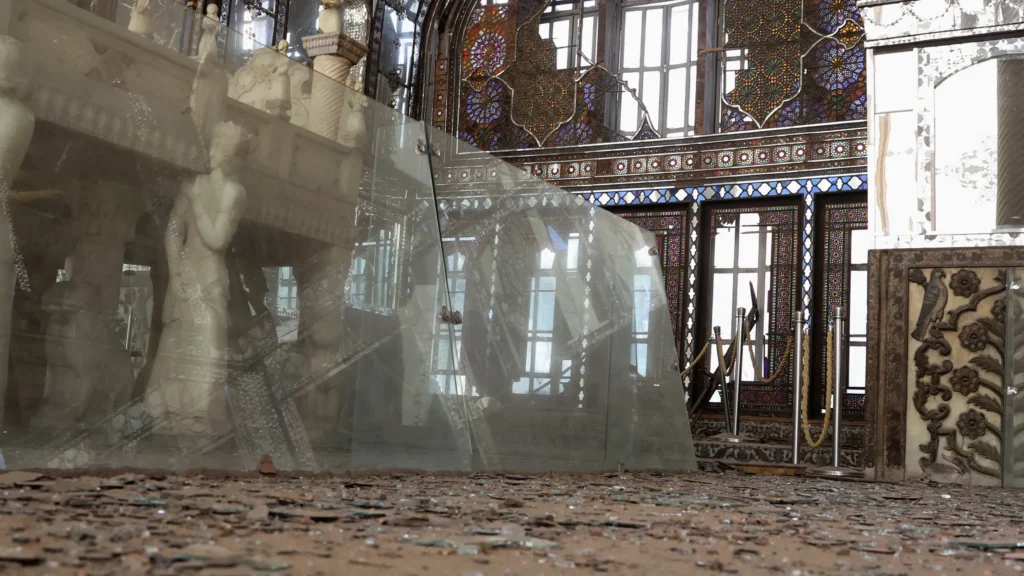
2026-03-11

by Leila Papoli-Yazdi

Golestan Palace, a UNESCO World Heritage site, was severely damaged on 2 March 2026 during the USA–Israel war against Iran. According to Khabaronline (2026), portable artefacts had been transferred to storage during the twelve-day war in June, and only the buildings themselves were affected by the explosions. The palace dates back to the fifteenth century and includes several buildings, gardens, exhibition halls, and galleries. It was used and developed mainly during the Safavid (1501–1736) and Qajar (1789–1925) dynasties, and was added to the UNESCO World Heritage List in 2013. It remains the only UNESCO-registered site in the capital city of Iran.

One of the most significant aspects of the palace is its vast archive, which includes more than 60,000 historical photographs, 9000 negatives and videos, and around 1,520 albums. For many years, independent scholars, researchers who do not work for the Iranian state, had great difficulty accessing this archive. In June 2024, however, an anonymous individual or group uploaded part of the photographic collection online (about 3200 photos). Their identity has never been revealed, and it remains unclear how they were able to access, digitize, and publish the albums in the public domain.

When the archive became available, I began to reflect on why access to these materials had been so restricted. The albums contain hundreds of photographs from the late nineteenth century, particularly images from the court and the harem of Naser al-Din Shah Qajar (1831–1896) and his many wives. These photographs reveal social norms or communities that the Islamic Republic has long denied or labeled as “westernized”: enslaved people, men holding hands, same-sex lovers, the king’s wives posing semi-nude before his camera, and a society far more complex and diverse than the homogenized image of the past promoted by the state.

Among these albums, one is especially important for understanding the concept of heritage in modern Iran: Album 137. I first learned about this album in 2011 after one of my students (S.) told me she had encountered it in Golestan Palace while she was there for another reason. She mentioned that the album contained photographs related to the archaeological excavations at Susa.

Maryam Dezhamkhooy, S., and I went to the palace to search for it. By chance, we met Dr. Chahriar Adl (1944-2015), an Iranian archaeologist, there. He kindly helped us obtain permission to make copies of the photographs. This was something that would have been nearly impossible without his support.

These photographs were later made public together with the rest of the archive. Album 137 contains 27 photographs related to the excavations at Susa led by Jean-Jacques de Morgan (1857–1924). According to the album’s description page, the photographs were taken in 1899–1900 (1317 A.H.) by a man named Heidar Milani while he was passing through Susa on his return mission from the southwestern province of Iran (Arabestan at the time and now, Khouzestan). In his note, Milani uses the phrase hasab-al amr-e al-a’laa, indicating that he took the photographs following an order from a higher political authority.

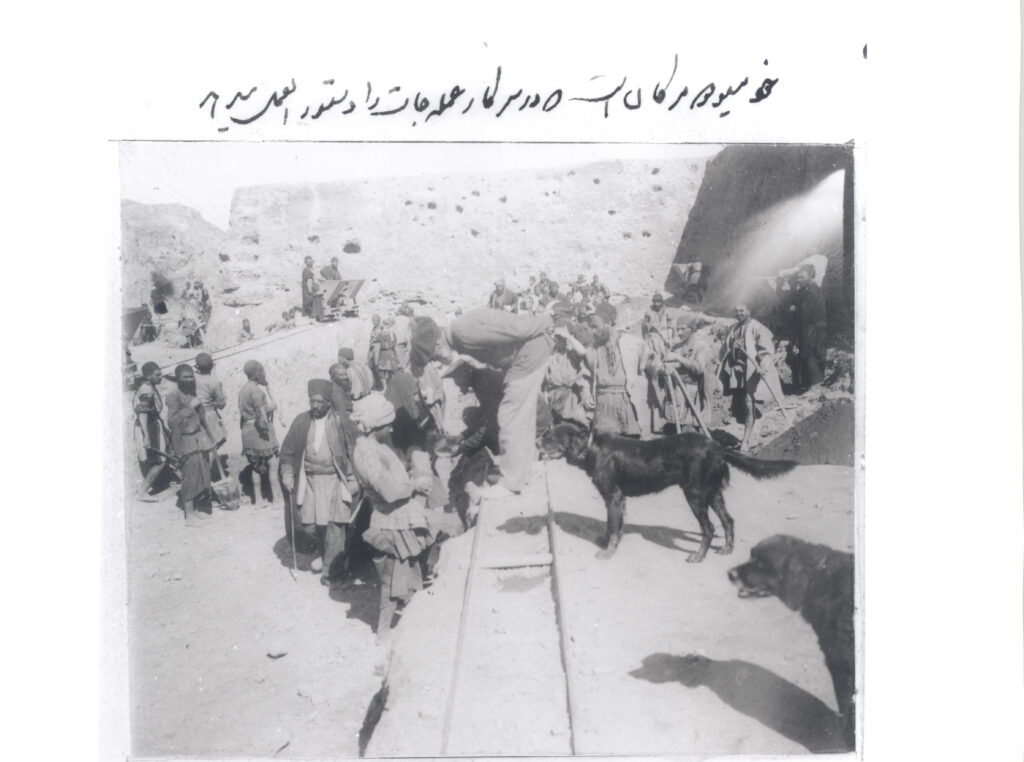
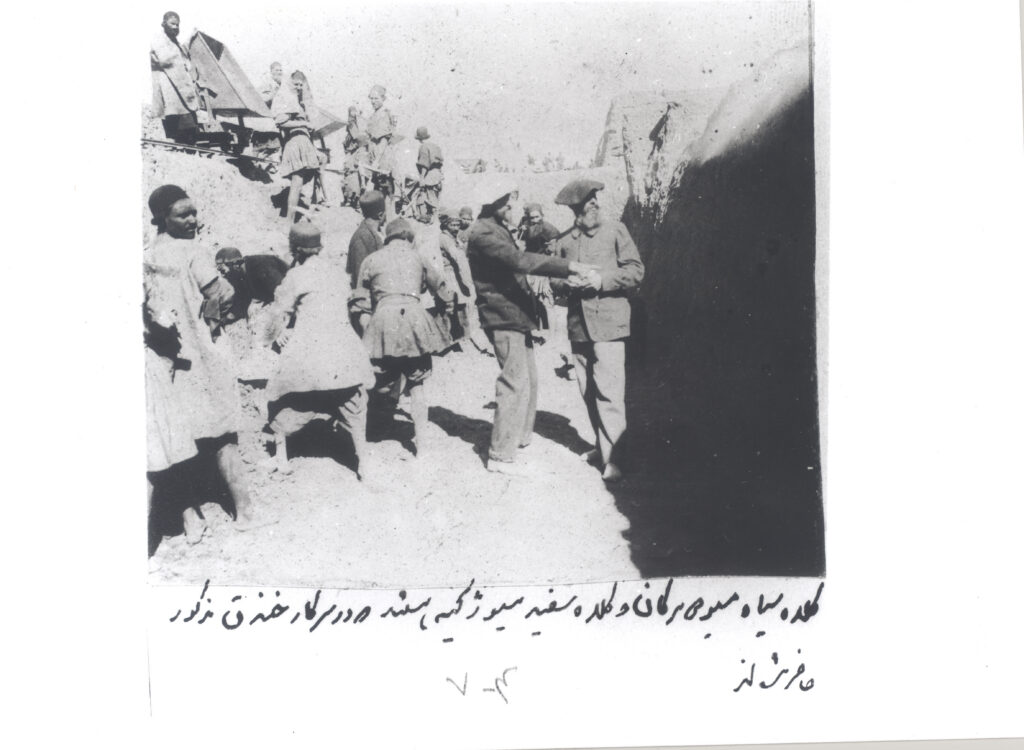
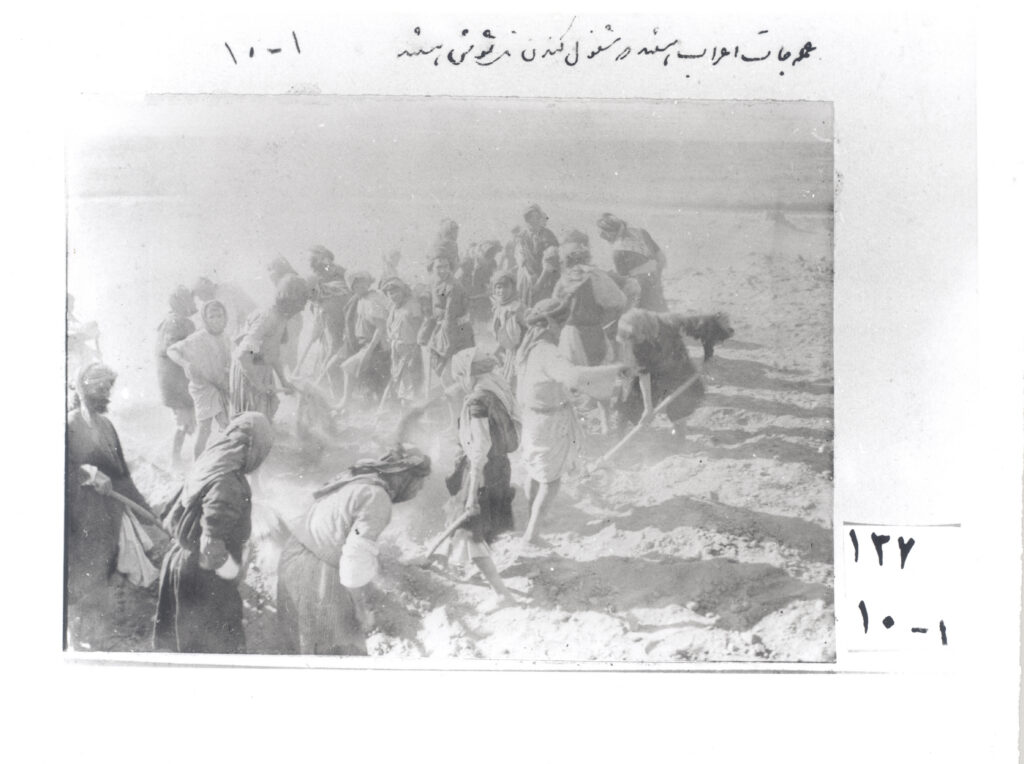
People consisting of de Morgan (Figure 2), his assistant (Figure 3), and workers (Figure 4) appear in eleven of the photographs, offering a rare glimpse of how he conducted his excavations. De Morgan, originally a geologist,  used mining techniques to excavate archaeological sites and caused considerable damage to sites in Iran and Egypt, such as Susa. He dug a large tunnel through the main mound at Susa and destroyed the archaeological layers, made big holes that compromised the preservation of the site very difficult till now. Milani’s captions note that the workers visible in the photographs were indigenous Arab inhabitants of the region.

Another revealing detail appears on the cover of the album: a note written by a retired Iranian archaeologist who, after the 1979 revolution, had been responsible for overseeing archaeological institutions (Papoli-Yazdi, 2023). The note is dated 10 April 2011 and records that three other members of the Iranian Cultural Heritage Organization and the University of Tehran accompanied him on his visit (which indicates the importance and formality of the visit).

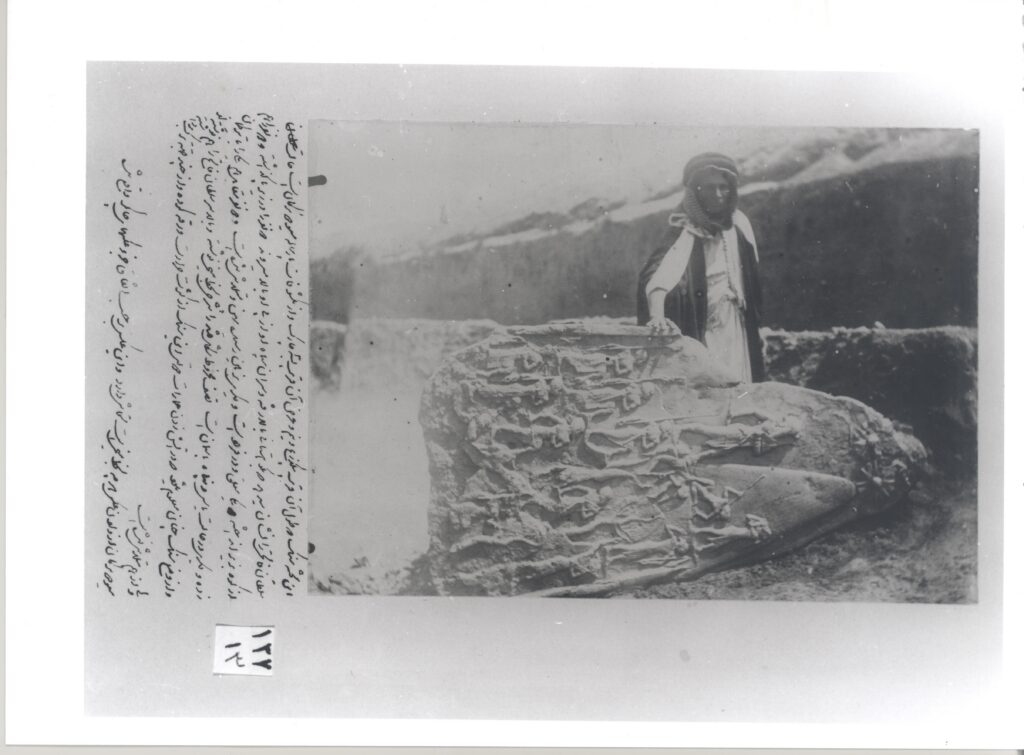
In the photographs where de Morgan appears, he is always positioned at the center. The large groups of local workers surrounding him remain anonymous through the photographer’s lens, or their bodies are only used as a scale to promote the size of an archaeological finding (Figure 5).

French missionaries, antiquarians, and archaeologists played a crucial role in shaping the modern idea of the identity of Iranians as a nation-state in the late nineteenth and early twentieth centuries. They transformed a largely mythical past into one defined by monuments and archaeological sites such as Susa, without considering the narratives of local communities and indigenous researchers.

During the past century, heritage in Iran has repeatedly been at the center of tensions between state power and nationalist narratives. At times, these two forces have overlapped, jointly marginalizing the perspectives of indigenous communities as well as those of independent researchers. Yet there has always been a third force, colonialism, one whose influence is often denied by both the state and nationalist discourse. Iranian nationalism frequently frames the country’s heritage as exceptional and uniquely its own, leaving little room to acknowledge external structures of power.

Today, however, the role of colonialism is bolder. The buildings of Golestan Palace have been damaged by explosions for the first time in their long history, despite standing in the center of a city that has endured Russian imperial influence, revolutions, coups, invasion by Allies, and two world wars.

However, Golestan Palace is not merely a collection of buildings. It also houses one of the largest historical archives in the world, whose preservation ensures the possibility of recovering at least part of the past, which has been mainly written by the states and colonizers; the preservation of this archive allows the denied and ignored heritage and past to be reinterpreted, re-narrated, and rewritten in the future. The destruction of Golestan Palace will transform the future of the past.

This destruction raises new questions about the future of the palace and its archive, as well as the future of archaeological narratives and the history of the heritage idea in Iran. Where is the archive? Is it possible that authorities/colonizers destroy unwanted parts of it? Will independent researchers be able to access the materials of Golestan Palace in the future? Or will the next political order conceal, reinterpret, or selectively reveal them in order to shape a new narrative in the future about Iran’s heritage and the history of archaeology within the country?

Leila Papoli-Yazdi
Archaeologist of the contemporary past and Garbologist and member of the UNESCO Chair on Heritage Futures

leila.papoli-yazdi@garbonomix.com

References:

Khabaraonline (2nd March 2026) Golestan Palace damaged in airstrike. https://www.khabaronline.ir/ (in Persian)

Papoli-Yazdi, L. (2023) Confessions of a Green Notebook: Reading Unpublished Documents About the Oppression of Iranian Archaeology Professors During the 1980s. Archaeologies. https://doi.org/10.1007/s11759-022-09468-9

Captions:

Figure 1- Debris at the historical monument Golestan Palace after it was damaged in an Israeli and U.S. strike, amid the U.S.-Israeli conflict with Iran, in Tehran, Iran, March 3, 2026. Photographer: Majid Asgaripour

(https://www.admiddleeast.com/story/irans-unesco-listed-golestan-palace-damaged-in-us-israeli-air-strikes)

Figure 2 – The caption reads: “Monsieur de Morgan, himself giving instructions to the workers” (photo 137-7-1, from Album 137). Photographer: Heidar Milani.

Figure 3 – The caption reads: “The man with the black hat is Monsieur de Morgan, and the man with the white hat is Monsieur Jacquier (?), present at the work taking place in the mentioned ditch” (photo 137-7-4, Album 137). Photographer: Heidar Milani.

Figure 4 – The caption reads: “Arab workers digging the mentioned ditch” (photo 137-10-1, from Album 137). Photographer: Heidar Milani.

Figure 5- Victory of Naram-Sin over the mountain tribe of the Lullubi and their king Satuni, Louvre. The caption describes the scene of the stele (photo 137-13, from Album 137). Photographer: Heidar Milani.

Uranium: What We Leave Behind Comes First

2026-02-20

Uranium, heritage futures, and environmental assessment

When uranium is discussed, the conversation usually starts with risk: toxicity, radiation, standards, limits. But risk is not the beginning of the story.

Before uranium becomes a health concern, it becomes something else:
◻︎ a long-lived inheritance.

Heritage is whatever persists beyond us and must be dealt with by those who follow. Some of it is chosen. Much of it is not. Industrial societies, in particular, generate large amounts of unintentional material heritage: substances, residues, and infrastructures that remain active long after their usefulness — and often their caretakers — are gone. Uranium belongs squarely in that category.

Long before we calculate doses to people or compliance margins, uranium has already become a durable inheritance that future societies must manage. This is where heritage futures and environmental assessment intersect.


Why Risk Frameworks Matter — but Come Later

Because uranium persists, institutions attempt to manage it through risk frameworks.

Historically, these frameworks have made a clear division:

▸ uranium → treated mainly as a chemical toxicant
▸ radium → treated as the radiological concern

This separation is deeply embedded in regulations, monitoring programs, and safety assessments. It has also shaped how responsibility is understood and communicated across time. But it carries an implicit assumption:

▹ that radium, not uranium, controls radiological ingestion risk.

What the Research Shows

In my latest paper, published in Science of the Total Environment, I tested this assumption directly. Two key results emerge:

▸ Uranium is not radiologically negligible, even where international guideline values are fully respected.

▸ Dose delivery is controlled by mobility, and groundwater systems are typically charged far more with uranium than with radium.

In other words, although radium is more radiotoxic per decay, uranium often dominates radiological ingestion risk simply because there is much more of it dissolved in water.


Why This Matters for Heritage — Not Just Compliance

Seen through a heritage lens, this result has a deeper meaning. The continued use of radium as a universal proxy for uranium-related radiological risk is not just a technical shortcut. It is a legacy assumption, inherited from earlier regulatory cultures.

That assumption:

▸ fragments what is chemically and physically unified,
▸ hides part of the long-term burden, and
▸ narrows how responsibility is framed across generations.


Turning the Perspective Around

The main message is not that past frameworks were wrong. It is that the material heritage we have created no longer fits comfortably within them.

Uranium is not just the parent of radium in a decay chain. In water-mediated environments, it often becomes the parent of dose — and therefore of risk.

Recognizing this does not overturn radiological protection. It strengthens its internal coherence. And, more importantly, it clarifies what kind of heritage we are actually passing on — material, persistent, ethical, and administrative, and inescapably shared with the future.


Further Reading

C. Pescatore (2026). Integrating uranium radiological ingestion risk into environmental safety assessment alongside radium.
Science of the Total Environment, 1011, 181055.
https://doi.org/10.1016/j.scitotenv.2025.181055

Claudio Pescatore
Claudio Pescatore is a member of the UNESCO Chair on Heritage Futures at Linnaeus University

New publication: Foresight in Heritage

2026-01-07

A new publication focusing on the value of Foresight in heritage was just published with Gustav Wollentz from the UNESCO Chair on Heritage Futures as a co-author.  The article is named “Foresight in heritage: fostering future consciousness to proactively face change”, by Hana Morel, myself, Sarah Forgesson, Amy Iwasaki and Alison Heritage. 

It is the first academic publication coming out from our engagement with ICCROM’s Strategic Foresight initiative, which has been piloting Foresight in heritage on a global level. It is a collaboration that is important since very little has been done in this area, and so much remains to be done. 

The paper introduces Foresight as a structured approach that is increasingly employed across industries and disciplines for anticipating future change and proposes its utility for the heritage sector. We illustrate how integrating greater Foresight into heritage practice can encourage proactive engagement with emerging trends; develop resilient strategies for heritage research, planning and management; and locate where heritage-based actions can bring transformative change.

Morel H, Wollentz G, Forgesson S, Iwasaki A, Heritage A (2025;), “Foresight in heritage: fostering future consciousness to proactively face change”. Journal of Cultural Heritage Management and Sustainable Development, Vol. ahead-of-print No. ahead-of-print. https://doi.org/10.1108/JCHMSD-12-2024-0298

Gustav Wollentz
Gustav Wollentz, UNESCO Chair on Heritage Futures

World Futures Day 2025 at UNESCO Headquarters in Paris

2025-12-04


Compiled by Helena Rydén, Assistant to the UNESCO Chair on Heritage Futures at Linnaeus University.

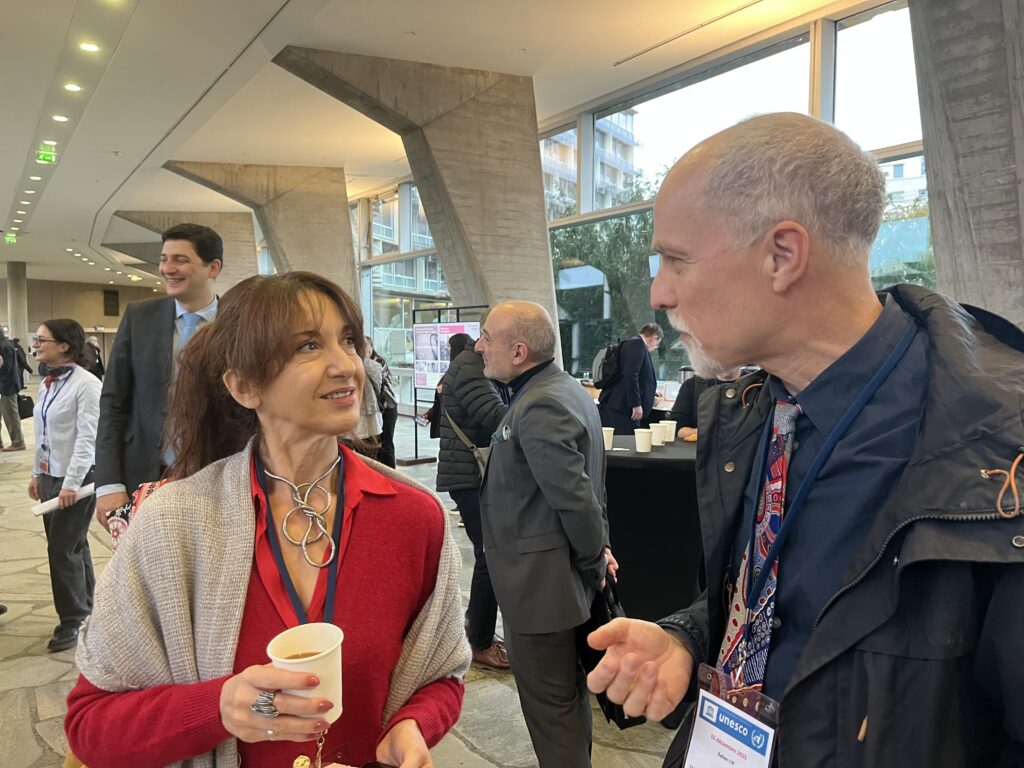
On 2 December, UNESCO hosted World Futures Day at UNESCO HQ in Paris under the theme “Anticipation in an Era of Volatility.” The event showcased UNESCO’s approach to addressing global challenges through futures thinking and foresight. It also highlighted the role of UNESCO’s network of over 1,100 University Chairs, including 35 focused on Futures Studies, in identifying emerging issues worldwide. Our Chair on Heritage Futures is one of them and was represented not only by Chairholder Cornelius Holtorf but also by affiliated researcher Claudio Pescatore and by Helena Rydén.

The event gathered around 700 registered participants—mainly from Europe, including many Paris-based attendees—from diverse backgrounds: academia, UNESCO Chairs, students, UNESCO staff, policymakers, and industry representatives. The venue itself, rich in history and adorned with works by among others Picasso and Giacometti, provided a cultural backdrop. Sessions alternated between French and English with simultaneous interpretation.

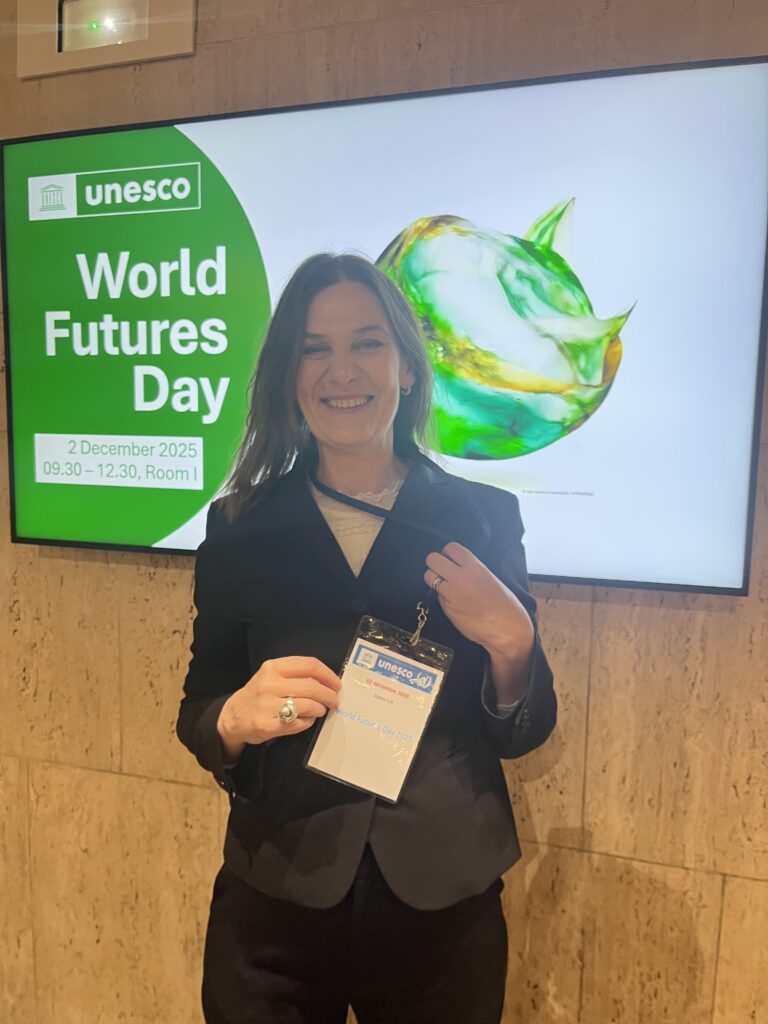
Helena Rydén, Assistant to the UNESCO Chair on Heritage Futures at Linnaeus University waiting for the World Futures Day to start!

A keynote lecture by French philosopher Éric Sadin “The Future of Humanity in an Era of Omniscient Artificial Intelligence,” argued that generative AI marks a turning point in human history. He warned of its social consequences, particularly in education, and urged critical reflection on what remains for humanity when learning and creativity are delegated to machines.

A panel followed, exploring how complex systems perspectives and education systems can help societies navigate AI-driven futures while safeguarding humanity and planetary well-being. Speakers included Rosa Vásquez Espinoza, Tanja Hichert, Michael Shamiyeh, and François Taddei, moderated by Gustavo Merino, Director, Social Policies, UNESCO.

Other sessions addressed systemic change, resilience, and international cooperation, with contributions from global thought leaders and UNESCO senior officials. Closing remarks by UNESCO’s Gustav Merino reinforced UNESCO’s mandate to strengthen shared humanity through education, science, culture, and communication.

A digital exhibition, “Good Ancestors: Art & Culture for Future Generations,” ran in the Ségur Hall, linking art and culture across time. The original exhibit was organised by a team around Michael Münker and supported by two missions to the UN in support of the UN Declaration on Future Generations. The exhibit was proposed for this event at UNESCO by Cornelius Holtorf.

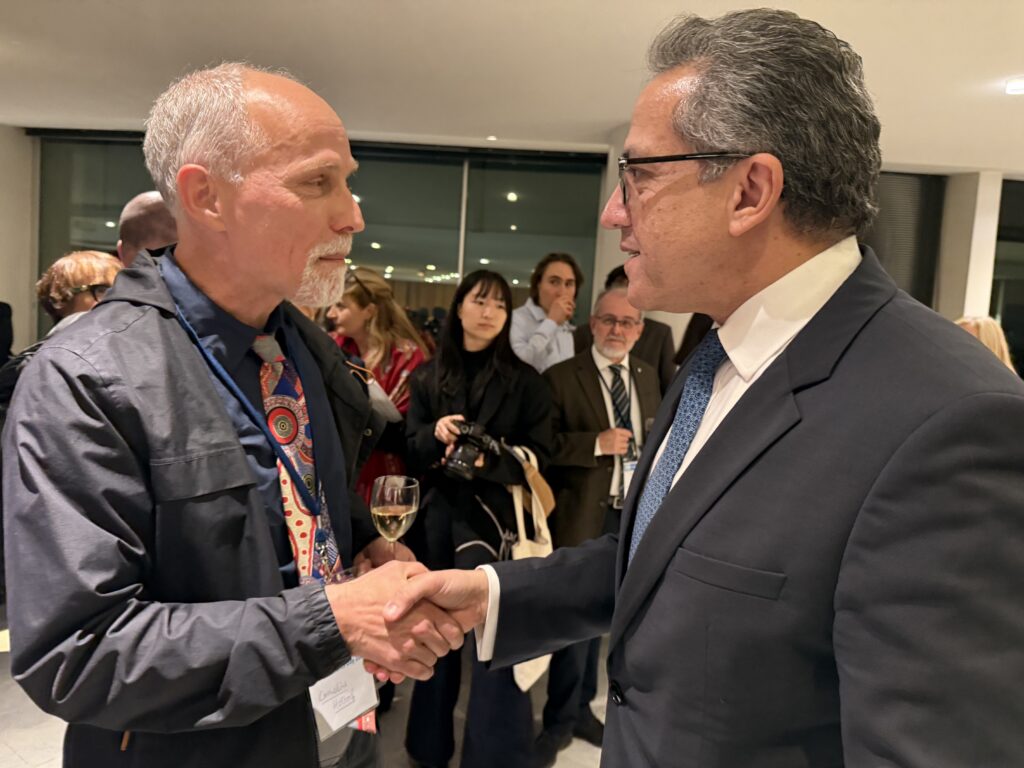
At the reception in the evening Cornelius Holtorf, holder of the UNESCO Chair on Heritage Futures at Linnaeus University and the new UNESCO Director-General, Dr Khaled El-Enany, an Egyptologist and former Egyptian Minister of Cultural Heritage, had the opportunity to shake hands and briefly discuss heritage futures. Photo Claudio Pescatore.

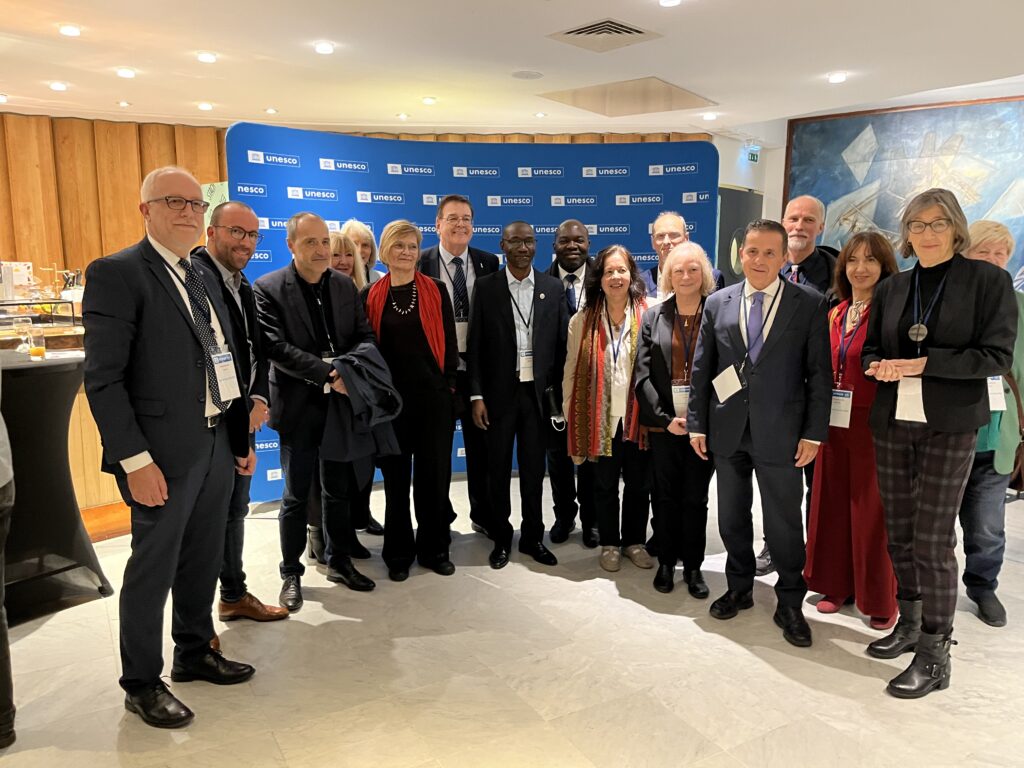
Some UNESCO Chairs on Futures Studies gathered at the reception in the evening.

Futures workshop at World Futures Day 2025

Compiled by Helena Rydén, Assistant to the UNESCO Chair on Heritage Futures at Linnaeus University.

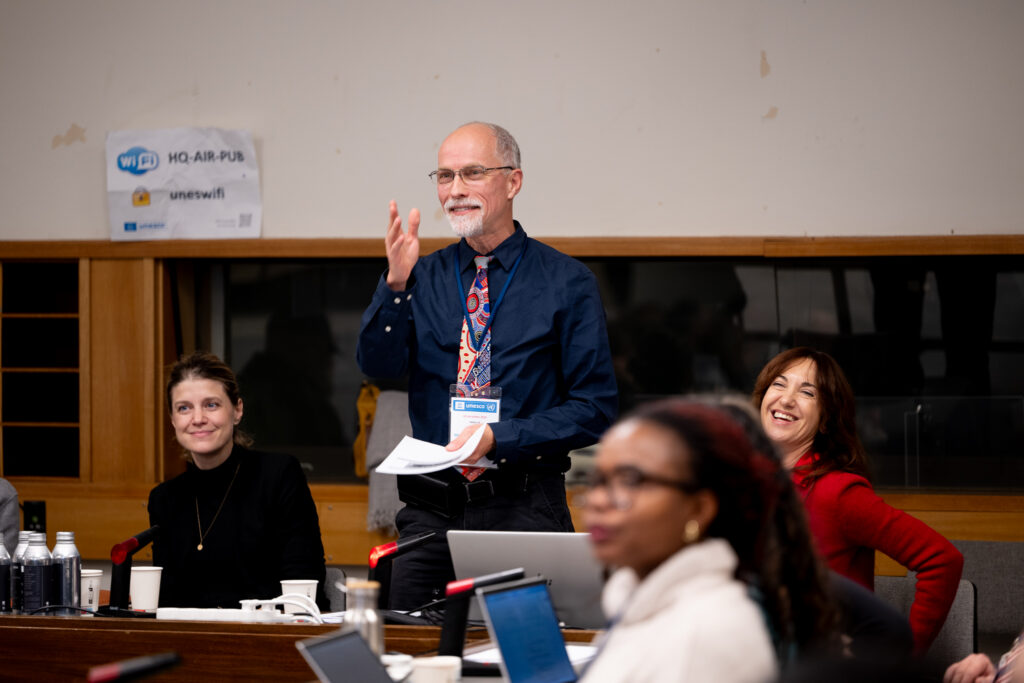
World Futures Day (WFD) on 2 December 2025 explored the theme “Anticipation in an Era of Volatility” at UNESCO Headquarters in Paris. One of the highlights was the afternoon futures workshop, “Crisis Preparedness and Beyond: Future-Making Through Culture and Heritage,” where Vicky Karaiskou and Cornelius Holtorf—both UNESCO Chairs—engaged a large (ca 50) and enthusiastic audience.

Vicky Karaiskou and Cornelius Holtorf at UNESCO HQ in Paris 2 December 2025 preparing for the afternoon session.

After statements by UNESCO, the European Commission and CrisisReady*, Vicky and Cornelius took the lead and guided us through the workshop. Both are deeply interested in the culture and values that shape us as human beings—Vicky focusing on the visual dimension.

Vicky Karaiskou explains: “I explore the profound implications of cultural visual narratives, shedding light on how they shape our individual and collective memory, as well as societal perceptions. Visuality examines the origins of our perceptions and assumptions because they deeply influence how we perceive the present, how we engage with the past, and how we envision the future.”

Cornelius Holtorf describes: “Heritage Futures are concerned with the roles of heritage in managing the relations between present and future societies, e.g. through anticipation, planning, and prefiguration.”

The workshop was truly engaging. We began by discussing what forms a collective identity: Who are we? How do culture and heritage make people who they are? Language, food, family and education were among the ideas raised. Next, we reflected on how our collective identities are relevant or affected in an anticipated crisis? We agreed that care—both as a human trait and as something that must be learned—was essential. Finally, we were asked to imagine future scenarios on how our collective identities could be used for crisis prevention, resolution, and recovery in the future?

The goal was to help us focus on the origins of our perspectives and assumptions, which deeply impact how we envision the future. Our group envisioned a natural disaster scenario where our collective identity, empathy, emotions, and local context were crucial for decision-making.

If the aim was to foster empathy, inspire positive change, and promote inclusiveness and social resilience for an equitable future, the workshop certainly succeeded. By envisioning the future beyond the uncertainty of the unknown, we learned how to mobilize and stimulate inspiring thinking, feeling, and acting—unlocking new ideas for creative solutions.

Several participants said this workshop was the highlight of the day, and some even asked to exchange contact details with us, expressing interest in visiting the Chairs for a period.

Want to learn more about the UNESCO Chairs?

  • Vicky Karaiskou’s Chair
  • Cornelius Holtorf’s Chair

    *The session started with short background statements to the topic by:
  • Ana Videkanic, Crisis Coordination Officer, Crisis Response and Preparedness, UNESCO 
  • Karalyn Monteil, Head of Unit, Culture and Emergencies, Culture Sector, UNESCO
  • Anne-Katrin Bock, Policy Analyst, EU Policy Lab, European Commission
  • Andrew Schroeder, Co-Director, CrisisReady, and V-P, Research and Analysis for Direct Relief

A Global Framework for Research and Action

2025-11-28

The UK National Commission for UNESCO has introduced a new Climate Action and Sustainability Framework alongside a Research Agenda, designed to leverage UNESCO sites as living laboratories for climate resilience and sustainable futures.

The publications align closely with the ARCHE (Alliance for Research on Cultural Heritage in Europe) Strategic Research and Innovation Agenda, the emerging Horizon Europe Resilient Cultural Heritage Partnership, and UNESCO’s global priorities on climate, culture, and sustainable development. They provide a ready-made platform for UK and international partners to collaborate on transdisciplinary research, Living Labs, open data infrastructures, and evidence-based policy.

Sarah May

Sarah May, affiliated with the Chair, serves as Co-Director at ButCH and is an active member of the UKNC Research & Innovation Group.

ButCH stands for Bureau for the Contemporary and Historic.

It is an organization involved in UNESCO-related climate and heritage research, and in this context, ButCH helps convene and manage the activities of the UKNC Research & Innovation Group, focusing on developing and delivering strategic research agendas around climate resilience and cultural heritage.

UKNC stands for UK National Commission for UNESCO

The publications are available here:

https://unesco.org.uk/news/unesco-uk-launches-framework-for-place-based-climate-research-and-action-through-unesco-sites

Claudio Pescatore: Uranium and Nuclear: Humanity’s Web of Liabilities

2025-11-06

Claudio Pescatore explains why uranium’s chemical hazard is not a distant issue but a present debt — and why it will remain forever.

Not tomorrow, but today

When most people think of nuclear waste, they imagine glowing canisters buried in rock, hazards for a far-off future. The truth is different, and more unsettling. The greatest uranium problem is already with us now.

From the deserts of the American Southwest to abandoned mines in Central Asia, uranium residues contaminate soil, rivers, and aquifers. Communities live with the consequences today — kidney disease, unusable water.

Present-day scars

The Navajo Nation (U.S.) bears the legacy of Cold War uranium mining. Hundreds of abandoned mines and one out of four contaminated water-wells leave residents facing disproportionate health risks, needing endless cleanup.

Wismut (Germany), once the largest uranium mine outside the Soviet Union, has been under remediation since reunification. Billions of euros have been spent, yet groundwater plumes persist and treatment must continue indefinitely.

Mailuu-Suu (Kyrgyzstan), a former Soviet mining town, is home to dozens of unstable tailings piles above a river valley. Landslides and floods threaten to spread contamination widely.

UMTRA sites (U.S.), meant to stabilize mill tailings from past uranium production, continue to show uranium plumes exceeding drinking-water standards decades after closure.

These are not failures of engineering so much as reflections of uranium’s nature: a hazard that does not diminish on human timescales. Covers break, dams erode, pumps wear out. Each “remedy” is temporary, and each handoff pushes costs into the future.

We hardly use what we extract

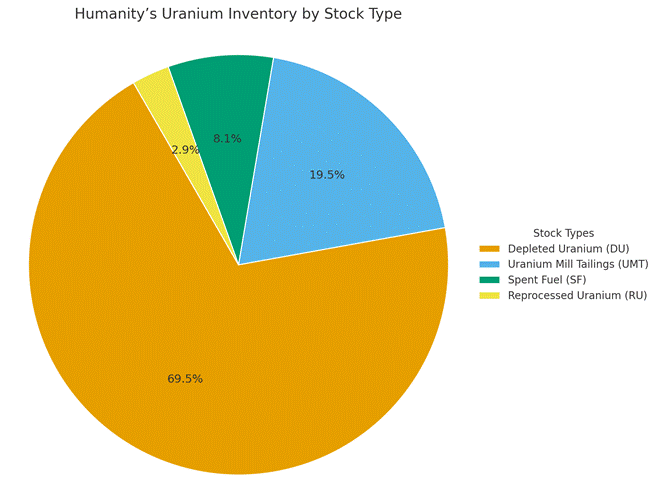
Of all uranium mined for the nuclear fuel cycle, less than 0.4% has been used in reactors. The other 99.6% remains as residues — mill tailings, depleted uranium, and reprocessed uranium (see Figure 1). Its inventory by stock type is shown in Figure 1.   For each ton of Uranium is spent fuel, there will also exist an additional 9 tons as Depleted Uranium or Mill-tailings uranium.

Figure 1. Distribution of humanity’s uranium by stock type. Depleted uranium (≈69.5%) and uranium mill tailings (≈19.5%) dominate the global inventory, while spent fuel (≈8.1%) and reprocessed uranium (≈2.9%) make up the remainder.

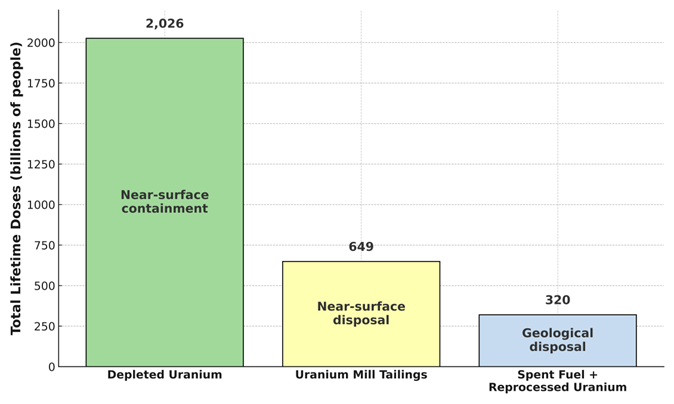
Figure 2 shows that the largest uranium stocks — DU and mill tailings — are exactly those left near the surface. In other words, the smaller share is given the world’s most advanced containment, while the larger share remains exposed.   Put differently: a single metric ton of uranium represents hundreds of thousands of cubic meters of water needed for dilution, and millions of lifetime toxic doses. Multiplied by thousands of tons, the numbers are staggering.

Figure 2.  A measure of the liability from managing uranium is the Total Lifetime Doses (TLD) indicator. Values associated with each stock represent the number of lifetime-equivalent chemo-toxic exposures, expressed in billions of people. As the largest stocks of uranium reside in Depleted Uranium and in Mill Tailings, there lies most of the uranium liability to the future. Yet they receive far less stringent containment. 

A web of liabilities

Uranium’s hazard is not just technical. It is woven into a web of liabilities:

– Geographical liabilities: Uranium may be mined in one country, enriched in another, and its waste left in a third. Communities that never benefited from the electricity pay the price. The Navajo did not choose the bombs their ore fueled; Mailuu-Suu’s residents did not choose Soviet reactors.

– Temporal liabilities: Every cover or dam has a lifespan measured in decades or centuries. Uranium’s hazard lasts for billions of years. Each cycle of repair and neglect transfers liability to the next generation.

– Institutional liabilities: Regulators often focus on radium or radon, ignoring uranium itself. Mining laws may require closure plans but not perpetual stewardship. Health agencies emphasize chemical toxicity, while nuclear agencies emphasize radiation. No one body takes full responsibility.

The result is a system that allows uranium to slip through the cracks, its hazard passed along invisibly until it reemerges as a plume, a lawsuit, or an abandoned site. 

Externalization of uranium costs

Uranium’s spread dismantles the idea of nuclear energy as “clean.” Yes, reactors emit little carbon dioxide. But the residue they generate — and the residues left by mining and enrichment — are anything but clean. Calling nuclear clean externalizes uranium’s costs onto:

– future generations, who will inherit broken dams and leaking piles;
– local communities, often Indigenous or marginalized, who live with toxic water and unsafe lands;
– other geographies, as uranium mined elsewhere, in Africa, Asia, Australia, Europe and North America leaves residues that outlast states and borders.

Nuclear power may be low-carbon, but when uranium’s chemical liability is ignored, it is not low-cost, low-risk, or clean.

As an example, countries like Finland or Sweden that only have spent fuel still carry an indirect liability ten times as large in terms of Total Lifetime Doses and Dilution Liability. This stems from the additional uranium mill tailings and depleted uranium left to others to manage. Unlike spent fuel, these vast residues remain in shallow sites, piles, or surface storage — often in jurisdictions with lower environmental standards and certainly facing the endless remediation that surface storage entails.

Toward accountability: a Uranium Liability Convention

How do we begin to govern such a debt? One step is recognition: uranium is the parent hazard. It should not be masked by proxies like radium or radon.

But recognition is not enough. Uranium is traded globally, yet its liabilities are stranded locally. This calls for a Uranium Liability Convention (ULC) — a framework to:

– Map liabilities: track where uranium has been mined, processed, stored, and abandoned.
– Assign responsibility: link benefits and burdens so costs cannot be endlessly shifted.
– Set binding obligations: require durable containment, including deep disposal for depleted uranium.
– Integrate health and environment: recognize both chemical and radiological hazards.

Such a convention would not be a technical fix. It would be a moral and political acknowledgment that uranium’s hazard cannot be wished away, and that accountability must match the timescales of the debt.

What this means in human terms

– For communities now: remediation cannot be partial. The Navajo, Mailuu-Suu, Wismut, and countless others need more than fences and promises. They need durable remedies that reduce exposure and stop passing costs to their children.

– For nuclear debates: sustainability claims must account for uranium’s unresolved debt. Low-carbon is not clean when its waste contaminates forever.

– For future generations: memory and containment must last longer than institutions usually plan for. Passing the burden on is not stewardship; it is abandonment.

Takeaway

The uranium hazard is not a future scenario. It is present contamination, future inevitability, and permanent liability.

It is a web that links countries, generations, and institutions. And unless we confront it honestly — by recognizing uranium itself, containing it durably, and sharing responsibility globally — that web will only tighten.

Uranium is not just fuel or waste. It is an environmental debt. The question is whether we will keep externalizing it, or whether we will finally take responsibility for paying it down.

Further reading

– Claudio Pescatore (2025). Humanity’s Uranium Inventory: A Persistent Chemical and Ecotoxicological Liability. Energy Research & Social Science 127 (2025) 104298  in open access

Claudio Pescatore

Claudio Pescatore is a member of the UNESCO Chair on Heritage Futures at Linnaeus University

Anticipating Change: Exploring Long-term Futures for Heritage

2025-10-23

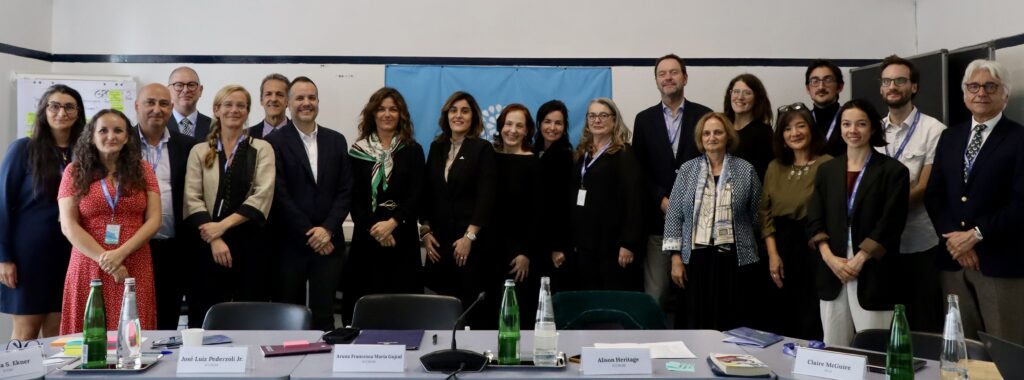
On the 16th of October 2025 ICCROM organized a workshop on Strategic Foresight in Heritage taking place in Rome, titled Anticipating Change: Exploring Long-term Futures for Heritage. The purpose of the workshop was to found a community for practice surrounding Strategic Foresight in heritage, to build resilience, relevance and agency among heritage organisations in the face of uncertainty and change.

Gustav Wollentz from the UNESCO Chair on Heritage Futures assisted in the organisation and facilitation of the workshop, contributing with a presentation on the value of Strategic Foresight in heritage and moderating parts of the agenda, which included both a hands-on Foresight exercise, the Futures Wheel, as well as a discussion on how to move forward together.

The goals of the newly established group are to:

  • Connect and amplify foresight and innovation efforts across the heritage sector. 
  • Co-developing and testing foresight methods in real-world heritage contexts. 
  • Building an open repository of trends, tools, and insights tailored to the sector’s needs. 

Together vid ICCROM, the workshop gathered representatives from the International Council on Archives, ICOM (International Council of Museums), IFLA (International Federation of Library Associations and Institutions), NEMO (Network of European Museum Organizations), UNESCO, the French Ministry of Culture, the Swedish National Heritage Board, the Heritage Alliance, UK, the Fondation des Sciences du Patrimoine, France, the Getty Foundation, USA, and University College London, UK. 

More information on the workshop is available here: https://www.iccrom.org/news/anticipating-change-exploring-long-term-futures-heritage